When a franchise becomes a civic Rorschach, every casting call and viewing choice turns into a public alignment test; Nicola Coughlan’s unequivocal refusal to watch or join HBO’s Harry Potter series is best understood as one actor drawing a bright ethical boundary in a culture that repeatedly asks fans and talent to separate art from the artist—and then punishes them for where they draw the line.
At a Glance
- Coughlan issued a clear, on-the-record refusal to watch or participate in HBO’s Harry Potter adaptation, framing it as a personal ethical choice tied to J.K. Rowling’s positions on transgender-related law and policy.
- Her stance is part of a sustained pattern—public criticism, a widely shared article headline condemning Rowling, and fundraising linked to a U.K. trans-rights charity—rather than a one-off quote.
- Rowling dismisses boycotts as performative “purity” and denies being anti-trans, arguing that opposition to her should not require rejecting every work connected to her.
- The disagreement spotlights the recurring “separate art from artist” dilemma, where symbolic refusals are morally legible but commercially ambiguous—often powerful as speech, less so as market force.
What Coughlan actually did—and why it matters
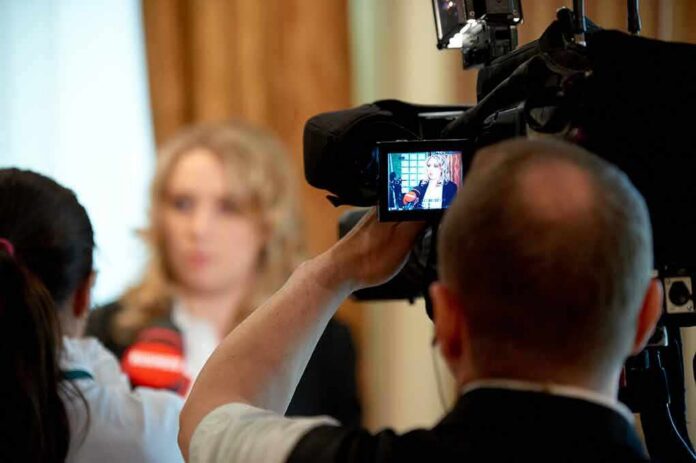
In an interview attributed to The Observer and picked up across the trade press, Nicola Coughlan said, “I will not be watching the new Harry Potter show and I would never be in it,” adding that people involved were “nice” but the project was “not for me.” The line is doing several jobs at once. It is unambiguous—no hedging about scheduling conflicts—and it signals a values-based decision without slandering colleagues or crew. Crucially, coverage tethered her position to Rowling’s public advocacy around transgender-related legal definitions, not to aesthetic disagreements about the series itself.
What transforms a single interview into a sustained position is the paper trail. Reporting connects the statement to Coughlan’s earlier social-media amplification of a sharp critique—The Cut’s “This Is a New Low for J.K. Rowling”—along with her own added refusal language (“Wouldn’t touch it with a 10-foot pole”), and to fundraising she helped channel to the U.K. trans charity Not a Phase after a key court ruling. While some outlets dispute the exact authorship versus sharing of the headline text, the broader through-line is intact: she has aligned publicly and repeatedly with trans-rights advocacy, and she treats association with the adaptation as incompatible with that alignment.
The mechanism: why participation in a franchise is seen as endorsement
In contemporary franchise economics, the creator’s brand equity is inseparable from the IP’s commercial engine—especially when the creator retains executive-producer credit, royalties, or symbolic stewardship. Participation therefore functions as a multi-level signal: reputational association for the actor, promotional lift for the studio, and, often, revenue for the creator. For performers and viewers who believe the creator’s public advocacy harms a vulnerable group, that chain of association becomes ethically charged. Coughlan’s formulation—respectful to workers, firm about abstention—tracks a broader industry pattern in which personal refusals are framed as moral hygiene rather than mass-organizing calls to action.
Symbolic refusals are powerful speech acts; they are also blunt instruments. They clarify the boundary of personal complicity but rarely map cleanly to measurable commercial effects for a property of Harry Potter’s scale. Entertainment press has not produced convincing data that Coughlan’s decision affects budgets, scheduling, or ratings. Her move is designed less to dent a balance sheet than to keep her own name off the credits—and, by extension, off the list of people whose labor sustains the creator’s cultural authority.
The countercase: Rowling’s rejection of “purity tests” and the separation thesis
Rowling’s public stance is consistent: she denies being anti-trans, says she opposes discrimination and abuse, and characterizes calls to reject all things Potter as ideological overreach. She has greeted boycott chatter with sarcasm, insisting such efforts won’t stall the machine. The argument’s core is that a reader’s love for a fictional world need not entangle them in the author’s politics, and that wholesale rejection is neither necessary nor coherent for millions who still find joy and belonging in the narrative.
That separation thesis is emotionally plausible and, for many, pragmatically convenient; it is also where the live disagreement sits. For critics of Rowling’s policy advocacy, economic and symbolic linkages are exactly the point—consumption confers status, reach, and leverage. For Rowling and supporters, those linkages are overstated; a book or adaptation is an artwork that can be stewarded by many hands and received on its own terms. Neither view is a gotcha; they are different ethical models of cultural participation grounded in different risk tolerances for complicity and different theories of how power flows through IP.
How we got here: from legal flashpoints to franchise-scale dilemmas
The current phase of the dispute intensified around a U.K. legal fight over sex-based definitions and anti-discrimination protections. Coverage links Coughlan’s sharpest objections—and her fundraising for Not a Phase—to Rowling’s celebratory response to a court ruling that narrowed the legal category of “woman” to biological sex. For Coughlan and many advocates, this was not an abstract speech issue; it was about the downstream effects on access, safety, and dignity for trans people. From there, the logic is straightforward: choosing not to add one’s name, face, or audience attention to a project so closely tied to the advocate of those policies.
Media ecosystems then do what they do: amplify a clean, quotable refusal into a headline-friendly “boycott,” collapse fine-grained distinctions between personal abstention and organizing imperatives, and cast the whole thing as a feud. Strip away the tabloid varnish and you’re left with a durable, familiar shape: values-based abstention by a public figure against a franchise whose creator’s politics they find incompatible with their own public commitments.
What this means for audiences, talent, and studios
For audiences: the practical question is not whether you can separate art from artist, but whether you want to, given what you believe about how attention and money circulate. If your theory of change is cultural—status and visibility drive norms—then abstention can feel morally necessary even if commercially negligible. If your theory is aesthetic—art belongs to its readers and viewers—then continuing to watch may feel defensible, even obligatory, as an act of reclamation.
For talent: Coughlan’s template is notable. She declines without demonizing colleagues, stakes her boundary in values not vibes, and backs words with action (public advocacy and fundraising). That combination reduces the risk of being caricatured as opportunistic or performative while acknowledging the real human network—friends, crew, craftspeople—who rely on the work.
Limits and clarity: what we know, what we don’t
The record is strongest on the simple, consequential point: Coughlan said she will neither watch nor join the series, and trade outlets tied that decision to her opposition to Rowling’s positions on transgender-related law and rhetoric. Some details at the margins—exact authorship of specific social-media phrasing; whether she intended a broader call to action—are less firm across outlets. Nothing in the reporting persuasively shows her refusal moved ratings or casting outcomes. But the refusal was never pitched as a market intervention; it was a line she declined to cross.
On the other side, Rowling’s denial of animus and critique of boycotts is well documented; so is the argument, echoed in outlets and by supporters, that many fans still experience Harry Potter as a source of joy even amid discomfort. These claims don’t erase the ethical questions Coughlan raises; they define the terrain on which millions now decide whether pressing play or signing on is, to them, a neutral act or a moral compromise.
🚨 Nicola Coughlan says she won't watch HBO's 'Harry Potter' series and would never appear in it
The 'Bridgerton' star cited her disagreement with J.K. Rowling's views on trans rights
Via: @DEADLINE
One of the biggest names yet to publicly walk away from the Wizarding World… pic.twitter.com/GSY3yWczbo
— The Multiverse Reporter 🍿 (@VerseReporter) November 16, 2026
The durable takeaway
Cultural participation is never ethically frictionless at franchise scale. Coughlan chose the simplest available tool—her own no—to avoid subsidizing a worldview she opposes. Rowling invites people to keep their love of the work intact despite their objections to her. Between those poles lies the practical truth of modern fandom and employment: your consumption and your credits do say something, even if they don’t say everything. The rest is judgment—yours to own, as Coughlan has owned hers.
Sources:
foxnews.com, deadline.com, hollywoodreporter.com, them.us, thepinknews.com, bbc.com, astrogeology.usgs.gov, theweek.com, nme.com
© conservativesense.com 2026. All rights reserved.