
A stuck 18-wheeler hauling a bulldozer turned a routine holiday rail run into a grinding derailment that injured five and stopped the Sunset Limited in its tracks.
Story Snapshot
- Amtrak train hit a tractor-trailer stuck on tracks near Broussard, Louisiana, on Nov. 22, 2026.
- Lead locomotive and two baggage cars derailed; five passengers reported with minor injuries.
- Authorities counted 95 people on board; buses later took riders on to New Orleans.
- The truck carried a bulldozer; cause of the truck’s immobilization remains under review.
What Happened, Where, and When
Authorities say the Amtrak Sunset Limited struck an 18-wheeler that was stuck on the tracks Sunday evening near the 100 block of Thru-Way Park Road in the city limits east of Lafayette. The impact happened around 6:05 to 6:15 p.m. local time during peak holiday travel. The Lafayette Fire Department reported five injured passengers, described as minor or non-life-threatening. No deaths were reported. The train carried 95 passengers. The truck was hauling a bulldozer on a lowboy trailer.
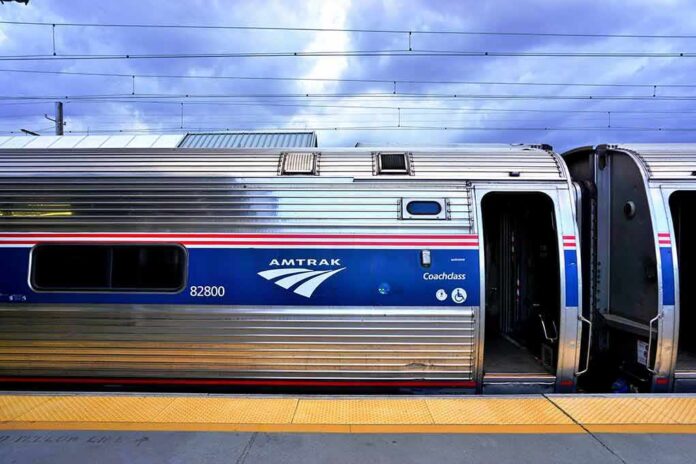
Amtrak said the lead locomotive and two baggage cars derailed after the collision. Local coverage at first described “two cars” off the rails, which can sound different than a locomotive plus cars, but the core details match across outlets: a highway-rail crossing strike followed by a partial derailment and a small number of minor injuries. That alignment across agencies and newsrooms is strong for an event reported in real time.
Emergency Response and Passenger Care
Firefighters stabilized the scene before helping riders off the train. Crews assessed the injured and coordinated ambulance transports as needed. Once responders cleared the area, buses took passengers onward to New Orleans to finish the trip. This handoff kept people moving without adding risk on scene. Such transfers are standard after derailments that block main lines and require equipment inspections before any movement resumes.
Officials described injuries as minor. Some reports note four people transported to a hospital, while others list five injured. Early tallies often differ by whether a patient accepts transport or self-reports symptoms later. The absence of serious trauma or fatalities stands out, given the mass and speed differences when a passenger train meets a heavy truck at grade.
The Crossing, the Truck, and the Open Questions
Local officials and outlets said the tractor-trailer became stuck while crossing, which is a known failure mode for long or low-clearance loads. The available reporting does not yet say why the rig stopped or how long it was immobilized. That gap matters because root cause could involve routing, permitting, driver decision-making, sight lines, approach grades, or a mechanical issue on the truck. Investigators will sort that out with data and scene measurements.
Some local coverage said the train appeared to slow before impact, which is common once an engineer spots a blockage. Exact approach speed, horn use, brake application time, and signal status sit inside event recorder and signal logs. Agencies will review those records as part of any formal inquiry. Nothing in current reports suggests the crew ignored rules or signals, but those details will be confirmed by data, not memory or video alone.
Why This Keeps Happening
Highway-rail crossing crashes are not rare. The Federal Railroad Administration logged 2,274 such collisions nationwide in 2025, with 284 deaths and 773 injuries. Most involve drivers making a bad bet against physics, but design and sight lines also play a part. The National Transportation Safety Board’s probe of the 2022 Mendon, Missouri, Amtrak crash found the truck driver at fault while also citing the crossing’s poor geometry as a contributing factor. Both levers matter for safety.
Amtrak Derailment in Louisiana After Truck Collision Injures Five https://t.co/3U0HCApmCa
— CrashDaily (@crashdaily_com) November 23, 2026
Common-sense steps line up with conservative principles of responsibility and results. Professional drivers need clear rules and real accountability. States and local agencies should map low-clearance and steep approaches and post large, simple warnings. Railroads and road owners should share data and fix sight lines and profiles that trap low trailers. Where traffic volumes and speeds are high, use gates, medians, and lights that are hard to ignore. Save lives first; argue budgets second.
Sources:
nypost.com, apnews.com, freep.com, upi.com, houmatoday.com, yahoo.com
© conservativesense.com 2026. All rights reserved.