

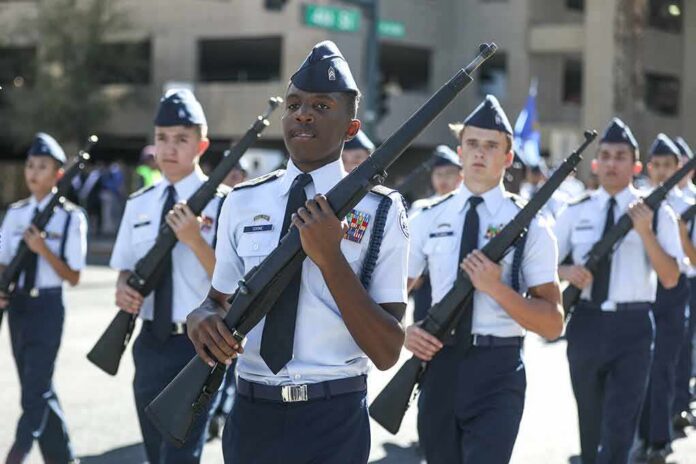
Federal agents are probing a famed Marine’s conduct as a high school Junior Reserve Officers’ Training Corps instructor, and the timeline is specific enough to test.
Story Snapshot
- Naval Criminal Investigative Service confirmed an active investigation tied to a Nevada high school role.
- The inquiry centers on retired Sergeant Major Bradley Kasal’s work at Basic Academy in Henderson.
- Former cadets described boundary-crossing interactions across several years, not a single claim.
- No charges have been announced; authorities have not disclosed specific alleged offenses.
NCIS confirms a federal investigation focused on a school setting
The Naval Criminal Investigative Service confirmed its Camp Pendleton field office is investigating allegations tied to retired Sergeant Major Bradley Kasal’s time as a Junior Reserve Officers’ Training Corps instructor at Basic Academy of International Studies in Henderson, Nevada. Military-focused outlets separately reported that the Naval Criminal Investigative Service, as the Department of the Navy’s lead felony-level investigative arm, is handling the case. Officials declined to describe suspected offenses. That restraint is common while investigators gather records and interview witnesses.
Federal reporting names the location, role, and period in question. Coverage states Kasal worked at Basic Academy from 2018 to 2025 and resigned in August 2025. Those anchors matter. They point to employment files, school policies, and communications that can confirm who supervised what, when transportation occurred, and how complaints moved. Clear anchors also prevent rumor from smearing unrelated people or programs, a recurring risk when high-profile names collide with school settings.
Witness accounts describe recurring boundary questions
Newsrooms said they spoke with dozens of people tied to the program. Former cadets described rides home, one-on-one time in rooms, coffee meetups, and an alleged offer to adopt a cadet, painting a pattern of close contact outside normal class hours. One former cadet suggested the intentions may have been innocent, while admitting the conduct could look wrong to outsiders. That split view highlights why safeguarding rules emphasize bright lines. Good intentions do not erase risk when adults blur boundaries with teens.
Facts that sound benign in isolation can look different in a stack. Repeated off-campus meetings, private rides, or special treatment for select students can undermine trust and expose schools to liability. Conservative common sense says set firm rules, follow them, and document exceptions. If a student needs a ride, two adults go, or a parent signs off. If mentorship requires extra time, meet in public and keep doors open. The standard is not vibes. The standard is clarity that protects kids and adults alike.
What investigators can verify next
Investigators can check sign-in logs, coach and chaperone rosters, activity calendars, messages, and email records for the stated years. They can compare any transportation notes with event schedules and parent permissions. They can pull policy handbooks and instructor training acknowledgments to see what rules applied. Federal agents can also seek digital records when allowed. Each step either supports or undercuts claims and shows whether conduct matched, stretched, or broke written standards.
Marine who survived Fallujah’s ‘Hell House’ under NCIS investigation
Retired Marine Sgt. Maj. Bradley Kasal, a Navy Cross recipient who is perhaps best known for an iconic photo taken of him emerging from the “Hell House” during the Second Battle of Fallujah in the Iraq War, is… pic.twitter.com/Xi8FamuQvT
— Armed Forces Press (@AFP_press) November 21, 2026
Broader data shows why this scrutiny matters for every Junior Reserve Officers’ Training Corps unit, not just one school. A recent Government Accountability Office review estimated that 2 to 7 percent of public high schools with Junior Reserve Officers’ Training Corps programs had an instructor face an adult sexual misconduct allegation over five years. Among schools that reported at least one allegation, only an estimated 6 percent had at least one substantiated claim. That spread underscores two duties: take reports seriously and sort fact from rumor fast.
Honor, due process, and the duty to guard students
Kasal’s 34 years in the Marine Corps and the Navy Cross for actions in Fallujah shaped his public image. Coverage notes that history, and it shapes how people react when new allegations surface. Valor matters. So do rules that shield students and protect instructors from vague claims. The right approach balances both: let investigators work, demand documentation, and insist that schools apply their policies the same way to heroes and to strangers. Equal standards honor service and protect kids.
Sources:
realcleardefense.com, cbsnews.com, marinecorpstimes.com, yahoo.com, ms.now, cbs17.com
© conservativesense.com 2026. All rights reserved.