

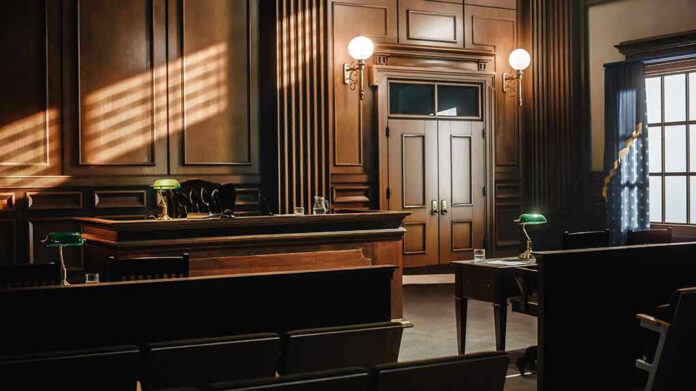
As jurors weigh Harvey Weinstein’s fate yet again, the disgraced Hollywood power broker is wheeled out of a New York courtroom claiming chest pain, turning a high‑stakes rape retrial into another spectacle of elite privilege and media spin.
Story Snapshot
- Harvey Weinstein reported chest pain and left court as jurors began deliberating a Manhattan rape retrial centered on Jessica Mann’s 2013 hotel‑room allegation.
- The case proceeds after New York’s highest court overturned Weinstein’s earlier conviction for an unfair trial that admitted unrelated accusers’ testimony.
- Weinstein’s health crises and hospital transfers risk overshadowing the legal question jurors must answer and further eroding trust in equal justice.
- Conservatives watching this saga see a justice system whipsawed between media‑driven #MeToo politics and special treatment for the well‑connected.
Rape Retrial Reaches Jury While Weinstein Exits With Chest Pain
Jurors in Manhattan began deliberating whether Harvey Weinstein raped hairstylist and actor Jessica Mann in a New York hotel room in March 2013, a case that has come to symbolize the highest‑profile criminal chapter of the #MeToo movement.[3][1] As arguments concluded and the panel received instructions, Weinstein’s lawyers reported he was feeling chest pains, leading to his removal from the courthouse while remaining in custody. Previous reporting notes he has a history of heart problems and similar complaints after court defeats.[4][5]
After weeks of testimony, jurors began deliberating in Harvey Weinstein's rape retrial on Wednesday, deciding whether the former movie mogul raped Jessica Mann. Weinstein left court with chest pain as deliberations commenced, adding a layer of uncertainty to the ongoing legal…
— Tegu breaking news. (@tegufy_news) May 13, 2026
Associated Press reporting explains that Mann, now forty, testified the two had an ongoing relationship but that Weinstein forced sex on her that day after she repeatedly said no.[3] Defense attorneys maintain the encounter was consensual and emphasize that Mann continued seeing Weinstein afterward, expressing warmth and staying in contact.[3] That clash over consent, memory, and power now sits with twelve citizens, even as the defendant’s latest health episode threatens to distract from the evidence they heard over nearly three weeks of testimony.[3]
From Overturned Conviction To New Deliberations
This retrial exists only because New York’s Court of Appeals threw out Weinstein’s 2020 conviction, finding that the original judge unfairly allowed testimony from women whose accusations were not part of the charged case.[2] The appellate court ruled that such “other bad acts” evidence poisoned the jury by encouraging a verdict based on character rather than strictly on the charged incidents. That decision did not declare Weinstein innocent; it said the state must prove its case again inside the rules that protect every defendant’s right to a fair trial.[2]
Prosecutors responded by moving toward a new indictment and preparing a narrower case that keeps the focus on Jessica Mann and the specific 2013 hotel‑room allegation.[2][1] ABC News reporting underscores that, throughout these developments, Weinstein has publicly denied wrongdoing and claims all his sexual encounters were consensual.[2] For many conservatives, the reversal underscored a long‑standing concern: when judges stretch evidentiary rules to satisfy media‑charged causes, they risk tainting verdicts and forcing traumatized accusers and taxpayers alike to endure expensive, exhausting do‑overs instead of delivering durable justice the first time.
Health Crises, Media Spectacle, And Public Trust
Weinstein’s chest‑pain drama fits a pattern. After his earlier New York sentencing to more than twenty years in prison, he was taken from Rikers Island to Bellevue Hospital in Manhattan for what his spokesperson described as ongoing heart problems and chest pains.[4][1] Coverage at the time highlighted that the hospital ward went into lockdown and that he received specialized treatment while the newly convicted felon repeated that he was innocent.[1][4] Later, he reportedly underwent emergency heart surgery while awaiting further proceedings.[2][4]
Repeated high‑profile hospitalizations for a powerful inmate feed public suspicion that America still runs a two‑tier justice system—one tier for the connected class that spent years selling cultural degeneracy to the country, and another tier for ordinary citizens who would likely sit in a standard jail infirmary. At the same time, sensational reporting that fixates on his ailments, wheelchairs, and medical transfers can crowd out sober coverage of testimony, cross‑examinations, and the precise legal standards jurors must apply.[2] That imbalance makes it harder for citizens to evaluate whether verdicts reflect facts or theater.
Due Process, #MeToo Politics, And A System Under Strain
For conservatives who believe both in personal responsibility and in due‑process protections, this case is a stress test for a justice system buffeted by competing pressures. On one side, a powerful defendant stands accused of exploiting women who believed their careers depended on him, with the Mann retrial serving as a proxy for a broader cultural reckoning. On the other side, appellate judges have already warned that political movements cannot justify short‑cuts around rules meant to guard every citizen—popular or reviled—from trial by reputation.[2][1]
Reports also note that the public record available so far leans heavily toward procedural updates—health scares, transfer decisions, retrial scheduling—rather than detailed evidence about the 2013 encounter itself.[1][2] That gap should caution both sides of the cultural divide. Americans frustrated by years of elite impunity want real accountability, not show trials. Yet they also know that once the state can convict anyone by importing unrelated accusations and drowning juries in outrage, the same machinery can be turned against political opponents, gun owners, or people of faith. Watching this jury deliberate as Weinstein again claims chest pain, many readers see less a single scandal than a system struggling to balance truth, fairness, and a media environment that too often rewards spectacle over substance.
Sources:
[1] Web – Harvey Weinstein Undergoes Emergency Heart Surgery …
[2] Web – Harvey Weinstein rushed to hospital for emergency heart …
[3] YouTube – Harvey Weinstein in hospital for emergency heart surgery | BBC News
[4] YouTube – Jailed Harvey Weinstein rushed to hospital for emergency heart …
[5] Web – Harvey Weinstein stays at hospital for chest pain a day after …