
As Venezuela’s death toll climbs past 3,000 and tens of thousands remain missing after twin quakes, the scale of state failure should shake every American who cares about basic competence and human dignity.
Story Snapshot
- Nearly 1,500 were killed in the first days, with the official toll later soaring above 3,000 as missing lists topped 50,000 people.
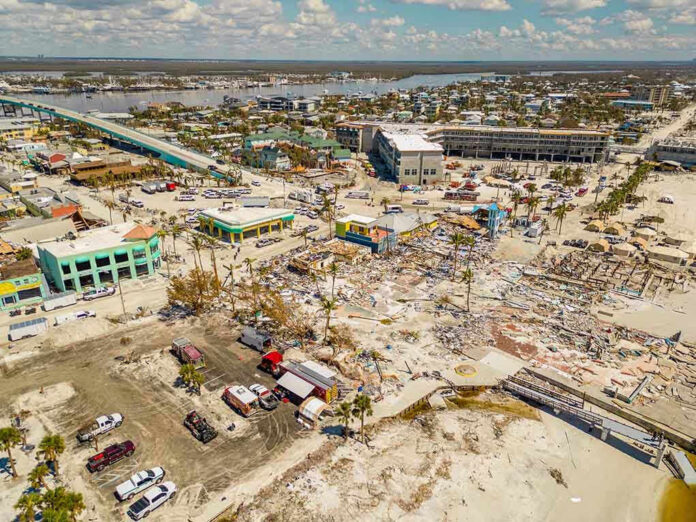
- Entire neighborhoods in La Guaira were wiped out, with hundreds of buildings collapsed and over 58,000 structures damaged or destroyed nationwide.
- United Nations agencies warn up to 6.7 million Venezuelans could be affected, while thousands remain homeless more than a week after the disaster.
- Experts say the tragedy exposes years of corruption, weak building standards, and a “completely ineffective” government response.
Quakes Turn A Long‑Running Crisis Into Mass Casualty Disaster
Two powerful earthquakes, measuring 7.2 and 7.5, slammed Venezuela’s northern coast on June 24, striking near La Guaira and the capital Caracas. In the first chaotic days, officials confirmed at least 1,430 deaths and more than 3,200 injuries, as panicked residents fled collapsing buildings and flooded crowded streets. The confirmed death toll then climbed quickly, passing 1,719 by June 29 and later rising above 3,000 as more bodies were pulled from the rubble. United Nations officials say the final human cost may not be known for weeks.
Websites set up to track the missing soon listed about 45,000 unaccounted people, while families in La Guaira reported at least 68,900 relatives and neighbors still missing only three days after the quakes. United Nations aid chief Tom Fletcher told reporters that more than 50,000 people were missing after the twin shocks hit within one minute, flattening buildings across the north. By early July, government figures showed more than 16,700 injured and roughly 17,000 left homeless, but still no official estimate of the missing. That gap has fueled deep distrust toward government reporting inside and outside Venezuela.
Shattered Buildings Reveal Years Of Rot And Weak Institutions
Satellite radar and field surveys show just how fragile Venezuela’s built environment was when the ground started shaking. Authorities say nearly 800 buildings collapsed, including 189 that were completely destroyed, while United Nations and private risk firms estimate a staggering 58,870 structures damaged or obliterated nationwide. In La Guaira alone, more than 1,400 buildings were destroyed, with over 11,000 people missing from that single coastal state. Structural engineers told major outlets that many collapsed buildings used brittle concrete with poor steel reinforcement, failing basic anti‑seismic standards. This pattern matches earlier Venezuelan disasters, where weak enforcement and political favoritism turned natural hazards into mass casualty events.
United Nations agencies estimate direct physical damage of between $4.7 and $8.7 billion, about 6 percent of Venezuela’s entire economy. A later assessment by the United Nations Office for Disaster Risk Reduction raised damage estimates to $37 billion, including about $24 billion to homes, businesses, schools, hospitals, and other buildings, plus $13 billion to infrastructure like roads and bridges. Those numbers do not fully capture long‑term economic pain, but they show how a country already battered by socialism, corruption, and collapse had almost no margin for shock. Analysts describe the quakes not just as a natural event but as the latest proof that failed institutions can be as deadly as the shaking ground.
Rescue And Aid Struggle Against Chaos And State Control
On paper, Venezuela’s government moved fast, declaring a state of emergency and mobilizing search and rescue teams, medical services, and security forces within about 24 hours. Officials later claimed to have opened more than 80 shelters, dispatched engineer teams to assess housing, and delivered tens of thousands of food packages and hundreds of thousands of liters of drinking water to affected families. They reported reaching more than 75,000 families with hydration, food, transport, psychological support, and medical care. Acting leaders also insisted that the search‑and‑rescue phase remained active and that they had not “closed” efforts to find survivors.
On the ground, however, survivors told reporters a different story. By day five, people in La Guaira and Caracas were still digging through ruins themselves, complaining that aid was slow and uneven while loved ones lay buried nearby. International rescuers, more than 1,600 by some counts, began winding down operations roughly ten days after the quakes, even as families kept recovering bodies and registering missing relatives online. United Nations reports say nearly 12,000 were displaced in the first week, rising to more than 17,000 without housing by early July. For many Venezuelans, the problem was not just limited resources, but a centralized state that controlled information, sidelined local initiative, and answered slowly when every minute meant lives.
Why This Matters For Americans Who Care About Freedom And Competence
United Nations agencies warn that up to 6.76 million people could be affected by the quakes, including two million in Caracas alone, with food access already a top concern for about 80 percent of the population even before the disaster. That means a country already wrecked by inflation, authoritarian rule, and economic mismanagement now faces a massive humanitarian emergency layered on top of years of socialist collapse. Experts interviewed by public broadcasters and think tanks call Venezuela’s government “completely ineffective,” arguing that weak rule of law, corruption, and ruined infrastructure turned a bad quake into a far worse tragedy.
The death toll from Venezuela’s twin earthquakes has risen to 4,561, with more than 16,000 injured and thousands still in temporary shelters. Hundreds of buildings were damaged or destroyed as authorities seek international reconstruction funds. #Venezuela #Earthquake pic.twitter.com/ccS3RPXTu8
— The International Front Page (@thetifp) July 14, 2026
For conservative Americans, this is a clear warning. When government power grows while accountability shrinks, basic duties like honest reporting, safe buildings, and fast disaster response fall apart. Venezuela shows what happens when leaders focus on ideology and control instead of competence and local freedom. It also shows why the United States must be careful in any aid or partnership, making sure help reaches real people and does not prop up failed regimes. Strong families, real transparency, and limited but effective government are not just slogans; in a crisis, they are the difference between life and death.
Sources:
insiderpaper.com, en.wikipedia.org, news.un.org, reuters.com, usnews.com, cnbc.com, cnn.com, france24.com, aljazeera.com, npr.org, worldvision.org, bostonglobe.com, latinarepublic.com, wmnf.org, actalliance.org, usatoday.com, thesoufancenter.org, documents1.worldbank.org
© conservativesense.com 2026. All rights reserved.