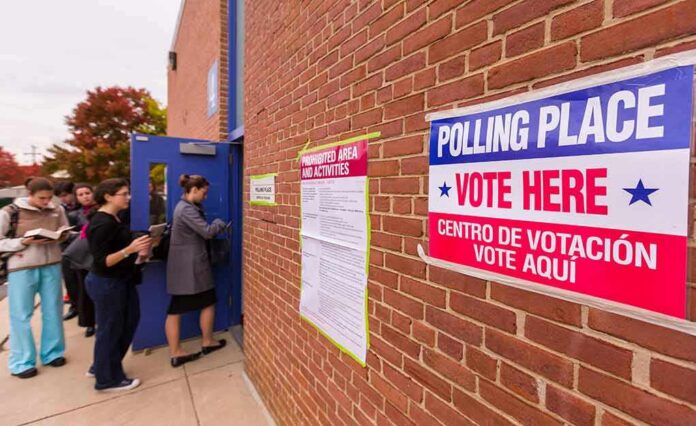
Peru is about to choose its ninth president in a decade, and the real contest is not left versus right but order versus exhaustion.
Story Snapshot
- Voters face a June 7 runoff between Keiko Fujimori and Roberto Sánchez after a splintered first round [1][2][8].
- Fujimori campaigns on “Peru in order,” pledging aggressive anti-crime measures and institutional discipline [3].
- Sánchez emphasizes political reform and social inclusion as an alternative path out of turbulence [7][8].
- First-round pluralities are thin mandates in a 35-candidate field, intensifying legitimacy risks [1][8][9].
Peru’s Runoff Is A Verdict On Instability, Not Just Ideology
Peru heads to a June 7 presidential runoff after an unusually fragmented first round, elevating Keiko Fujimori and Roberto Sánchez to a binary choice that masks a deeper problem: chronic volatility. Reports confirm the runoff date and the finalists, capping a cycle in which Peru has cycled leaders faster than policies can mature [1][2][8]. Analysis warns the outcome could push the country toward further crisis if the winner governs without a broad, cross-faction mandate capable of steadying institutions [9].
First-round results gave Fujimori a plurality, not a consensus. Election tallies place her first with 17.19 percent, a figure that signals more about dispersion than dominance in a field that stretched to dozens of candidates [1]. The Americas Society and Council of the Americas underscores that both finalists combined amassed a sliver of the vote, a point that matters because whoever wins must negotiate a skeptical public and fractious Congress before passing even routine legislation [2][8].
What Keiko Fujimori Is Really Promising When She Says “Order”
Fujimori’s message focuses on restoring order through tougher policing and expanded incarceration capacity, including more officers and new large-scale prisons, packaged under the slogan “Peru in order” [3]. Supporters argue these promises match the country’s fears about crime and impunity. That alignment can mobilize urban voters who want swift, visible enforcement. The plan’s test will be execution within Peru’s institutional constraints: budgets, judicial bottlenecks, and the reality that public security gains require durable coordination among police, prosecutors, and municipal authorities [3].
Her electoral track record adds familiarity and baggage. Coverage notes this is her fourth trip to a runoff, reflecting persistent name recognition and a loyal base, but also an electorate that has repeatedly balked at granting her the final step into office [3][8]. Markets that price political outcomes have watched the race closely, but pricing signals are opinionated, not evidence of governance capacity [4]. A conservative lens prizes order and the rule of law; the question is whether enough voters believe her approach can actually deliver those outcomes in Peru’s gridlocked system.
What Roberto Sánchez Offers Against A Law-And-Order Frame
Sánchez positions himself as a reformist alternative, emphasizing political reform and social inclusion to rebuild trust with historically marginalized communities [7][8]. That pitch targets the roots of instability: a brittle party system, transactional politics, and economies of informality that leave citizens outside effective state services. His camp argues that legitimacy, not just force, curbs disorder over time by making institutions feel fair and accessible to ordinary Peruvians [7]. The runoff allows a stark comparison between rapid enforcement and slower, systemic renovation.
The Peruvian presidential runoff election is scheduled for June 7, 2026 (this Sunday), between Keiko Fujimori (Fuerza Popular, right-wing) and Roberto Sánchez (Juntos por el Perú, left-wing).
Both Peru and Colombia run offs are characterized by strong personalities and deep… https://t.co/hLQbsWZMb6
— Miguel Bolivar (@MiguelBolivarx) June 5, 2026
The broader context complicates both pitches. Chatham House warns that the election’s outcome could deepen crisis if the victor misreads a narrow win as a blank check rather than a loan contingent on performance [9]. The field’s extreme fragmentation and the thin first-round pluralities suggest mandates are fragile at best [1][9]. Any president who governs as if half the country will simply fall in line risks repeating Peru’s familiar slide: street protests, congressional standoffs, and policy whiplash that scares off investment and erodes public patience.
The Common-Sense Test For The Next President
Governing after June 7 will demand three concrete moves. First, stabilize basic security with measurable targets: homicide clearance rates, case processing times, and officer deployment tied to crime data. Second, lock in legislative coalitions early by trading public, transparent policy concessions rather than backroom arrangements that breed suspicion. Third, protect economic predictability by publishing a fiscal path and regulatory calendar by sector to avoid surprises that undercut growth expectations [9]. These are not ideological; they are managerial commitments voters can verify.
How Voters Can Read The Signals Before Casting A Ballot
Voters can interrogate both campaigns with the same checklist. Does the public-security plan specify milestones and oversight, or only slogans [3]? Does the reform plan detail how to pass changes through a fragmented Congress without triggering stalemate [7][8]? Do both candidates acknowledge that a 17.19 percent first-round finish, or a razor-thin runoff win, requires humility and coalition-building [1][9]? Peru has seen enough promises. The only credible offer now is disciplined delivery the country can track in weeks, not years.
Sources:
[1] YouTube – Peru will vote in a runoff to pick a ninth president in 10 years
[2] Web – 2026 Peruvian general election – Wikipedia
[3] Web – Poll Tracker: Peru’s 2026 Presidential Election | AS/COA
[4] Web – Peru’s Chaotic Election — and Some Reasons for Hope
[7] YouTube – Peru heads to polarised runoff between Keiko Fujimori and Roberto …
[8] Web – Peru 2026 Presidential Election Explained | Keiko Fujimori, Roberto …
[9] Web – Peru’s 2026 Presidential Candidates: Keiko Fujimori and Roberto …
© conservativesense.com 2026. All rights reserved.