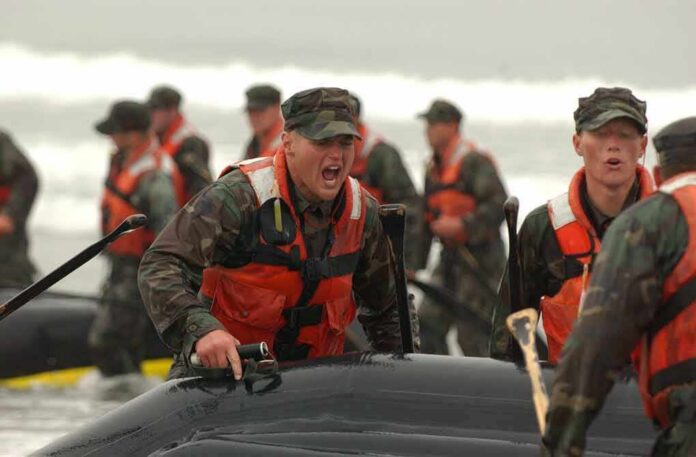
Eight sailors attached to a single carrier strike group tried to take their own lives during one deployment — and every one of them survived, which is the fact most easily lost in the arithmetic of a nine-month war-zone rotation.
Key Points
- Acting Navy Secretary Hung Cao told Sen. Kirsten Gillibrand in a letter that eight suicide attempts occurred across the USS Abraham Lincoln strike group since the deployment began, with no fatalities
- The count spans the entire strike group — carrier crew, air wing, destroyer squadron staff, escorting destroyers, and embarked aviation squadrons — not the Lincoln’s crew alone
- The deployment stretched to roughly 300 days, a modern record for carrier time at sea, and included combat operations against Iran
- Navy and command officials had earlier denied any measurable rise in suicidal ideation or attempts, a position the letter’s disclosure sits uneasily alongside
- Sailors and families described supply shortages, medication gaps, and long stretches without port calls as compounding strain during the extended mission
What the Navy Disclosed, and to Whom
The figure entered public record through official channels, not leaks. In a letter dated in late September, Acting Navy Secretary Hung Cao informed Sen. Kirsten Gillibrand of New York, a Democrat on the Senate Armed Services Committee, that “since the beginning of Lincoln’s deployment, there have been a total of eight suicide attempts across the strike group”. Cao’s letter was explicit that no service member died by suicide during the deployment. That distinction — attempts survived, not lives lost — was corroborated across CNN, The Hill, USA Today, BBC, NBC News, and Mediaite, each citing the same document independently rather than relaying a single wire report.
The letter’s own language matters as much as its headline number. Cao defined the population under review broadly: “This number includes the Lincoln crew and sailors from the carrier airwing, strike group and destroyer squadron staff, escorting destroyers and all embarked aviation squadrons”. That is a population in the range of several thousand personnel spread across multiple ships and commands, not the roughly 5,000 sailors who bunk aboard the carrier itself. Collapsing that distinction is the single most common way this story gets misread — a strike-group total gets reported, and remembered, as a carrier-only statistic.
Why This Deployment Looked Different
The USS Abraham Lincoln left San Diego in November on what was briefed as a standard six-month rotation. It did not come home on schedule. The outbreak of hostilities involving Iran extended the mission toward the 300-day mark, a length that multiple outlets and Navy-adjacent sources described as a modern record for carrier time underway. Extended deployments compress an already demanding rhythm: fewer port calls, longer resupply gaps, and sustained flight and watch operations without the psychological reset that a liberty call in a foreign port normally provides.
Sailors interviewed during the ship’s eventual port visit in Thailand described the practical texture of that strain — a reduction from two main entrees to one at mealtimes, scarce fresh produce, stretches without mail, and tight hygiene and repair supplies, even as caloric needs were still technically met. One former crew member, a nuclear engineer who deployed while grieving his mother’s death, has described being prescribed medication mid-deployment only to have the ship run short of supply, forcing a treatment switch, and said he felt “looked down on” by peers after seeking help despite ultimately being medically evacuated. A 19-year-old sailor who went overboard in early August is now facing non-judicial punishment under the Uniform Code of Military Justice for leaving his post, a case his wife has characterized as a suicide attempt that followed weeks of exhaustion and requests for help through his chain of command.
The Earlier Denials, and Why They Complicate the Picture
Before Cao’s letter, Navy and command officials had pushed back on reporting about deteriorating conditions aboard the Lincoln. ABC News and Task & Purpose both quoted officials saying the service had “not identified an increase in reported suicidal ideation or suicide attempts aboard the ship”. That denial was narrower in scope — framed around identified increases and, in some accounts, the carrier rather than the full strike group — but the sequence of flat denial followed by a specific, congressionally disclosed count is the part of this story most likely to shape how it’s remembered. It is worth stating plainly: a caveat exists here, not a contradiction proven in court. The two statements can be reconciled if officials genuinely had not flagged a statistical increase at the time they spoke, even as the underlying eight cases were later compiled and reported. But the optics of sequence — denial, then disclosure — are the kind of thing that erodes institutional credibility regardless of the technical accuracy of either statement.
8 sailors attempted suicide in USS Abraham Lincoln strike group, Navy secretary says https://t.co/ZeNX8u4mlR
— 12 News (@12News) September 24, 2026
Placing the Number in Context
Carrier deployments have never been psychologically neutral environments. Academic research on Navy personnel underway has long documented elevated stressors tied to confinement, family separation, and restricted mental-health access during extended sea time, and earlier studies of carrier deployments during Operations Enduring Freedom and Iraqi Freedom found comparable patterns of anxiety and coping strain among crews. The Navy does not routinely publish suicide-attempt rates ship by ship or strike-group by strike-group, which is precisely why a single congressional letter carries outsized weight: it is one of the only moments a specific, dated, bounded figure enters the public record at all, rather than being folded into the service-wide annual total. That structural opacity — not any dispute over Cao’s figure — is the real, recurring difficulty in evaluating military mental-health data. Comparable disclosures for other recent carrier deployments do not exist in public form, which makes it hard to say whether eight attempts represents an outlier or simply the first time anyone counted out loud.
Sources:
mediaite.com, cnn.com, thehill.com, newsweek.com, bbc.com, ynetnews.com, x.com, abcnews.com
© conservativesense.com 2026. All rights reserved.