
Elon Musk’s bold Terafab announcement exposes America’s broken chip supply chain, thrusting private enterprise into the void left by government failures amid wartime vulnerabilities.
Story Highlights
- Musk declares US/global chip system inadequate, launching Terafab near Austin to produce 1 terawatt of compute—double current US output.
- Joint Tesla, SpaceX, xAI facility targets AI chips for EVs, Optimus robots, and radiation-hardened space tech at 2-nm scale.
- $20B+ project promises end-to-end manufacturing for rapid innovation, bypassing foreign dependencies like TSMC amid reshoring pushes.
- Short-term relief for Musk’s firms boosts Texas jobs; long-term risks include delays in a high-stakes era of national security needs.
Terafab Announcement Details
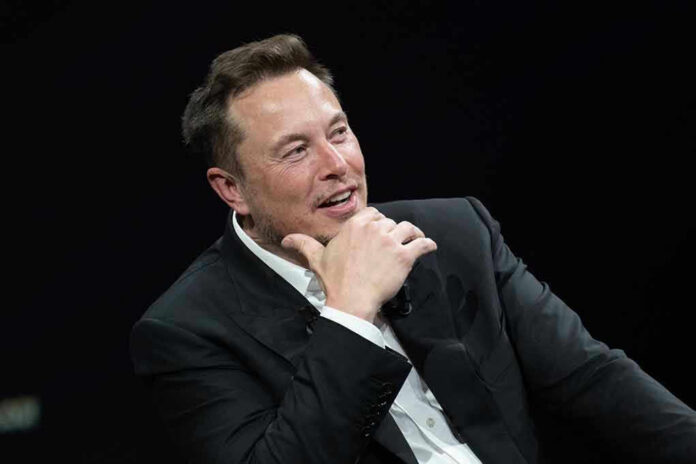
On March 21, 2026, Elon Musk unveiled Terafab during an Austin presentation, a joint facility by Tesla, SpaceX, and xAI near Tesla’s Texas headquarters. The project addresses chronic chip shortages crippling AI scaling for Tesla’s Full Self-Driving, Optimus robots, and SpaceX’s orbital data centers. Musk criticized the US chip system as broken, unable to meet demands exceeding global output. Terafab integrates design, lithography, fabrication, packaging, and testing under one roof for unprecedented speed. This vertical integration differs from traditional fabs, enabling quick iterations on specialized 2-nm chips.
Background of Chip Shortages
Global chip crises since 2020-2022, worsened by COVID-19, US-China tensions, and AI surges, exposed US reliance on Taiwan’s TSMC for over 90% of advanced nodes. The 2022 CHIPS Act allocated $52 billion for domestic fabs by Intel, TSMC, and Samsung, yet advanced 2-nm production lags in Asia. Musk’s companies faced delays: Tesla production halted in 2021-2023 due to shortages, SpaceX needs radiation-resistant chips for satellites, and xAI requires massive compute for Grok models. Past efforts like Tesla’s Dojo supercomputer highlighted supplier limits from Nvidia and others. Austin’s tech hub, including Samsung’s nearby fab, positions it ideally for growth.
Musk’s multi-planet vision demands billions of robots yearly and space-based AI, outpacing suppliers like TSMC, Samsung, and Micron. Precedents include Apple’s in-house A-series and Amazon’s Graviton, but Terafab’s scale—50 times a major fab’s output—breaks new ground.
Technical and Timeline Specifics
Terafab comprises two fabs: one for Tesla AI chips powering EVs and Optimus, another for SpaceX’s high-power, radiation- and heat-resistant chips to reduce satellite radiator mass. Musk stated, “We either build the Terafab, or we don’t have the chips,” emphasizing necessity. X posts detailed single-chip designs per fab for efficiency. Planning phase targets small batches in 2026 and volume ramp-up in 2027, with 1 terawatt annual compute by 2030 surpassing global AI production. The $20 billion-plus cost reflects cleanroom builds and expert hiring challenges.
Elon Musk Is Moving Fast Because the US Chip System Is Broken – RedState https://t.co/tPzU92NgD7
— ✝️🙏🇺🇸”MAW”⚔️ (@mw5001) March 25, 2026
Skeptics note Musk’s history of delays, like Dojo, and fab construction typically spans 3-5 years due to complexity. No construction start confirmed by March 25, 2026.
Economic and Strategic Impacts
Short-term, Terafab secures chips for Musk’s empire, creates Austin jobs, and strains suppliers while aligning with CHIPS Act reshoring against Taiwan/China risks. Long-term, it could dominate AI and space sectors, enabling cheaper orbital data centers via solar power and household robots. Economic boosts include a $20 billion investment amid AI demand surges noted by AMD executives. Politically, it strengthens US tech independence critical during conflicts, reducing vulnerabilities to foreign disruptions. Socially, accelerated robotics promises industrial and home transformations, though feasibility doubts persist over unproven end-to-end scale.
Sources:
Elon Musk announces plans to manufacture chips for SpaceX and Tesla
Musk says Tesla, SpaceX to build advanced chip manufacturing facility
Elon Musk’s Terafab: Chip manufacturing for AI data center
Terafab: Elon Musk chips semiconductors what to know