
Senior aides say secret White House meeting tapes may have leaked to reporters, raising grave questions about security and trust.
Story Snapshot
- Trump aides reportedly fear reporters obtained Situation Room audio for a new book [11].
- No public proof confirms any reporter accessed or copied tapes [7].
- White House and Pentagon have tightened press access amid recording concerns [3][5][6].
- The legal line between leaks and unlawful acquisition remains contested [2].
What Aides Fear About Situation Room Tapes
Trump White House aides reportedly believe journalists Maggie Haberman and Jonathan Swan obtained audio from sensitive White House meetings for their book, “Regime Change.” The claim centers on detailed dialogue said to appear in the book. Aides point to lines that read like verbatim quotes from a secure room. The Situation Room bans personal devices and recordings. If any audio exists, it would be highly restricted. Public sources do not show the tapes themselves or a chain of custody [11].
So far, there is no public evidence that either reporter accessed, copied, or transferred Situation Room audio. There is no released tape inventory, access log, or forensic audit tying them to recordings. That gap matters. In Washington, detailed books often come from interviews, notes, and documents. Many big scoops rely on sources who were in the room. That can explain precise dialogue without illegal recording or physical tapes becoming public [7].
Press Access Rules Tighten After Recording Concerns
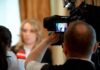
White House officials have limited reporter movement inside the complex in response to concerns about secret recordings. Communications leaders cited surreptitious recording risks when justifying tighter access to the press secretary’s workspace. The policy reduces chances for off-the-cuff captures and casual eavesdropping. Press advocates argue the new limits hurt transparency. Supporters say rules protect sensitive conversations and national security from leaks and gotcha tactics that distort policy debates [3].
A similar clash played out at the Pentagon. Dozens of reporters turned in building badges rather than accept new ground rules they viewed as restrictive. That walkout showed how far some newsrooms will go to protest controls on access. It also showed officials are serious about limiting uncontrolled interactions that can lead to leaks or misquotes. The fight reflects a wider struggle between open coverage and the duty to safeguard sensitive operations and personnel [5].
The Legal Line: Leaks Versus Illegal Acquisition
Courts have long treated publishing true information differently than stealing it. The debate often turns on how the information was obtained. If a source lawfully shares their memory of a meeting, that is usually protected. If someone breaks rules to smuggle out a recording, that can be a crime. Analysts warn that efforts to prosecute journalists for newsgathering risk chilling speech. Recent legal commentary stresses caution before criminalizing routine reporting practices [2].
‘We’re Afraid’: Top Trump Aides Reportedly Think Maggie Haberman and Jonathan Swan Have Tapes of ‘Sensitive Conversations’ Inside the Situation Room – Yahoo News UK https://t.co/Q0DJ7UxP5o
Follow @NewsHubGlobe for 24/7 breaking news from around the world. pic.twitter.com/LRPgaAixRr
— News Hub (@NewsHubGlobe) June 15, 2026
For this case, the known record has limits. The fear about tapes comes from sources describing what aides believe. The public record does not include the alleged audio. It does not include logs proving a breach. That leaves two live options. First, reporters got vivid accounts from participants. Second, a restricted recording surfaced. Without primary proof, the safer conclusion is that the tape theory remains unproven, while the quotes may rest on aggressive but standard sourcing [7].
Why This Matters To Readers
Security failures inside the White House would be serious. The Situation Room exists to protect the president’s decision-making. If recordings leaked, foreign rivals could learn how America thinks and plans. If this is not a leak of audio, the episode still exposes a culture of gossip around power. Either way, it hurts trust. Americans want strong borders, safe streets, and cheap energy. That work requires focus, not side dramas fed by secrecy breaches or media spin.
What Should Happen Next
Officials should verify whether any audio left a secure space. A narrow, documented review can confirm logs and device controls without chilling lawful journalism. If systems failed, fix them fast. If not, say so clearly. Reporters should show sourcing discipline and avoid vague claims that imply tapes exist when they may not. Readers deserve clarity: what is on the record, what is not, and who is accountable for guardrails that protect the country’s business from chaos [3].
Sources:
[2] Web – Longtime Trump aide Hope Hicks recalls ‘Access Hollywood’ tape …
[3] Web – Prosecuting Journalists Complicates Biden’s Press Freedom Legacy
[5] YouTube – Journalists turn in access badges, exit Pentagon rather than agree …
[6] Web – Journalists turn in access badges, exit Pentagon rather than agree …
[7] Web – Trump administration restricts reporters’ access to White House …
[11] YouTube – Situation Room FIASCO over obscene Trump-Epstein allegations
© conservativesense.com 2026. All rights reserved.