Five people are dead after a U.S. military strike blew up a fast boat on a known drug route in the Eastern Pacific, and officials say intelligence tied the vessel to narcotics trafficking.
Story Snapshot
- U.S. Southern Command said a go-fast boat on a known drug corridor was hit, killing five.
- Officials cited “confirmed intelligence” but did not release cargo evidence or identities.
- A short video clip shows the blast that destroyed the vessel.
- The strike adds to a campaign that has killed more than 200 people since 2025.
What The Military Says Happened
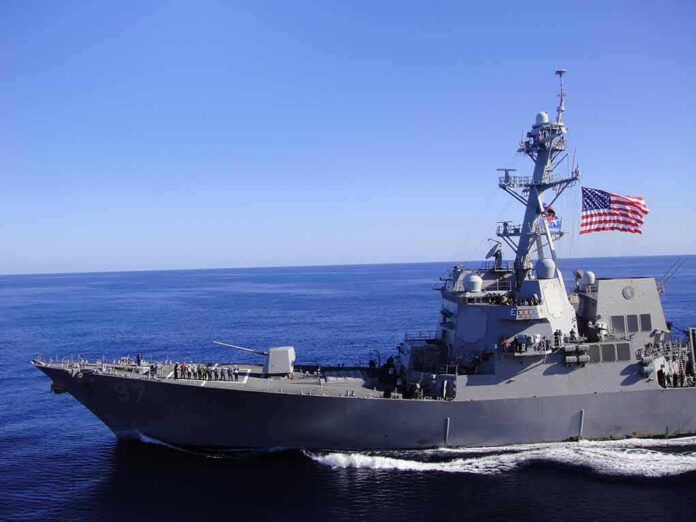
United States Southern Command said a joint task force launched a lethal strike on October 27 against a go-fast vessel in the Eastern Pacific. The command said the boat was on established narco-trafficking routes and that confirmed intelligence showed active drug trafficking. The strike killed five people aboard the vessel, according to multiple outlets that carried the military’s account. A short official video shows a stationary boat engulfed by an explosion consistent with a precision strike.
Southern Command’s description fits how cartels often move cocaine at sea. Fast boats run low on the water and can sprint far with extra fuel. The United States Coast Guard has long reported seizing cocaine from such boats in the region after disabling shots and boardings. Those cases normally end with arrests, contraband seizures, and prosecution records, which help prove what was on board and who was involved.
What We Still Do Not Know
The military has not publicly shown the intelligence that justified the strike. Officials did not release images of drugs, logs, or communications from the boat. They did not identify the five people who died or link them to a named group. The Associated Press reported that the military offered no proof that the vessel was carrying drugs, and Reuters said officials provided no further evidence beyond the brief statement.
This evidence gap fuels public concern across the spectrum. Many Americans want hard proof when the government uses deadly force. Some see a pattern where agencies offer firm labels, such as “narco-terrorists,” while the records stay secret. That dynamic deepens mistrust of institutions that people on both the right and left already view as serving insiders more than citizens. Clear, verifiable facts would help reduce that distrust.
How This Fits A Wider Campaign
The strike is part of a broader U.S. push against maritime trafficking. Reporting places the death toll from similar boat strikes at over 200 since late 2025, a tally that has drawn human-rights criticism and legal questions. Critics argue that lethal force at sea, without public evidence or arrests, departs from long-standing American practice in maritime drug cases. Supporters argue that cartels are violent networks that demand stronger tools.
Past interdictions by the Coast Guard show another model. Aircrews disable engines, boarding teams secure crews, and officials offload cocaine as evidence. Press releases then list weights, routes, and prosecution steps. That record helps the public see what happened and why. If the Pentagon and Southern Command can disclose more about this strike—such as surveillance timelines or recovery efforts—it would help the public judge the action on the facts.
What Accountability Would Look Like Now
Congress can request a classified briefing and push for a redacted release that covers the target’s track, why it was flagged, and what alternatives to a strike were weighed. The Pentagon can publish more of the strike video, including sensor data and timestamps, if safe to share. Agencies can also disclose whether any debris, equipment, or narcotics were recovered. These steps would not reveal sources and methods but would answer core public questions.
Americans want drugs off the streets and safer communities. They also want a government that proves its case when it uses lethal force. Releasing verifiable details would honor both goals. It would support those who believe the strike was necessary and address those who fear the system acts first and explains later. Trust grows when facts lead, not labels. The government should meet that standard here and in future operations.
Sources:
stripes.com, pbs.org, yahoo.com, bssnews.net, apnews.com, news.uscg.mil
© conservativesense.com 2026. All rights reserved.