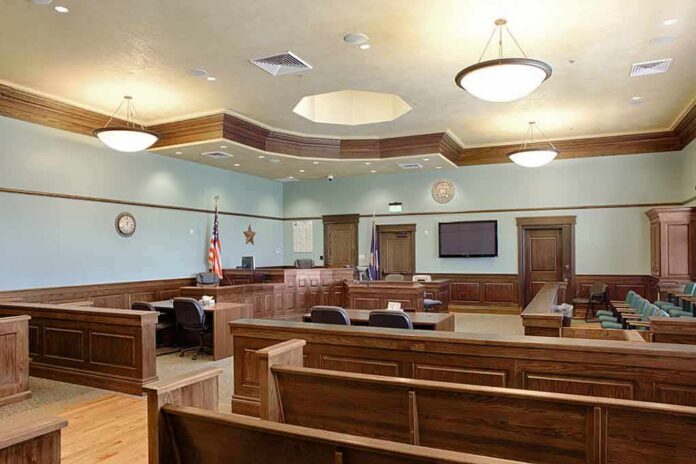
A grieving father-in-law stormed a Phoenix courtroom and punched his son-in-law’s convicted killer during sentencing as deputies rushed to stop him.
Story Highlights
- Court video shows Alberto Ontiveros Sanchez strike defendant Abel Uribe several times.
- Uribe had pleaded guilty to first-degree murder and received life in prison.
- Deputies detained Sanchez, and police later referred charges including assault of a restrained person.
- A judge released Sanchez on his own recognizance after his initial appearance.
Sentencing Hearing Erupts After Victim Impact Statement
Reporters state the outburst followed Sanchez’s victim impact statement during a sentencing for the 2022 murder of 27-year-old David Navidad-Parra, Sanchez’s son-in-law. Video shared by outlets shows Sanchez leave the lectern and lunge toward the defense table. He reaches Abel Uribe and throws several punches while Uribe sits in handcuffs and leg restraints. Deputies and court staff intervene within seconds, pulling Sanchez away and restoring order as the courtroom falls silent.
Coverage places the incident inside a downtown Phoenix courthouse on a weekday morning, with some reports specifying the South Court Tower on Madison Street around 10:30 a.m. on September 22. Outlets report minor variations on the exact moment Sanchez moved, but they agree he attacked immediately after addressing the court. The number of strikes is described as four to five or simply several, a common range in fast-moving courtroom clips.
Convicted Killer Receives Life Term
Abel Uribe had pleaded guilty to first-degree murder for killing Navidad-Parra, who is described as a West Point graduate and Army veteran in multiple reports. The sentencing imposed a life term, which Arizona law allows in first-degree murder cases. That context underscores why emotions run high at such hearings, where families speak about loss, fear, and harm. Those statements aim to inform the court of impact, not to spark confrontation or change a decided sentence.
Victim impact statements are supported by the United States Department of Justice as a way for judges to hear the emotional, physical, and financial toll of crime. Agencies note that statements can be written or oral, and some judges review them in advance to prepare for the hearing. Research on how these statements affect outcomes is mixed, but their purpose is clear: give victims a voice in a process that can feel remote and procedural.
New Charges, Quick Release, and Public Reaction
Police took Sanchez into custody at the courthouse, and outlets report charges such as aggravated assault of a bound or restrained victim and interfering with a judicial proceeding were referred or filed afterward. A judge later released Sanchez on his own recognizance following his initial appearance, a decision that drew attention because it balanced the assault claims with Sanchez’s ties and circumstances. No serious injuries to Uribe were reported in the available accounts.
CHAOS IN COURT: A grieving Arizona father-in-law lunged across a Phoenix courtroom to attack the man convicted of murdering his son-in-law, 27-year-old Army veteran David Navidad-Parra.
The outburst happened right after his victim impact statement, when he saw the killer… pic.twitter.com/LFLquYI4ZU
— Diamond and Silk® (@DiamondandSilk) September 25, 2026
This incident resonates far beyond one case. People across the political spectrum see courts as slow and detached, while families carry deep grief. When a loved one is murdered, patience can fracture in seconds. That does not excuse violence in court, which threatens due process and safety. But it explains the pressure that builds when citizens feel the system listens too little and moves too late. The rule of law depends on courts staying calm even when pain is raw.
Sources:
nypost.com, wcjb.com, youtube.com, us.headtopics.com, fox10phoenix.com, ground.news, msn.com
© conservativesense.com 2026. All rights reserved.