
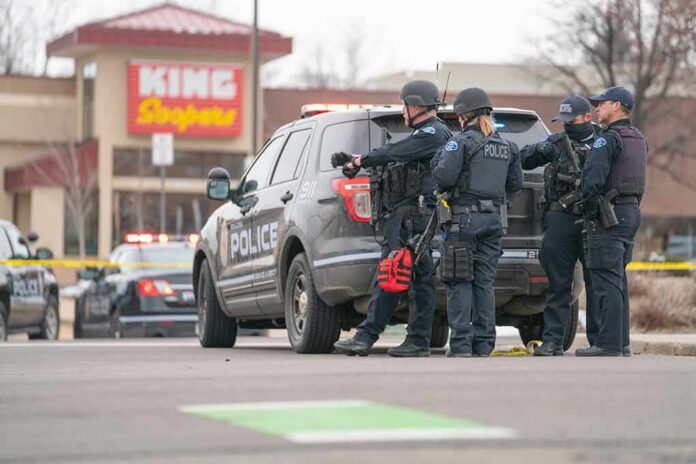
An armed parolee opened fire on a crowded city bus, killing a Lakewood police agent and wounding three others, officials said.
Story Snapshot
- Lakewood Police say Agent Nicholas Graham, 33, was killed; three agents and a bystander were injured.
- Officials identified the suspect as Gabriel Steven Garcia, who was on mandatory parole at the time.
- Regional Transportation District confirmed the shooting happened on a contractor-operated Route 76 bus.
- Officers say the suspect fired first after boarding; they returned fire and killed him.
What Police Say Happened On The Bus
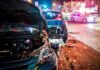
Lakewood Police report that officers tracked a suspect tied to an earlier hit-and-run. Officials say the man boarded a Regional Transportation District Route 76 bus, and officers followed him onto the vehicle. Police state the suspect opened fire on the agents at close range. Officers returned fire and killed the gunman. The exchange left one Lakewood agent dead, three agents wounded, and a bystander injured, according to the department and local reporting.
The Regional Transportation District confirmed the scene was an RTD-contracted bus. The agency said officers first encountered the suspect away from the bus, then the suspect boarded, and officers followed him on board. After investigators processed the scene, authorities towed the bus as evidence in the early morning hours. That detail supports that the gunfire took place inside the vehicle, not on the street or sidewalk nearby.
The Fallen Officer And Survivors
Lakewood authorities identified the fallen agent as Nicholas Graham, age 33. Officials said Graham served with the department for seven years. Local coverage described a strong community response, including memorials, flowers, and a procession in his honor. Hospital officials released the three wounded Lakewood agents and the injured civilian in the days after the shooting, according to reporting that cited police updates on their conditions.
The outpouring of support came as residents and fellow officers mourned the loss and honored Graham’s service. Public statements from law enforcement leaders emphasized the risks of police work and the toll on families. Coverage highlighted tributes and calls for continued support for those hurt and for Graham’s loved ones. These events often shape early public understanding before the full investigative record is released by authorities.
Suspect Identity And Parole Status
Officials identified the suspect as Gabriel Steven Garcia. Reporters who reviewed state corrections records said Garcia had a lengthy criminal history. The Colorado Department of Corrections confirmed that Garcia was released to mandatory parole supervision in late September and was under parole supervision at the time of the shooting. News accounts also reported that Garcia had recently absconded from parole, based on state and local sources.
Community Invited to Honor Fallen Lakewood Police Agent Nicholas Graham as Funeral and Procession Details Are Announced
LAKEWOOD, COLORADO | November 9, 2026
The Lakewood community is preparing to say goodbye to Police Agent Nicholas Graham, the 33-year-old officer killed in…
— D.M.G. (@DWildcard303007) November 10, 2026
These facts raise familiar concerns about public safety and system gaps. Conservatives see a failure to detain a repeat offender who then harmed officers. Liberals see strains in parole oversight and community services that can allow dangerous behavior to escalate. Both sides see institutions that struggle to coordinate in real time. When a contractor-operated transit system, city police, and state parole each hold part of the picture, accountability can move slowly and leave riders and officers at risk.
Why This Matters Beyond Lakewood
Transit riders expect safe passage, not a gunfight on a route bus. Officers expect backup and clear information when a suspect moves into a crowded space. This case also fits a wider pattern in officer-involved shootings, where police give the first public account while outside investigators assemble video, ballistics, and witness statements. That long process often decides whether actions were lawful and justified, and it helps the public sort emotion from evidence.
What To Watch Next
Investigators will work to confirm who fired first and which rounds caused each injury. Key records may include bus camera video, officer body-camera footage, radio traffic, and dispatch logs. Forensic work will likely cover shell casings, trajectory paths, and medical reports. Prosecutors will later review the full file and issue findings. Those steps matter for transparency and for lessons on parole supervision, interagency response, and transit safety going forward.
Sources:
washingtontimes.com, dailypress.com, coloradopolitics.com, 9news.com, rtd-denver.com, denver7.com, denverite.com
© conservativesense.com 2026. All rights reserved.