
When a passenger leaves a moving vehicle on a high‑speed urban expressway, physics and traffic patterns leave almost no margin for survival — and when an allegedly intoxicated driver is the next link in the chain, criminal law, civil liability, and roadway design converge in a single, brutal outcome.
At a Glance
- Police say a passenger exited a moving Toyota RAV4 identified as an Uber on the Brooklyn-Queens Expressway and was fatally struck by a following vehicle.
- The sequence — egress into a 50‑mph multi‑lane stream, followed by impact — aligns with what we know about pedestrian risk on high‑speed, non‑intersection roadways.
- Alleged intoxication by the striking driver raises potential criminal charges independent of why the pedestrian was in the roadway.
- Civil responsibility can be contested across multiple actors, but rideshare firms typically defeat employee-based vicarious liability claims in New York courts.
What police say happened on the BQE
According to police and law‑enforcement sources, Chasna Thelemaque exited the rear door of a moving Toyota RAV4 — identified by sources as an Uber — on the westbound Brooklyn‑Queens Expressway near Exit 28 in DUMBO, just before 2:30 a.m. She landed in the right travel lane and was struck by a Hyundai Elantra; the Elantra’s driver was taken into custody on suspicion of driving while intoxicated. The description provided by authorities is specific on location, timing, and vehicle types, and it captures a sequence that traffic safety professionals recognize as exceptionally unforgiving: sudden pedestrian exposure within a live, high‑speed lane is rarely survivable.
Two truths sit side by side in that narrative. First, a person unexpectedly appears in the roadway at night, in a lane where drivers do not anticipate pedestrians. Second, a following motorist may be impaired, which both increases crash likelihood and, under New York law, can elevate the criminal consequences if impairment is proven beyond a reasonable doubt. Those threads are analytically distinct: the presence of a pedestrian where none should be complicates avoidance even for a sober driver; impairment, if substantiated, remains its own offense and a potential proximate cause of the fatality.
Why the risk is extreme on limited-access roads
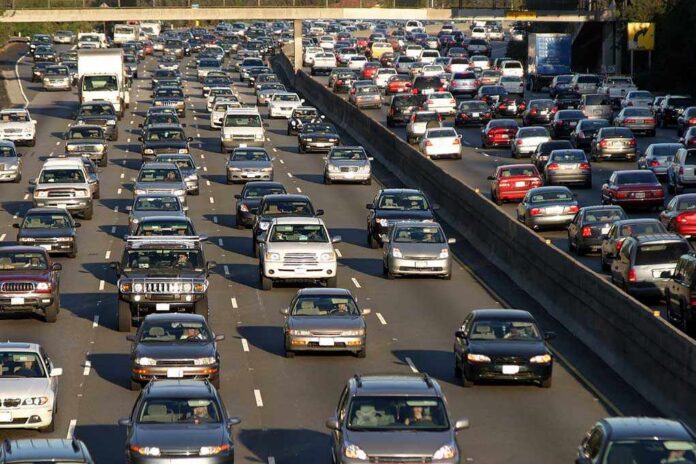
Pedestrian fatality risk is driven by speed, conflict geometry, and expectation. Limited‑access facilities like the BQE bundle all three in the wrong direction. National Highway Traffic Safety Administration data show that the vast majority of pedestrian deaths occur away from intersections — locations where drivers are traveling faster, looking farther ahead, and are not primed to yield to people on foot. In 2021, 73% of pedestrian fatalities happened at non‑intersection locations, a pattern consistent across years and jurisdictions.
That matters here because exiting into a 50‑mph lane collapses the reaction envelope. A driver traveling at 50 mph covers roughly 73 feet per second; even an alert, unimpaired motorist needs perception‑reaction time before braking begins. Add darkness, lane curvature, or traffic in adjacent lanes and the maneuvering space vanishes. NHTSA’s broader pedestrian compendium underscores how rare and perilous “entering/exiting vehicle” exposures are even for parked or stopped vehicles; when the vehicle is moving and the person appears fully within a live lane, the risk spikes beyond what general tables capture.
Criminal exposure for the striking driver if intoxication is proven
New York’s vehicular manslaughter and aggravated vehicular homicide statutes hinge on impairment, recklessness, and causation. Courts have sustained serious charges where intoxication and dangerous driving produce pedestrian deaths, even amid messy factual contexts about where the pedestrian came from or whether the scene was well lit. The causal analysis is not academic: prosecutors must connect the driver’s impairment to the inability to avoid the collision. Defense counsel, by contrast, will focus on sudden emergency doctrine — the idea that an unexpected pedestrian in a high‑speed lane left no reasonable opportunity to evade, regardless of sobriety. How those arguments fare turns on toxicology, speed, lighting, dash‑cam or roadway camera footage, and forensic reconstruction of sight distance and braking.
One brief caveat belongs here. Early case characterizations can tighten or shift as lab results, reconstruction reports, and witness interviews accumulate; charging decisions typically track that evidentiary record over weeks or months, not hours. The baseline remains: if impairment is established and causally linked, criminal liability can be severe; if the emergent hazard negated reasonable avoidance, criminal exposure narrows even if separate DWI counts stand.
Rideshare status and civil liability: who pays, and on what theory
When tragedies involve multiple actors — the passenger’s own actions, a rideshare vehicle in motion, and a following driver — civil liability frequently fragments. Plaintiffs explore negligence and vicarious liability theories across every pocket with potential responsibility. In New York, however, Uber and similar platforms have repeatedly defeated claims that their drivers are employees for purposes of respondeat superior, a threshold that often controls whether the platform itself bears direct vicarious exposure for a driver’s negligence during a trip.
That does not end the inquiry. A plaintiff may still pursue the individual drivers and their insurers, and, in some circumstances, argue negligent training, supervision, or app design if a platform‑level duty can be articulated and causally tied to the harm — a far steeper climb than classic employer liability. Separate suits sometimes allocate fault among multiple defendants where a pedestrian’s presence in a lane and another driver’s conduct together produce the fatality; New York’s comparative negligence framework then apportions damages accordingly. Appellate decisions in taxi and for‑hire contexts show how fact‑specific these allocations are and how often summary judgment on liability is elusive when multiple actors’ choices commingle to cause injury.
What the crash pattern teaches about prevention
Prevention on limited‑access roads is brutally practical. For passengers: do not open doors or exit a vehicle unless it is fully stopped out of the travel lanes — preferably on an off‑ramp shoulder or at a safe pull‑off. For drivers, rideshare or otherwise: if a passenger becomes agitated or requests to exit, reduce speed, signal, and reach a genuine place of refuge; a few hundred yards to the next exit can be the difference between inconvenience and catastrophe. For agencies, design and operations matter: continuous shoulders, well‑marked pull‑off zones, and ramp meter placements that discourage shoulder encroachment reduce conflict points where people and 50‑mph traffic intersect.
The larger data landscape underscores that pedestrians are consistently vulnerable in fast, non‑intersection environments; 7,080 pedestrians were killed nationwide in 2024, a burden concentrated on arterials and freeways where speeds and lane counts magnify exposure. Individual cases, like the BQE fatality described by police, are not a “new category” of rideshare danger so much as an extreme version of a known risk: sudden pedestrian presence in high‑speed lanes is unforgiving regardless of how that presence occurs.
The bottom line
The police account describes a chain that traffic safety, criminal law, and tort law all recognize: a person in a live, high‑speed lane is nearly impossible to protect once exposure begins; alleged intoxication by a following motorist, if proven and causally linked, invites severe criminal charges; and civil liability will likely be disputed across multiple actors, with New York doctrine making it difficult to pin vicarious responsibility on rideshare platforms. None of that brings back a life lost in seconds. But it does point to the only durable intervention available on limited‑access roads: prevent the exposure in the first place.
Sources:
nypost.com, crashstats.nhtsa.dot.gov, nycourts.gov, nhtsa.gov
© conservativesense.com 2026. All rights reserved.