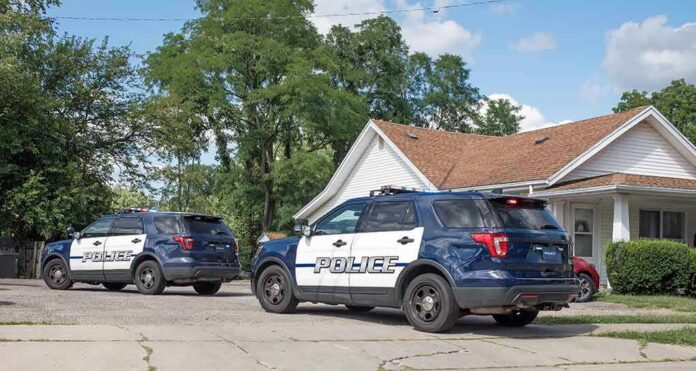
Deputies arrested a Florida mother after finding four children, ages 9 to 14, home overnight without an adult during her five-day work trip to Las Vegas, following a 911 call about a head injury to the youngest child.
Story Snapshot
- Deputies say the children were alone overnight for several days while their mother worked in Las Vegas.
- A 911 call reported a dumbbell hit the 9-year-old’s head; responders found no adult at the home.
- Florida neglect law focuses on unsafe supervision, not a fixed “home alone” age.
- The mother faces four child neglect counts without great bodily harm, according to reports.
What Deputies Reported Happened
Osceola County deputies responded to a 911 call just after 8:30 p.m. on October 21 about a dumbbell injury to a 9-year-old. Deputies say they found four siblings, ages 14, 12, 11, and 9, at home without an adult present. Reports state their mother, Irene Miller, was away on a five-day work trip to Las Vegas. Deputies later arrested her at Orlando International Airport and booked her on four counts of child neglect without great bodily harm, according to media reports citing officials.
Investigators say Miller told them a babysitter checked on the children during the day, but no adult stayed overnight. A sheriff’s office account described a gap in adult supervision from about late afternoon until morning hours across multiple days. The older sibling reportedly called 911 after the dumbbell incident with the 9-year-old. Officials have not released medical records, but outlets report the charges specify “without great bodily harm,” indicating prosecutors did not allege severe injury based on available information.
What Florida Law Says About Supervision And Neglect
Florida law does not set a single age when a child can be left alone. Instead, the law looks at whether a caregiver provided needed care and safe supervision. State statutes define neglect as a willful failure or omission to provide supervision or services needed for a child’s physical or mental health. The test focuses on danger and the child’s ability to handle a crisis, not just age or a clock time. That is why overnight gaps can weigh heavily in a case.
Florida’s child welfare framework also directs officials to assess whether a child faced obvious danger or lacked the ability to meet basic needs without help. Those standards leave room for case-by-case judgment by deputies, prosecutors, and courts. The same setup that seems acceptable to one person may look unsafe to another. That flexibility can feel confusing to parents who must balance work demands and childcare limits, especially during off-hours or travel.
Why This Case Is Stirring Public Frustration
Working parents on tight budgets often struggle to cover late nights and travel. Many say the system punishes them for trying to keep a job. Others argue that basic guardrails are needed, especially overnight. This arrest lands in the middle of that tension. Deputies point to a real safety event—a head injury—while the mother’s account highlights daytime check-ins but no overnight sitter. Both facts drive strong reactions across the political spectrum.
Police were waiting at the aircraft door when a Florida mother returned from Las Vegas. Her four children had been home without overnight adult supervision.
The woman had reportedly flown to Nevada on October 18, leaving her children, aged 9, 11, 12 and 14, at their Osceola… pic.twitter.com/0PzzoxmY5v
— Flightdrama (@flightdrama) October 29, 2026
Conservatives and liberals alike worry that government systems miss the big problems yet show up fast to make an example of one family. People see high costs, long shifts, and thin childcare options, then see charges when a plan fails. At the same time, many parents expect law enforcement to step in when kids are alone and get hurt. This case shows how one 911 call can trigger criminal scrutiny where rules are broad and judgment calls carry real stakes.
What Comes Next Legally
Prosecutors will decide whether to file formal charges under Florida Statutes section 827.03, which governs child neglect. They will weigh the length of time the children were alone overnight, the 911 call, the reported injury, and the mother’s plan for daytime check-ins. Courts often consider access to food, phones, emergency contacts, and a clear safety plan. The outcome could range from diversion or services to more serious penalties, depending on the full case record.
Sources:
abcnews.com, flhouse.gov, flsenate.gov, abc7.com, leg.state.fl.us
© conservativesense.com 2026. All rights reserved.