

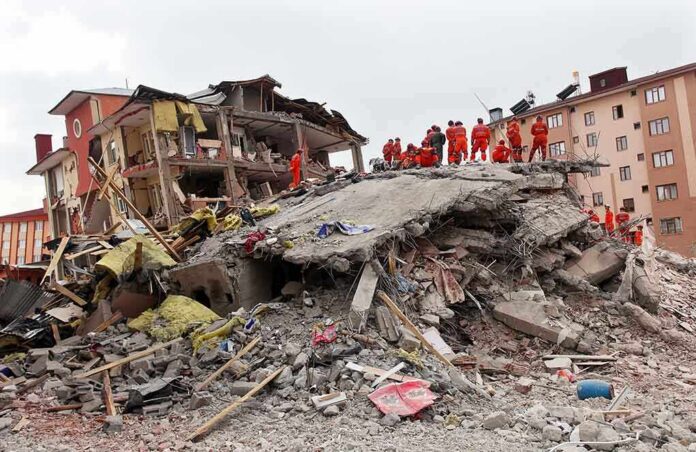
Venezuela’s fast-climbing death toll after twin earthquakes signals a far higher final count than officials have confirmed so far.
Story Highlights
- Officials reported sharp jumps in confirmed deaths while warning numbers will rise.
- Thousands remain missing as search teams uncover wider destruction.
- United States and allied rescue teams on the ground validate the scale of loss.
- U.S. Geological Survey modeling points to a much larger potential toll.
Official Counts Climb While Leaders Admit Numbers Are Not Final
Acting President Delcy Rodríguez posted a series of rising death counts in the days after the quakes, moving from 164 confirmed deaths and hundreds injured to more than 900, and later over 1,400, with thousands hurt. Her updates also said the toll would keep rising and noted large numbers of missing people. These figures show active verification but also major gaps. The speed of each jump reflects ongoing recovery, delayed access, and identification backlogs rather than a settled final number.
Officials face communication outages and damaged roads that slow data from hard-hit areas. The result is a picture that changes by the hour. The numbers are “confirmed so far,” not the full loss. That matters for aid flows, morgue capacity, and family notifications. It also explains why the government has not issued a complete forensic ledger yet. Without a unified, public list of names and timestamps, the count will continue to lag visible destruction.
Missing Persons And Rescue Logs Point To A Wider Tragedy
Independent lists of missing people surged into the thousands within days, far beyond early confirmed deaths. Media reports describe tens of thousands unaccounted for, a gap that signals far more bodies may be found as debris is cleared and access improves. Rescue teams reported dramatic saves, including infants and young children, showing that careful searches are still yielding survivors and confirming the dead. These actions prove the process works, but they also reveal how much remains unfinished.
Local reporting cited outages and a lack of centralized coordination in some zones, including Lara state, which likely delays accurate tallies. That is common in major disasters when power, cellular service, and local records offices fail. In these conditions, confirmed counts trail reality. Hospitals and morgues also get overwhelmed. The best way to close the gap is to merge hospital intakes, morgue logs, and field recovery notes into one audited list, which has not yet been published.
International Teams Corroborate Scale; U.S. Modeling Warns Of More To Come
International rescue teams from the United States, Mexico, France, Spain, Canada, El Salvador, and Chile joined Venezuelan crews, confirming severe coastal damage and ongoing body recovery. Their presence validates the scope reported by officials and the need for more gear, body bags, and heavy equipment. Coverage from late June detailed their deployments and the expectation that the toll will rise as access expands and building-by-building searches advance.
The United States Geological Survey produced early-impact modeling that placed a substantial chance of a death toll well into the five figures. While models are not body counts, they help planners size the response and predict needs for shelter, medicine, and identification capacity. Media summaries cited those projections to explain why early official numbers likely understate the final reality on the ground. That framing aligns with what rescuers are now seeing as they reach new areas.
Why The Final Number Will Be Higher, And What Comes Next
Disasters often show a split between confirmed bodies and likely deaths. After past quakes and storms, final tolls rose for weeks as records were matched and debris cleared. Scholars who study disaster mortality warn that quick official numbers almost always miss indirect deaths and people trapped in cut-off areas. They argue that transparent, verifiable body counts from mortuaries and vital records are the soundest path to accuracy when issued with methods and time stamps.
VENEZUELA EARTHQUAKES: The death toll has risen to 1,943, with 10,571 people injured and an estimated 40,000 to 50,000 still missing. A total of 15,866 people have been affected, while satellite analysis suggests roughly 58,870 buildings were damaged or destroyed.
— Gabriel freytez (@Gabrielfreytez1) July 1, 2026
For readers at home, the lesson is clear. Demand clear methods, full transparency, and fast audits, not politics or inflated claims. The United States can help by pushing for a joint ledger that merges morgue logs, hospital intakes, and missing-person reports under one standard. International partners on the ground are already feeding that pipeline. As access improves, confirmed deaths will rise, and a careful audit can honor the lost while preventing spin from any side.
Sources:
youtube.com, democracynow.org, abc7news.com, preventionweb.net
© conservativesense.com 2026. All rights reserved.