

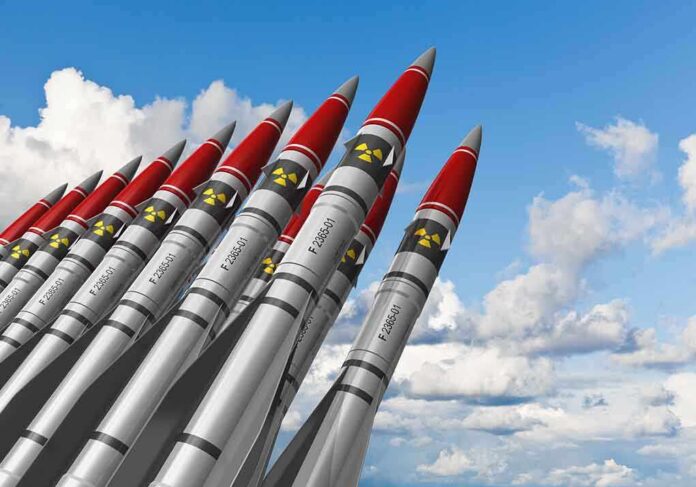
A potential Tomahawk missile deal between the U.S. and Ukraine stirs tensions, raising concerns about global security.
Story Highlights
- Zelensky meets Trump in Washington amid Tomahawk missile discussions.
- Ukraine seeks advanced U.S. weapons to bolster defense against Russia.
- Russia warns against missile delivery, citing escalation risks.
- Trump’s decision could significantly impact U.S.-Russia relations.
Zelensky’s Crucial Visit to Washington
President Volodymyr Zelensky’s visit to Washington on October 14, 2025, marks a pivotal moment in Ukraine’s diplomatic efforts to secure advanced weaponry. The meeting with President Donald Trump highlights Ukraine’s urgent need for Tomahawk cruise missiles to enhance its long-range strike capabilities against Russian forces. With the ongoing conflict, this request represents a strategic move to shift the balance of power in Ukraine’s favor.
Ukraine’s pursuit of Tomahawk missiles aligns with its pattern of requesting more advanced weapons from Western allies throughout the war. This progression has seen Ukraine acquire HIMARS rocket systems, Patriot air defense systems, and F-16 fighter jets. Each step has faced initial resistance due to escalation concerns, eventually giving way to provision as conflict dynamics evolved.
Russia’s Reaction and Escalation Warnings
Russia has issued stern warnings against the potential transfer of Tomahawk missiles to Ukraine, citing significant escalation risks. The Russian leadership perceives the delivery of advanced Western weapons as a direct threat to its national security and territorial integrity. Moscow’s preemptive diplomatic pressure aims to dissuade the United States from approving the missile transfer, highlighting the geopolitical tensions underpinning the conflict.
The provision of Tomahawk missiles would fundamentally alter the military dynamics in the region. These sophisticated weapons allow precision strikes deep within Russian-controlled territories, targeting critical military infrastructure. However, this enhancement in Ukraine’s military capabilities could provoke aggressive responses from Russia, raising the specter of a broader confrontation.
Implications for U.S. Foreign Policy
President Trump’s decision on the Tomahawk missile provision will significantly impact U.S.-Russia relations and signal America’s commitment to Ukraine’s defense. Approval would underscore the U.S. dedication to supporting Ukraine’s military capabilities against Russian aggression, while rejection might suggest a shift towards accommodating Russian concerns or pursuing a negotiated settlement.
European allies are closely monitoring the outcome, as it could influence their military support decisions and risk assessments. The decision could either fortify trans-Atlantic unity in support of Ukraine or create tensions if European partners disagree with the U.S. approach. Trump’s choice will set a precedent for future arms transfers and shape the strategic balance in the ongoing conflict.