Thirty-five freight cars careened off a Union Pacific bridge near Gordon, Texas, raising new alarms about America’s rail safety just as communities demand accountability for infrastructure risks.
Story Snapshot
- Thirty-five Union Pacific train cars derailed near Gordon, Texas; no injuries reported and no hazardous leaks detected.
- Incident treated as a hazardous materials situation, reigniting scrutiny over rail safety and government oversight.
- Emergency response was swift, containing a grass fire and securing the site without evacuations.
- The cause remains under investigation, echoing nationwide concerns about the transport of dangerous materials through rural communities.
Large-Scale Derailment Rocks Rural Texas, Highlights Critical Infrastructure Risks
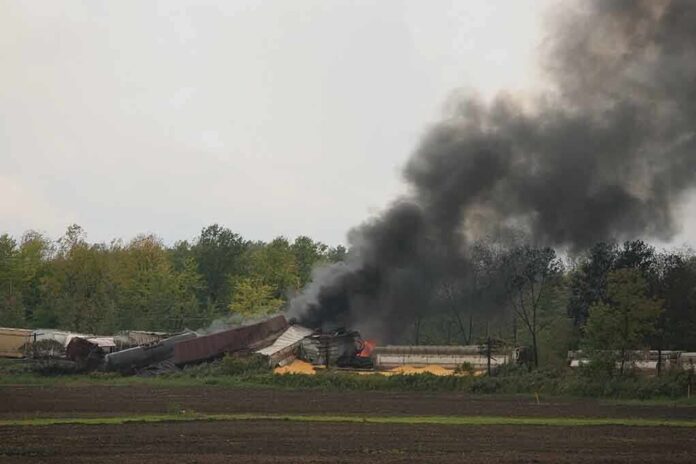
On August 12, 2025, approximately 35 cars of a Union Pacific freight train derailed on a bridge just east of Gordon, Texas, a small town in Palo Pinto County. The incident occurred around 2 p.m., with cars piling up and igniting a grass fire adjacent to the tracks. Emergency crews responded rapidly, and the fire was swiftly contained. Thankfully, no injuries were reported among crew or residents, and local officials confirmed no hazardous material leaks or need for evacuations at the time.
Union Pacific, as one of the country’s largest freight rail operators, shoulders responsibility for both the investigation and remediation of this significant accident. The derailment’s proximity to a rural community and vital infrastructure underscores ongoing vulnerabilities in the nation’s supply chain—especially when hazardous cargo is involved. With the site secured and no immediate environmental contamination detected, officials have treated the event as a hazardous materials situation out of caution, reflecting a growing trend of applying stricter protocols in response to high-profile rail incidents nationwide.
Emergency Response and Safety Protocols Under the Microscope
First responders from Palo Pinto County and Union Pacific’s own emergency teams enacted hazardous materials (HazMat) protocols, even though no leaks were confirmed. Their actions highlight increased vigilance following national incidents involving hazardous cargo derailing in rural and small-town America. The rapid containment of the grass fire and absence of injuries are positive outcomes, but local residents and businesses endured temporary disruption as rail traffic halted and emergency resources concentrated at the scene. The incident demonstrates both the strengths and the limitations of current emergency response frameworks for critical infrastructure failures.
Federal and local authorities are now coordinating an in-depth investigation to determine the cause of the derailment. Early reports confirm that all protocols were followed, but the sheer scale—35 cars off the tracks—raises pressing questions about ongoing rail maintenance, track monitoring, and the standards applied to hazardous materials transport. These issues are not new: in the wake of the 2023 East Palestine, Ohio derailment, calls for regulatory reform and oversight intensified, but tangible improvements have lagged. Many communities feel that government agencies and corporations are not doing enough to prevent such disasters or to safeguard rural residents from the consequences of infrastructure failure.
Broader Implications: Rail Safety, Local Accountability, and National Debate
This Texas derailment amplifies a pattern of accidents that have rattled public confidence in freight rail safety. While no hazardous material was reported to have leaked, the potential for catastrophe remains at the forefront of American concerns—especially in light of recent regulatory rollbacks and persistent debates over government oversight versus corporate responsibility. Residents of Gordon and similar towns face unique risks when dangerous cargo is routed through their communities, often without sufficient transparency or local input.
Nationally, these events prompt policymakers and industry leaders to reconsider existing safety standards and infrastructure investment. The incident also shines a spotlight on the balance of power between private rail operators, federal agencies, and local governments. As cleanup and investigation continue, communities will be watching closely for real accountability and reforms that prioritize American safety and sovereignty over profit-driven shortcuts or bureaucratic complacency.
Community Response and the Demand for Transparency
The absence of injuries and immediate containment of hazards brought relief to Gordon’s residents, but concerns linger about the transport of dangerous materials through rural areas with limited emergency resources. Community leaders and property owners are demanding more transparency from both rail companies and government regulators. Many see this as a test of local, state, and federal commitment to protecting American families and upholding the constitutional right to safety and property. As the investigation into the cause of the derailment unfolds, the pressure is on for meaningful improvements to prevent future disasters and to ensure that rural voices are not ignored in the debate over national infrastructure policy.
35 Union Pacific train cars derail near Texas town, no injuries reported https://t.co/aSG7uGhqoH
— Troy Record (@troyrecord) August 13, 2025
While the incident in Gordon did not result in tragedy, it serves as a stark warning that complacency in oversight or maintenance can have serious consequences. The public will demand answers, and as the Trump administration continues to emphasize the importance of American infrastructure, this derailment may prove to be a catalyst for overdue reforms in rail safety and emergency preparedness—priorities that align with the core conservative values of accountability, limited government overreach, and protection of American communities.
Sources:
Fox News: Smoke pours from train derailment in Palo Pinto County, Texas
ABC News: Train carrying possible hazardous materials derails in Palo Pinto County, Texas