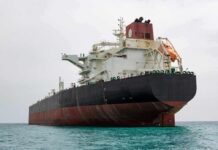
The U.S. Navy has now disabled four Iranian-flagged vessels attempting to break a maritime blockade — and Iran is firing back, raising the specter of open conflict in one of the world’s most critical shipping lanes.
Story Highlights
- U.S. Central Command disabled three Iranian-flagged tankers in early May 2026 after crews ignored repeated warnings to turn back from Iranian ports.
- Navy F/A-18 Super Hornets fired precision munitions into vessel smokestacks and a 20mm cannon into a tanker’s rudder to disable ships without sinking them.
- More than 50 commercial vessels have been redirected and multiple ships disabled since the blockade began, according to U.S. Central Command.
- Iran has responded with missile and drone attacks on U.S. Navy ships near the Strait of Hormuz, and has seized at least one vessel in retaliation.
U.S. Forces Disable Three Tankers in Days
U.S. Central Command (CENTCOM) announced on May 8, 2026, that American forces disabled two Iranian-flagged oil tankers — the M/T Sea Star III and M/T Sevda — before they could enter an Iranian port on the Gulf of Oman in violation of the ongoing U.S. blockade. Navy F/A-18 Super Hornets fired precision munitions directly into the vessels’ smokestacks, disabling them without sinking either ship or causing reported casualties among the crews.
Two days earlier, on May 6, an F/A-18 Super Hornet launched from the USS Abraham Lincoln disabled the Iranian-flagged tanker M/T Hasna by firing several rounds from a 20mm cannon into its rudder after the crew failed to comply with warnings. CENTCOM described the Hasna as an unladen oil tanker attempting to reach an Iranian port in the Gulf of Oman. The targeted rudder strike left the vessel adrift but intact, consistent with a deliberate policy of disabling rather than destroying non-compliant ships.
Earlier Seizure Set the Pattern
The April and May disabling actions follow a precedent set on April 19, when the USS Spruance, a guided-missile destroyer, disabled the cargo vessel M/V Touska after its crew refused to comply with warnings over a six-hour period. The Spruance fired several rounds from its 5-inch MK 45 gun into the Touska’s engine room, destroying its propulsion. CENTCOM stated the crew was directed to evacuate the engine room before the shots were fired, and the vessel was subsequently taken into U.S. custody.
CENTCOM confirmed that more than 50 commercial vessels have been redirected and multiple ships disabled since the blockade took effect. The blockade, announced by U.S. Central Command, applies to all vessels entering or departing Iranian ports and coastal areas, regardless of national flag. The enforcement posture is designed to apply maximum economic pressure on Iran while avoiding direct casualties — a calibrated use of naval force that reflects a deliberate escalation ladder.
Iran Pushes Back — and Tensions Spike
Iran has not accepted the blockade quietly. Iranian state media and reports from the region indicate that Iranian forces have fired missiles at U.S. ships near the Strait of Hormuz and seized at least one vessel in what Tehran frames as retaliatory self-defense. Iranian President Masud Pezeshkian has publicly demanded the U.S. lift the blockade before any diplomatic progress can occur, positioning the enforcement actions as an obstacle to ceasefire stability rather than a legitimate military measure.
🇺🇸US and Iran exchange fire in Strait of Hormuz , but Trump insists ceasefire holds. 🇺🇸🇮🇷
Oil prices spiked as forces clashed, with the US intercepting attacks on Navy ships and Iran calling it “reckless.” Yet diplomatic talks continue behind the scenes.
Mainstream downplays the… pic.twitter.com/CbGoUUJFMP— MG Reports (@martinOlsen94M) May 8, 2026
The broader situation remains volatile. Saudi Arabia has reportedly barred U.S. use of its airspace for enforcement operations, signaling unease among Gulf partners. Commercial shipping through the Strait of Hormuz — a chokepoint through which roughly 20 percent of global oil supply passes — has ground to a near halt. No commercial ships reportedly transited the strait in the days following the latest disabling actions. Oil prices have spiked in response, a direct consequence of the standoff that American consumers will feel at the pump. Iran’s strategy appears to be one of attrition: keep challenging the blockade, absorb the losses, and frame every U.S. action as aggression in hopes of fracturing international support for the enforcement mission.
Sources:
[1] U.S. Disables 2 More Vessels Violating Blockade in Gulf of Oman
[2]
[3] U.S. Forces Disable Vessel Attempting to Enter Iranian Port, Violate …
[4]
[5] US military disables 2 Iranian-flagged tankers trying to … – Fox News
[6]
[7]
[8]
[9] U.S. Naval Blockade of Iran Signals Shift to Maritime Pressure
[10] U.S. to Blockade Ships Entering or Exiting Iranian Ports – centcom
[11] US says it seized Iranian ship refusing to comply with blockade
[12]