
A deadly campus shooting at elite Brown University is exposing how years of feel‑good security talk and failed policies still leave American students defenseless while the killer walks free.
Story Snapshot
- Two are dead and nine injured after a mass shooting inside Brown University’s Barus & Holley building during finals week.
- Confused campus alerts, an unlocked lecture hall, and a multi‑state manhunt raise hard questions about basic security competence.
- The case highlights how gun debates, federal overreach, and campus ideology often overshadow practical protections for students.
A Deadly Attack in an Unlocked Ivy League Classroom
On the afternoon of December 13, 2025, a gunman walked into Room 166 of Brown University’s Barus & Holley engineering and physics building during an introductory economics review session and opened fire. Two people were killed and nine wounded as students prepared for final exams in a lecture hall that seats nearly two hundred. Most of the victims were Brown students, and all of the injured were rushed to Rhode Island Hospital for treatment after the chaos subsided.
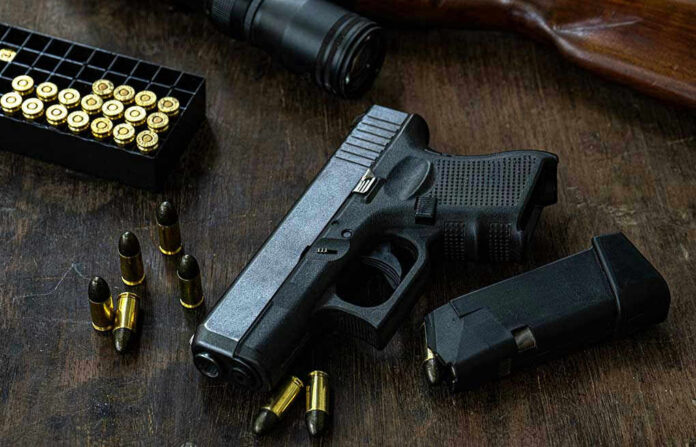
The shooting struck on the second day of Brown’s final examination week, when campus buildings were busy and Barus & Holley remained unlocked for academic use. A teaching assistant was leading the review on behalf of economics teaching professor Rachel Friedberg when the attack began. Officials believe a handgun was used. The killer exploited an open academic building and a predictable, high‑occupancy event, raising concerns about how many universities still treat security as secondary to convenience.
Confused Alerts, Campus Lockdown, and a Community in Shock
Roughly seventeen minutes after shots were fired, Brown’s Department of Public Safety sent a campus alert warning of an active shooter near Barus & Holley and ordering students and staff to shelter in place. In the tense minutes that followed, an internal alert incorrectly stated that a suspect was in custody before being corrected about twenty minutes later. That mistake, during a life‑and‑death emergency, understandably rattled trust in the university’s emergency communications.
Later that afternoon, Brown issued another alert about reported gunfire near Governor Street, only to retract it as unfounded less than an hour later. While police and federal agents swept campus buildings and nearby streets, students huddled in classrooms, dorms, and basements following active‑shooter protocols drilled into them for years. Brown’s president, Christina Paxson, later confirmed two deaths and at least eight more injuries in a letter to parents, calling it a tragic day and urging families to use counseling and support services.
Manhunt, Wisconsin Lead, and an Unsolved Case
As night fell on Providence, the manhunt intensified. Investigators asked residents near campus to turn over doorbell and home‑surveillance footage and released video of a man in dark clothing walking along Hope Street as a person of interest. Federal partners, including the FBI, joined Providence police and Rhode Island State Police, launching a highly visible, interstate investigation that quickly stretched from New England to the Midwest.
Within days, agents and local officers executed a search at a residence in Cedarburg, Wisconsin, detaining a twenty‑four‑year‑old man publicly described as a person of interest. After questioning, he was released without charges, and outlets that had named him began stepping back, noting he was not an accused shooter. Law enforcement still has not publicly identified or charged the gunman, leaving families of the dead and wounded, and the broader community, waiting for answers while a dangerous criminal remains at large.
Families, Faith, and the Human Cost Behind the Headlines
Behind the statistics are two young lives cut short and families suddenly thrown into grief. One of the deceased, Brown student Ella Cook from Birmingham, Alabama, was a parishioner at the Cathedral Church of the Advent. The other, Mukhammad Aziz Umurzokov, was a recent graduate of Midlothian High School. At least eight of the victims were Brown students, all thrust from exam preparation into trauma care at Rhode Island’s main hospital as doctors worked to stabilize multiple critical patients.
Parents across the country watched news from Providence and saw their own children in those classrooms and hallways. For many, the shooting confirmed a fear that expensive tuitions, constant diversity initiatives, and layers of bureaucracy have not delivered the most basic promise: that their sons and daughters can attend class without being gunned down. The emotional, spiritual, and financial toll on these families will last for years, long after cameras leave campus and officials move on to the next press conference.
Security Failures, Policy Debates, and What Comes Next
Brown’s leadership now faces hard questions. An unlocked engineering building during a large, scheduled review session allowed a gunman to step straight into a crowded room. Confused emergency alerts briefly misled the community about a suspect in custody and reported phantom gunfire blocks away. Administrators will almost certainly review building access controls, card‑entry rules, and emergency notification protocols, but those reviews arrive only after lives were lost in an avoidable soft target environment.
BREAKING UPDATE: Mass shooting at Brown University, at least 2 deadhttps://t.co/UorM8Ie4Ss
— The Post Millennial (@TPostMillennial) December 13, 2025