
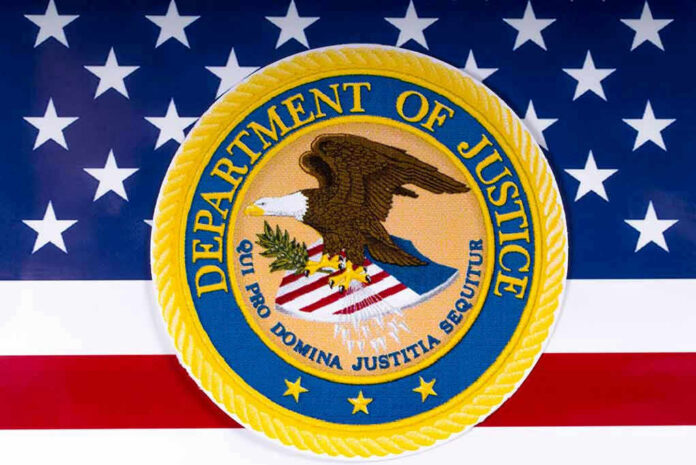
The DOJ’s sudden decision to close its criminal probe of Federal Reserve Chair Jerome Powell is reopening a raw question for both parties: who really controls America’s most powerful institutions?
Quick Take
- DOJ prosecutor Jeanine Pirro closed the criminal investigation into Fed Chair Jerome Powell on April 24, 2026, shifting the matter to the Federal Reserve’s Inspector General.
- The probe centered on whether Powell misled senators about cost overruns tied to a roughly $2.5 billion Federal Reserve headquarters renovation.
- A federal judge previously quashed key subpoenas and said prosecutors lacked evidence of a crime, blunting the investigation’s momentum.
- Ending the probe removes a major obstacle to confirming President Trump’s Fed chair nominee, Kevin Warsh, before Powell’s term ends May 15.
DOJ closes the case, but keeps the door cracked open
U.S. Attorney for Washington, D.C., Jeanine Pirro announced on April 24 that the Justice Department is closing its criminal investigation into Federal Reserve Chair Jerome Powell. Instead of pushing forward with grand jury demands, Pirro referred the matter to the Federal Reserve’s Inspector General for review of renovation spending and disclosures. Reports indicated Pirro reserved the option to reopen the criminal probe depending on what the inspector general finds.
The pivot matters because it signals a tactical retreat rather than a clean exoneration or a formal prosecution. For citizens already skeptical of Washington, that “closed but not over” posture lands in a familiar gray zone: accountability language without a courtroom test. Conservatives who want waste exposed and liberals who fear political targeting can both read the same move differently—yet both end up asking whether the system is protecting itself.
The renovation controversy and why it became a criminal probe
The underlying dispute traces back to the Federal Reserve’s long-running renovation of its Washington headquarters, a project widely reported at about $2.5 billion. The Fed’s inspector general audited the project in 2021, and Powell later requested a fresh review in 2025 as scrutiny intensified. The Justice Department’s criminal angle focused on Powell’s June 2025 testimony to the Senate Banking Committee, where investigators alleged he misrepresented the scale of cost overruns.
Criminal investigations tied to disputed testimony are serious, but they also demand a tight evidentiary chain—especially when the target is a sitting Fed chair. That is where this story turned politically combustible. Powell disclosed in January 2026 that grand jury subpoenas had been issued, and he portrayed the pressure as tied to President Trump’s public push for lower interest rates. Those claims became part of the broader argument about whether the Fed can operate independently.
A judge quashed subpoenas—and the legal footing appeared to weaken
The investigation hit a major barrier in March 2026 when U.S. District Judge James Boasberg quashed subpoenas connected to the probe. Coverage of the ruling emphasized the judge’s view that the subpoenas functioned as a pretext for political pressure rather than a narrowly tailored criminal inquiry. Reports also indicated prosecutors acknowledged they did not have evidence of a crime, and the Justice Department ultimately did not appeal the ruling.
That sequence helps explain why the case ended not with charges, but with a referral back to the Fed’s internal watchdog. From a limited-government perspective, the judge’s intervention underscores an important check: prosecutors should not be able to use criminal tools to strong-arm policy outcomes. From an anti-corruption perspective, the referral preserves a path to examine whether the renovation’s costs and communications were handled responsibly—without stretching criminal law past its proofs.
Warsh’s nomination and the Senate’s leverage in a high-stakes transition
The timing is inseparable from the leadership transition now facing the central bank. Powell’s term is scheduled to end May 15, and President Trump nominated Kevin Warsh as his successor after repeatedly criticizing Powell’s interest-rate posture. Senator Thom Tillis, a Republican on the Banking Committee, was among those pressing for the investigation to be resolved before the Senate moved forward—effectively using confirmation leverage to force clarity.
With the criminal probe closed, the path to a Senate vote on Warsh appears clearer, and the White House has indicated confidence in his confirmation. For markets, the practical question is whether leadership change brings faster rate cuts; for the public, the deeper issue is trust. When a probe into a top official ends amid judicial setbacks and political crossfire, it reinforces a bipartisan frustration: the public often sees institutions battling each other while everyday families keep absorbing high costs and policy whiplash.
BREAKING: DOJ Drops Criminal Investigation into Fed Chair Powell
READ: https://t.co/7YUI5ubfDD pic.twitter.com/JcvZ2rbELx
— The Gateway Pundit (@gatewaypundit) April 24, 2026
The inspector general review now becomes the cleanest lane for facts: what the renovation cost, what was communicated to lawmakers, and whether internal controls worked. Yet even that outcome may not satisfy Americans who believe “the deep state” and the political class rarely face consequences. The challenge for Republicans in unified government is to prove oversight can be tough but fair—focused on evidence, not vendettas—while Democrats decide whether to defend institutional independence consistently, even when the target is not an ally.
Sources:
https://abcnews.com/US/doj-expected-drop-criminal-probe-fed-chair-jerome/story?id=132344914
https://www.livenowfox.com/news/justice-deparment-drops-criminal-probe-jerome-powell
https://www.cbsnews.com/news/justice-department-drops-probe-into-fed-chair-jerome-powell/
https://www.axios.com/2026/04/24/fed-powell-trump-doj
https://www.politico.com/news/2026/03/13/court-blocks-dojs-probe-of-fed-chair-jerome-powell-00828448
https://en.wikipedia.org/wiki/Federal_investigation_into_Jerome_Powell
https://www.federalreserve.gov/newsevents/speech/powell20260111a.htm