

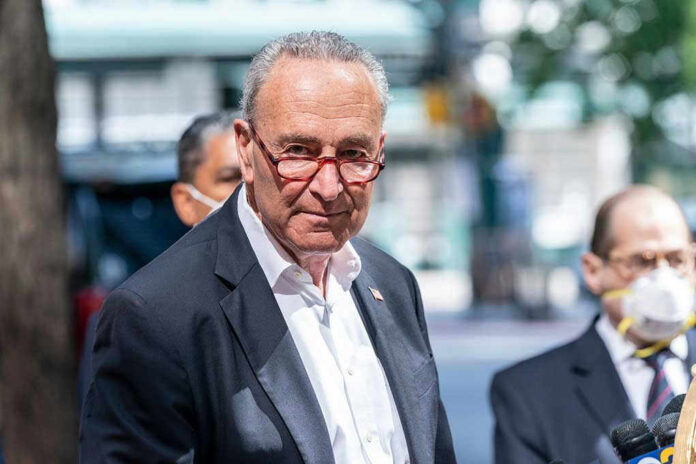
Amid mounting frustrations, Chuck Schumer becomes the Democrats’ unlikely punching bag, reflecting a turbulent shift within the party.
Story Snapshot
- Chuck Schumer faces criticism from progressive Democrats for perceived passivity.
- Rising intra-party tensions echo the Tea Party’s challenge to Republicans.
- Schumer’s leadership is under threat, with calls for primary challenges and protests.
- Democratic base dissatisfaction parallels historical party insurgencies.
Democratic Dissatisfaction Grows
In early 2025, the Democratic Party found itself in a state of turmoil, with Senate Minority Leader Chuck Schumer at the center of growing dissatisfaction. Following their loss in the presidential election, Democrats struggled against a coordinated Republican effort to reshape government, fueling frustrations among party activists and progressives. The perceived lack of strong opposition to Republican policies, including government spending bills and immigration legislation, intensified discontent.
As a result, Schumer postponed a planned book tour in March 2025, facing protests and demands for a primary challenge. The Democratic base, especially younger voters and grassroots organizers, expressed deep dissatisfaction with the party’s leadership. These events echoed the Tea Party movement’s impact on Republicans in the early 2010s, when the party establishment faced similar internal challenges.
The Role of Progressive Groups
Progressive organizations, particularly those allied with Bernie Sanders, have been at the forefront of the calls for change. *Our Revolution*, a key player in the progressive movement, has been instrumental in organizing public demonstrations and challenging incumbent leaders. These groups demand more aggressive tactics and leadership accountability, pushing for a shift in party strategy toward a more confrontational approach.
In response to this increased pressure, some Democratic leaders in states like Arizona and Georgia have already been ousted by activist-led campaigns. As grassroots groups gain influence, Schumer’s authority is increasingly challenged, with his leadership viewed as politically risky by some within the party. This dynamic underscores the growing power of progressive voices in shaping the party’s future direction.
Implications for the Democratic Party
The implications of this internal conflict are significant. In the short term, it disrupts party unity and leadership activities, increasing the likelihood of primary challenges against incumbents. In the long term, it could lead to a realignment of Democratic Party leadership and strategy. The risk of fragmentation and weakened opposition to Republican initiatives looms large, while the progressive wing sees an opportunity to gain greater influence.
As Democratic voters continue to express declining approval for congressional leadership, the party faces a critical juncture. The outcome of this internal strife will likely impact the broader political landscape, influencing future election strategies and potentially reshaping the party’s structure. The parallels to past insurgencies highlight the potential for significant transformation within the Democratic Party.
Sources:
Democratic Base’s Anger Puts Some Party Leaders on Shaky Ground