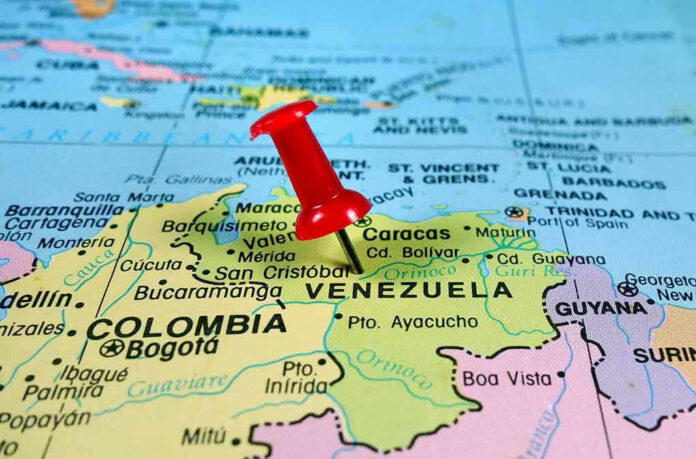
As debate flares over Venezuela, one senator is reminding President Trump that the biggest battlefield may be between the war powers of Congress and the reach of the modern presidency.
Story Snapshot
- Rand Paul says President Trump must get congressional approval before going to war with Venezuela.
- The Constitution clearly assigns Congress, not the president, the power to declare war.
- Decades of executive overreach have allowed presidents to stretch or bypass war authorizations.
- Conservatives face a key test: defend constitutional limits even when they support the president’s broader agenda.
Rand Paul’s Warning on War with Venezuela
During a segment on Fox News Channel’s “America Reports,” Senator Rand Paul of Kentucky stated that President Donald Trump would need to “come ask for permission from Congress” before going to war with Venezuela. His comment underscored a long-simmering tension in Washington over who truly controls the nation’s war-making power. Paul’s reminder did not attack Trump’s broader policies, but it spotlighted a constitutional boundary conservatives have warned about for years.
Paul’s remarks were aimed as much at the permanent foreign policy establishment as at the White House. For decades, unelected bureaucrats and interventionist advisers from both parties have pressed presidents toward regime-change adventures. Venezuela, with its failed socialist dictatorship and humanitarian crisis, is an easy emotional target for those who believe America should police the world. Paul’s intervention signaled that, even under a conservative administration, Congress cannot simply surrender its most serious responsibility.
Constitutional War Powers and Conservative Principles
The Constitution intentionally divides war powers, giving Congress the authority to declare war while recognizing the president as commander in chief to direct military operations once war is authorized. The Founders knew how dangerous it would be to let one person both decide on war and execute it. Conservatives who champion originalism and limited government have long argued that bypassing Congress on war undermines the very document they seek to protect, regardless of which party controls the White House.
Over the last several decades, both Republican and Democrat presidents have stretched old authorizations or claimed unilateral authority to launch military action without a clear, specific vote from Congress. That drift has fueled endless conflicts, ballooning defense and reconstruction spending, and a foreign policy often detached from concrete American interests. For many Trump supporters who are tired of globalist entanglements and open-ended wars, Paul’s insistence on congressional approval aligns with the promise to put America First, not the priorities of international elites.
Venezuela, Regime Change, and the America First Test
Venezuela’s crisis is real: socialist mismanagement has devastated its economy, empowered criminal networks, and driven millions to flee. That reality makes it tempting for interventionists to frame military action as a moral duty. Yet conservatives wary of regime change remember Iraq and Libya, where toppling dictators led to chaos, strengthened extremists, and cost American lives and trillions of dollars. Paul’s warning is a test of whether Washington has truly learned from those mistakes or remains addicted to intervention.
For Trump-aligned voters, the core question is not whether the Maduro regime is evil; it is whether sending American troops into yet another conflict serves our national interest and respects constitutional limits. If war is truly necessary, Paul argues it must be debated openly and authorized explicitly by Congress, forcing lawmakers to put their names on the line. That process not only honors the Founders’ design but also makes it harder for bureaucrats and think-tank warriors to push the country into conflict from the shadows.
Guarding Liberty at Home While Debating Force Abroad
Wars do not just reshape distant countries; they reshape life and liberty here at home. Every major conflict since the twentieth century has brought expanded federal power, domestic surveillance, higher taxes, and new justifications for government intrusion. Conservatives already frustrated with inflation, overspending, and weaponized agencies have reason to fear what another open-ended intervention could unleash. Demanding a constitutional process for any action in Venezuela is one way to keep Washington’s appetite for control in check.
Rand Paul’s stance does not make him anti-Trump; it makes him consistently pro-Constitution. Many grassroots conservatives have supported Trump precisely because he challenged bipartisan foreign policy failures and questioned why American troops were policing other nations’ borders while our own remained porous. By insisting that Congress debate and vote on war with Venezuela, Paul is pressing Republican and Democrat leaders alike to match their rhetoric on the Constitution with concrete actions when it matters most.
Sources:
Rand Paul says President Trump must get congressional approval before going to war with Venezuela.