

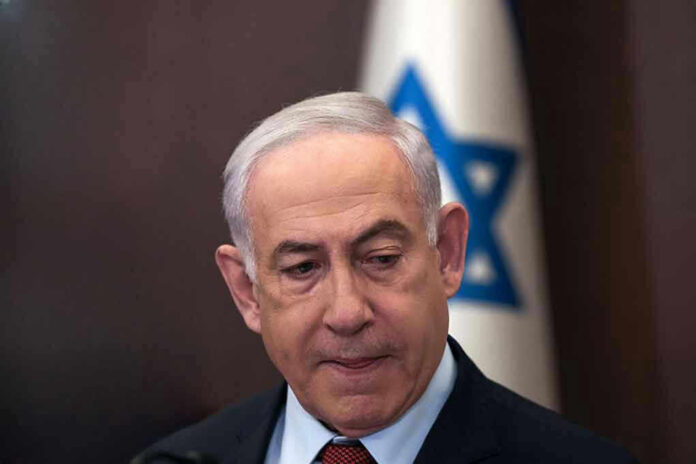
Israeli Prime Minister Netanyahu’s firm rejection of Palestinian statehood sparks diplomatic tensions with traditional Western allies.
Story Snapshot
- Netanyahu publicly dismisses Palestinian statehood west of the Jordan River.
- UK, Australia, and Canada recognize Palestine, prompting Israeli backlash.
- Potential Israeli annexation of West Bank territories looms.
Netanyahu Rejects Palestinian Statehood
In a bold statement, Israeli Prime Minister Benjamin Netanyahu declared that there will be no Palestinian state west of the Jordan River. This announcement came shortly after the UK, Australia, and Canada recognized Palestinian statehood, marking a significant shift in international diplomacy. Netanyahu’s remarks underscore Israel’s firm resistance to unilateral recognition of Palestinian statehood and hint at potential annexation of West Bank territories as a countermeasure.
Netanyahu’s rejection has heightened tensions with Western allies, who have traditionally been supportive of Israel but are increasingly frustrated with the stagnation of peace efforts. The Israeli government’s stance reflects its security concerns and territorial interests, opposing moves that could threaten its control over the disputed region. This diplomatic standoff illustrates the complex power dynamics and political challenges in the Israeli-Palestinian conflict.
International and Domestic Reactions
Western governments, including the UK, Australia, and Canada, have reaffirmed their support for a two-state solution despite Netanyahu’s rejection. Their recognition of Palestinian statehood is seen as an attempt to revive stalled peace negotiations and signal dissatisfaction with Israeli policies. Meanwhile, the Palestinian Authority views the recognition as a critical step toward achieving legitimacy and leverage in negotiations.
Domestically, Netanyahu’s stance has been met with mixed reactions. Some Israelis support his firm approach as necessary for national security, while others are concerned about the potential international isolation and economic repercussions. The possibility of annexation has also stirred debate within Israel, reflecting the deep divisions over the country’s future direction and its relationship with Palestine.
Potential Implications and Future Outlook
The implications of this diplomatic rift could be profound, both in the short and long term. In the immediate future, there may be heightened diplomatic tensions, possible recall of ambassadors, and increased Israeli security measures. Long-term consequences could include the erosion of the two-state solution framework, potential annexation of West Bank territories, and increased international isolation for Israel.
BREAKING 🚨 Israel’s Netanyahu tells Western leaders there will be no Palestinian state.
— WATCHTOWER (@news_24_365) September 21, 2025
As the situation develops, the international community will closely monitor the responses of both Israel and its Western allies. The outcome of these diplomatic efforts will likely shape the future of the Israeli-Palestinian conflict and influence broader regional stability. While recognition alone may not resolve core issues, it underscores the global community’s desire for progress and peace in this longstanding conflict.
Sources:
The Jerusalem Post, “Netanyahu: No Palestinian state west of Jordan, weighing annexation”