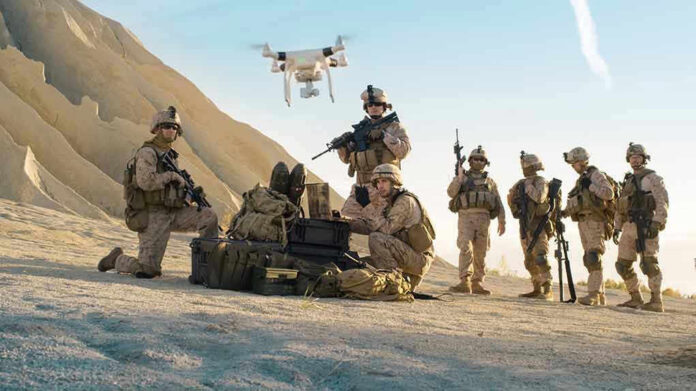
A new solar-powered hydrogen station is revolutionizing U.S. military drone operations, slashing dependence on foreign energy and securing American autonomy in the field.
Story Snapshot
- Sesame Solar’s “Drone Refueling Nanogrid” enables military drones to fly autonomously for up to six months without conventional fuel.
- More than 65 mobile hydrogen stations have been deployed to U.S. and Indo-Pacific military theaters as of October 2025.
- Technology eliminates logistical vulnerabilities, advances national security, and positions America as a leader in sustainable defense innovation.
- Trump administration policy shifts have accelerated domestic energy independence and defense modernization.
Breakthrough in Energy Independence for U.S. Military Drones
Sesame Solar, a Michigan-based firm, has delivered a game-changing solution for America’s military: the Drone Refueling Nanogrid (DRN), a mobile station that turns air into water, then water into hydrogen fuel for military drones. This solar-powered innovation makes it possible for hydrogen-powered drones to operate far from any base for up to six months—without ever needing traditional fuel convoys or foreign supply chains. The DRN produces hydrogen on-site by extracting moisture from the air, stores it safely, and refuels drones in the field, bypassing previous logistical bottlenecks.
Traditional drone operations have always been hampered by the need for frequent battery changes, recharging, or cumbersome fuel deliveries, especially in remote or contested environments. Now, with over 65 DRNs already fielded in key U.S. and Indo-Pacific theaters, American forces can deploy drones continuously, with dramatically reduced risk to supply lines. This advancement not only strengthens border security and intelligence-gathering but also aligns with calls for greater self-reliance and less dependence on adversarial nations for critical resources.
Defending Autonomy: How the DRN Protects American Security and Values
The DRN’s deployment is more than a technological upgrade—it is a direct response to years of vulnerability created by globalist energy policies and supply chain dependence. By eliminating the need for foreign-sourced fuel, the U.S. military can now operate with unprecedented autonomy, reducing exposure to international instability and hostile actors. Stakeholders like Sesame Solar, Heven Drones, and U.S. defense agencies have prioritized energy resilience, ensuring that American service members are no longer at the mercy of unreliable allies or adversarial regimes. This commitment to operational independence reflects a core conservative principle: strong national defense backed by domestic innovation.
Historically, hydrogen and solar-powered drones struggled with endurance and logistical support. Earlier models, like the SolarXOne, could fly for 12 hours at best, often limited by weather and daylight. Battery-powered drones also suffered from short flight times and frequent maintenance. The DRN overcomes these obstacles, integrating atmospheric water generation, solid-state hydrogen storage, and rapid deployment capabilities. This leap forward directly addresses the logistical nightmares that have plagued past military operations and upholds the conservative value of practical, American-made solutions over wasteful, inefficient global supply chains.
Trump Administration’s Role in Restoring American Strength
The rapid deployment and domestic development of solar-powered hydrogen refueling technology come amid a broader Trump administration push to restore American energy independence and military dominance. After years of leftist policies promoting reliance on international agreements, open borders, and green energy boondoggles, President Trump’s decisive leadership has re-focused American defense on common-sense, results-driven innovation. Executive actions have cut bureaucratic red tape, driven record investments in U.S. technology, and protected American industries from foreign exploitation. The DRN’s success story is one result of these bold changes: unleashing American ingenuity to solve real-world problems and keep our military the best equipped in the world.
Trump-era policies have prioritized energy security, border protection, and domestic manufacturing, aligning perfectly with the goals of the DRN program. By ending taxpayer subsidies for open borders and focusing on American needs first, the administration has ensured that new defense technologies serve citizens and secure the homeland. With the U.S. Army, Marine Corps, and Indo-Pacific partners now operating DRNs, America sends a clear message: national security will never be outsourced or compromised by globalist agendas.
Impacts for Defense, Economy, and the American People
The DRN’s impact extends beyond military efficiency—it signals a new era of American leadership in sustainable, off-grid technology. Military personnel benefit from safer, more autonomous operations; taxpayers gain from reduced fuel costs and greater return on defense investments; and the broader economy thrives as advanced energy and drone sectors grow. Civilian applications—such as emergency response and disaster relief—will follow, further strengthening American resilience against both natural and man-made threats.
While some technical challenges remain, particularly in scaling atmospheric water generation for larger platforms, the core achievement is clear: the U.S. is once again leading by example, not by outsourcing. The DRN’s success is a powerful rebuke to past years of wasteful spending, bloated government projects, and foreign energy dependence. With strong leadership and innovation rooted in American values, the nation is on track to secure its future and protect its constitutional principles.
Sources:
US Firm’s ‘Base in a Box’ Turns Air Into Water to Power Drones
New UAV to Combine Solar, Hydrogen & Battery Power for Extended Flight
US Firm Unveils Mobile Hydrogen Refueling Nanogrid to Power Long-Range Military Drones