
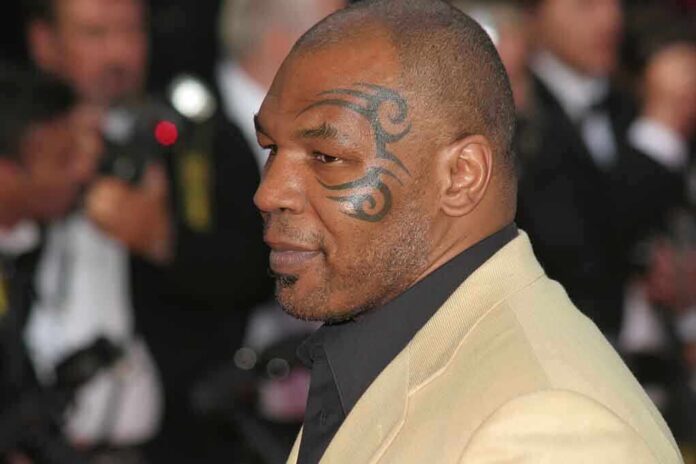
Celebrity intermediaries have become a parallel channel into presidential power, and the Mike Tyson–Sean “Diddy” Combs–President Trump letter story is a clean case study: a high-profile messenger, an informal clemency ask, and a public record that confirms the request existed while leaving the handoff’s mechanics largely undocumented.
The Short Version
- Mike Tyson said Sean Combs asked him to deliver a letter to President Trump; Tyson says he did so.
- President Trump separately acknowledged receiving a Combs pardon request “through a letter,” partially corroborating a written plea.
- The chain of custody and the letter’s content remain undisclosed; no official intake record or copy has surfaced.
- The episode mirrors a broader shift: informal, influencer-mediated routes now compete with the formal Justice Department clemency process.
What Tyson and Trump actually said — and what that establishes
In an on-air interview, Tyson described a straightforward exchange: Combs called him and asked him to give a letter to the president; asked if he carried it out, Tyson answered, “I did what he told me to do.” Multiple outlets reproduced the same brief exchange from Tyson’s SiriusXM appearance, all attributing the account to Tyson himself. Standing on its own, that is a first-person claim of delivery, not hearsay. It is narrow in scope, but clear in wording. The same week, reporting pointed back to President Trump’s earlier acknowledgment that Combs had asked him for a pardon “through a letter,” which corroborates that a written request existed, even if it does not identify Tyson as the courier.
Two limitations matter. First, Tyson did not specify when or where the handoff occurred, to whom he physically gave the letter, or whether the president personally read it. Second, the letter itself remains nonpublic; no copy, envelope, or White House correspondence log has been produced in the coverage to date. Those gaps do not negate Tyson’s account, but they define its evidentiary ceiling: a claimed delivery and a separately acknowledged letter, without a documented link that proves the two are the same document.
Where the record stops: delivery, receipt, and decision are different questions
The president’s public posture on clemency for Combs is distinct from the delivery question. Reporting notes Trump said he was not considering granting Combs a pardon at the time he discussed the letter. His representatives also pushed back on coverage implying he was mulling clemency. That matters because public debate tends to collapse process into outcome: if there is no pardon, skeptics read the messenger story as overblown; if there is a pardon, the messenger is credited with influence. In reality, the evidence supports two discrete facts and no more: Tyson says he delivered a letter at Combs’s request, and Trump acknowledged receiving a Combs letter about a pardon while signaling he wouldn’t grant it.
The unresolved details are straightforward, not conspiratorial: Was the Tyson-carried letter the same one Trump referenced? When exactly was it delivered, and to whom? Did it travel through standard White House correspondence channels or a personal aide? Without a released document or intake record, those remain open questions — and the press coverage, heavy on celebrity names and light on paperwork, has not closed them.
How clemency actually moves: the formal process vs. the access track
To understand why a Tyson handoff is plausible, you need the baseline: the Department of Justice’s Office of the Pardon Attorney exists to vet petitions — weighing acceptance of responsibility, rehabilitation, and the interests of justice — before recommendations reach the president. That is the institutional route. In modern practice, however, presidents also hear, and sometimes grant, requests that arrive outside DOJ’s pipeline, routed by personal contacts, political allies, or public campaigns. Coverage of the current era documents a robust “access track” in which advocates seek proximity to the president and senior aides rather than building a conventional DOJ case file.
That duality — a rules-based process alongside an influence-based path — creates exactly the scenario on display here. A celebrity under legal pressure asks a celebrity friend to get a plea in front of the only decider who matters. The fact that Trump said he received such a letter is consistent with the access track’s mechanics; the absence of formal paperwork in public reporting is also consistent with a route that may have bypassed the ordinary DOJ intake.
Why celebrity messengers surface — and what they can and cannot do
Celebrity intermediaries offer two currencies: access and attention. Access gets a message in the room more quickly than a DOJ packet; attention amplifies the plea’s political salience. Research on celebrity and political “epistemic power” is blunt about it — people with large platforms can get testimony heard. That does not guarantee success on the merits; it guarantees a hearing. Tyson’s role, by his telling, was precisely that of a conduit. Trump’s public stance — acknowledgment of the letter, disinterest in granting clemency — suggests that even a successful delivery didn’t convert into relief, underscoring the limits of messenger power when it runs into the president’s judgment or incentives.
In practice, effective intermediaries mesh moral argument with political risk calibration. They time the ask, tailor it to the president’s stated priorities, and sometimes pair it with endorsements or coalition support. The fragmentary reporting around the Tyson letter contains none of that strategic apparatus; it describes a simple handoff and a negative decision signal from the only person who can sign the warrant. That spare record is more typical than it sounds. Many informal appeals end exactly there.
Evidence thresholds: how to convert a headline into a documented event
For those who want to move beyond the headline, the documentary trail is knowable in theory: the letter itself (original or certified copy), White House or Secret Service visitor logs, correspondence intake stamps, and sworn statements that align dates, locations, and handlers. In practice, most of those materials are either privileged, exempt, or simply not maintained in a way that is public-facing in real time. That is why stories like this one live on statements by principals and secondhand reporting rather than records you can inspect. Asking for more proof is reasonable; expecting it quickly, in a live presidency, is not.
The cleaner analytical posture, then, is to hold two truths at once: the available evidence supports that Combs sought clemency in writing and that Tyson claims to have delivered a letter to President Trump at Combs’s request; and the same evidence does not establish the chain of custody, content, or presidential consideration of the specific document Tyson says he carried. Precision about those boundaries is not pedantry; it is how we keep influence stories from outgrowing their proofs.
Mike Tyson confirmed he delivered a letter from jailed music mogul Sean 'Diddy' Combs to Donald Trump as the rapper sought a presidential pardon. https://t.co/f9QD8kaapa pic.twitter.com/1GA7vJEu3F
— OK! Magazine USA (@OKMagazine) October 9, 2026
What this episode tells us about clemency politics now
Strip away the star power and you see the modern clemency landscape: a formal DOJ process that signals fairness and regularity; an informal access route that signals speed and proximity; and a media environment primed to elevate the messenger over the memorandum. Tyson’s sentence — “I did what he told me to do” — became the hook. The outcome sentence — the president was not considering a pardon — was the quiet part. Both are true, and the distance between them is the space in which most high-profile clemency bids actually play out.
Sources:
yahoo.com, balleralert.com, ew.com, complex.com, campaignlegal.org, irishtimes.com
© conservativesense.com 2026. All rights reserved.