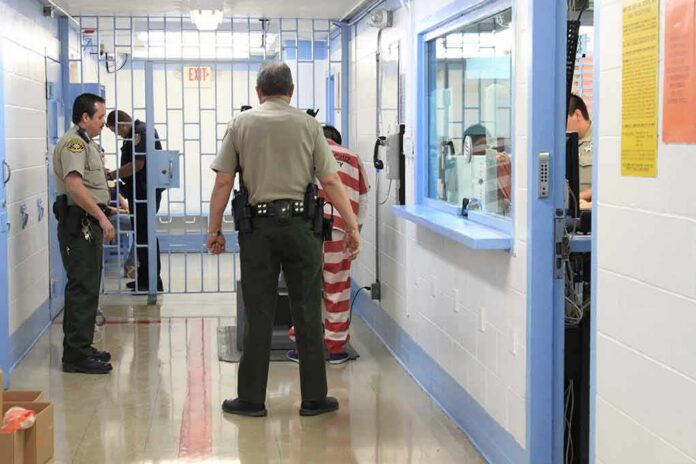
DHS says California let nearly 24,000 jail inmates with federal detainers walk free, tied to more than 81,000 criminal charges or convictions since 2025, and that number forces a hard question about who is accountable for public safety.
Story Snapshot
- DHS cites nearly 24,000 California releases after non-honored ICE detainers, with 81,000 charges or convictions.
- The releases include homicide, sexual assault, drug trafficking, assault, and burglary counts, per DHS.
- California law treats immigration detainers as requests and limits cooperation without legal grounds.
- ICE detention capacity in-state shows a ready handoff point that often did not happen.
What DHS Says Happened and Why It Matters
The Department of Homeland Security (DHS) says California agencies declined immigration detainers and released nearly 24,000 people from jail since January 20, 2025. DHS links those releases to more than 81,000 criminal charges or convictions, including 169 homicides and 147 sexual assaults. DHS argues detainers allow a safe handoff from local jail to federal custody. DHS says the handoff failed because state and local officials refused to hold inmates long enough for federal pickup.
United States Immigration and Customs Enforcement (ICE) operates detention infrastructure in California, including the California City Detention Facility. That presence undercuts the idea this was a theory debate with no operational end point. It shows the federal government had beds, transport, and booking ready to receive people flagged by detainers. The heart of the DHS claim is simple: the state let inmates with serious records go back into communities when a transfer to federal custody was available.
What California Law Allows and Forbids
California law treats immigration detainers as voluntary requests, not commands. The California Attorney General explains that local agencies can comply only when continued detention is lawful and the person meets listed conviction or criminal-history criteria under the TRUST Act. The TRUTH Act adds due process guardrails. It requires notice and consent for any ICE interview in jail and allows a lawyer to be present. These rules aim to prevent unlawful holds and protect civil rights.
State legislative findings argue that automatic holds can harm community policing. Lawmakers said victims and witnesses may avoid police if any contact risks deportation. Some local guidance also warns that jails should not honor detainers without a judicial warrant, to avoid Fourth Amendment liability and extra costs for local taxpayers. This state view frames detainers as a legal risk unless a court signs off or statute allows the hold.
Where the Numbers and the Law Collide
DHS uses large, specific counts to press a safety case. The agency says the nearly 24,000 releases include people with serious histories, such as homicide and sexual assault, and links non-honored detainers to risk on the street. The dataset presented combines charges and convictions, which vary in weight, and DHS did not release person-level records. That gap limits outside audits of who was released, why, and when. Still, the presence of in-state detention capacity strengthens DHS’s practical claim of a ready transfer path.
California counters with law and liability. Courts have treated detainers as requests, not orders, exposing local jails to constitutional risk for unlawful holds. That federalism reality helps explain why sheriffs and counties resist blanket compliance. Several California habeas cases also show federal detention itself gets court scrutiny, which complicates any claim that a transfer always equals safety. Those cases do not rebut the DHS totals; they show the custody debate runs on legal rails that are not simple.
The Safety Test Voters Deserve
Public safety demands clarity. DHS should release a redacted, person-level dataset so the public can see detainer dates, release dates, offenses, and final outcomes. That proof would let auditors test whether a non-honored detainer caused a release into the community or whether normal rules and timing explain some cases. A matched study could compare people transferred to ICE versus those released after a declined detainer to measure new arrests and convictions over time.
California should publish county-by-county logs showing when detainers arrived, whether a warrant existed, who met TRUST Act criteria, and why a hold was denied. If California claims safety and due process, it should back that up with data. If DHS claims danger, it should back that with names redacted but records intact. Voters do not need more slogans. They need facts that match common sense: hold the worst offenders, honor lawful warrants, and stop politicizing the middle.
Sources:
zerohedge.com, law.justia.com, cases.justia.com, leginfo.legislature.ca.gov, patch.com, judiciary.house.gov
© conservativesense.com 2026. All rights reserved.