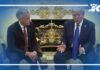
Rubio’s Middle East trip sells a ceasefire that opens oil lanes for 60 days but leaves Iran’s nukes and proxies largely unchecked.
Story Highlights
- The memorandum promises an immediate, permanent halt to fighting and 60 days of free passage in Hormuz.
- The United States will lift its naval blockade and shift forces away from Iran within 30 days.
- Rubio says Gulf security will not be weakened, yet allies remain wary and demand proof.
- The deal is not legally binding; inspections and missiles remain unresolved flash points.
What The Deal Actually Does Right Now
The memorandum of understanding says all sides must stop military action at once, including in Lebanon, to calm the region. It also guarantees 60 days of toll‑free transit for commercial ships through the Strait of Hormuz, a lifeline for global energy. These two steps aim to cut risk and steady oil markets during a fragile window. They matter to families here at home because energy shocks drive prices up fast, from the gas pump to the grocery aisle.
The agreement orders the United States to end its naval blockade within 30 days and to remove forces from areas near Iran. Supporters say this reduces chances of miscalculation at sea and opens space for talks. The text also creates a monitoring setup to track compliance and issues waivers for Iran’s crude exports and related services. Backers argue fewer clashes and more oil flows lower prices and help U.S. workers and seniors on fixed incomes.
Where The Risks Still Live
The memorandum is not a binding treaty under international law. It is a framework to keep talking, without strong enforcement if Iran cheats. Iranian officials have signaled that inspectors will not visit enrichment sites until a final deal is done, clashing with claims of early oversight. The text speaks about disposal “mechanisms,” but it does not force Iran to give up highly enriched uranium now. That gap makes allies nervous about nuclear breakout risk.
The memorandum avoids Iran’s missiles and proxy network, which Gulf leaders rank as urgent threats. Analysts warn Tehran could exploit the joint maritime “management” idea after the 60‑day window to push renewed coordination demands. That could slow traffic or invite future tolls. Critics call the deal a “time‑buying ceasefire,” useful to cool tempers but thin on guardrails. Without clarity on inspections, missiles, and proxies, the calm may not last.
Rubio’s Mission: Reassure, Clarify, and Lock In Allies
Secretary of State Marco Rubio told Gulf partners the deal does not hurt their security, stability, or prosperity. His message aims to shore up trust after months of hard fighting and Iranian strikes that rattled energy markets. Gulf voices on regional panels pressed him on compensation, frozen assets, and patrol rules in Hormuz. They also questioned why key issues like proxy militias were left to later. Rubio’s task is to anchor support while talks chase a final pact.
Some Gulf leaders say the United States moved fast at the start of the war without enough consultation, and they bore the cost. Former officials called the tour “damage control” meant to fix that gap and steady alliances. This is where process matters for conservatives: allies who share our goals need honest briefings and clear red lines. Rubio’s stops in the United Arab Emirates, Kuwait, and Bahrain focus on exactly that—specific security needs, air defense ties, and maritime rules of the road.
Why This Matters At Home: Energy Prices, Deterrence, and U.S. Leverage
Free passage in Hormuz helps keep oil moving and prices down for American families and small businesses. But leverage comes from enforcement, not words. A non‑binding text can cool tempers, yet it must be backed by real inspections and penalties if Iran breaks faith. Conservatives will judge this process by simple tests: Does oil flow without new tolls? Do inspectors visit nuclear sites on schedule? Do missiles and proxies face firm limits soon, not “someday”.
Rubio's Gulf trip last week visited the UAE, Kuwait, and Bahrain, three countries hit hardest by Iran during the war, but skipped Saudi Arabia entirely. Saudi officials read the omission as a calculated snub. The administration denies that was the intent and points to a friendly… pic.twitter.com/Zy3nD5ZFyu
— The Tectonic (@thetect0nic) July 1, 2026
Congress and the administration can strengthen this path with transparency and oversight. They can demand public timetables for inspections, publish metrics on ship transits, and brief allies on air and missile defense support. If Iran honors the 60‑day window, markets stay calm and our deterrence holds. If Iran backslides, the United States must be ready with snap‑back measures. Peace through strength still works, but only when promises meet proof—and when our friends know we have their backs.
Sources:
townhall.com, bbc.com, cnn.com, nbcnews.com, npr.org
© conservativesense.com 2026. All rights reserved.