
When an industrial process goes sideways, the public impact is measured less by chemistry than by disruption; the Garden Grove emergency proved the point, and the $125 million civil settlement framework that followed shows how modern enforcement now prices that disruption, funds recovery, and compels safer operations long after the sirens fade.
At a Glance
- A proposed $125 million civil agreement with GKN Aerospace would fund a large claims program, civil penalties, emergency-response reimbursement, and multi‑year operational oversight.
- Roughly 50,000 residents and businesses were evacuated over Memorial Day weekend as responders worked to stabilize a methyl methacrylate tank at GKN’s Garden Grove facility.
- GKN has emphasized there was no contamination or reported injuries and that it cooperated with authorities; the settlement is without admission of liability.
- The structure mirrors national practice after high‑consequence chemical incidents: immediate relief plus sustained safety management, while root‑cause analysis and prevention standards continue in parallel.
What the settlement actually does
The Orange County District Attorney’s office announced a civil agreement with GKN Aerospace Transparency Systems, Inc. and GKN Aerospace, Inc. totaling $125 million, filed for Orange County Superior Court approval. The reported terms allocate the lion’s share to a claims program for residents and businesses, with additional civil penalties, reimbursement of public agency emergency and abatement costs, and a long‑horizon safety and monitoring plan administered with outside expertise. NBC Los Angeles’ breakdown cites approximately $100 million for claims, $15 million in penalties, and $8.47 million to cover emergency response—plus at least seven years of independent oversight of GKN’s operations. This combination—compensation, deterrence, cost recovery, and enforced management-system upgrades—tracks with how prosecutors now resolve complex hazmat crises without waiting years for contested liability trials.
For affected households and small businesses, the claims program is the practical heart of the deal: it substitutes a centralized, rules‑driven channel for thousands of individual lawsuits, speeds payment, and—if well administered—reduces the asymmetry of proof that often defeats small claimants. For public agencies, cost recovery acknowledges the true price of mass evacuation: overtime, specialized contractors, air monitoring, road closures, and the opportunity cost of tying up regional fire and hazmat assets during a holiday weekend. The civil penalties component serves the classic aims of deterrence and signaling; the oversight requirement aims at prevention, where the lasting value lies.
The emergency and the chemical at issue
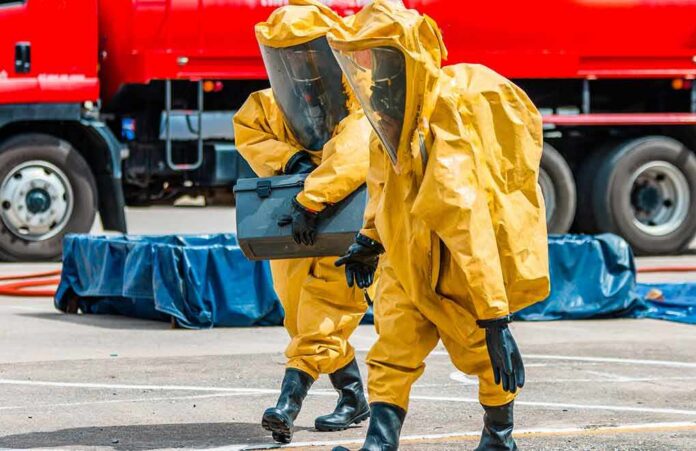
The triggering event was an “emergency hazmat incident” centered on a large storage tank of methyl methacrylate (MMA), an acrylic monomer used in transparent structural plastics. MMA is highly flammable; under heat, polymerization risk and pressure rise can drive a runaway reaction, creating the kind of instability that makes incident commanders order wide evacuations and standoff distances. Authorities ultimately evacuated tens of thousands from Garden Grove and neighboring Stanton while fire and hazmat teams cooled, monitored, and methodically neutralized the tank to avert catastrophic failure. This is textbook major-incident posture: protect life first, then stabilize the process, then methodically unwind the perimeter as risk falls.
GKN has stressed that the response concluded without reported injuries, contamination, or a breach that dispersed chemicals into neighborhoods, and that the company worked continuously with local, state, and federal responders. In a contemporaneous statement, it framed its priority as a safe resolution so residents could return home promptly and said officials reported no leak or contamination. The settlement itself preserves that posture; like most civil enforcement resolutions of this scale, it is structured without an admission of liability while still delivering compensation, deterrence, and operational controls.
Why the absence of injuries is not the end of the story
Communities judge industrial incidents not only by exposure metrics but by upheaval: evacuation orders, lost wages, shuttered storefronts, anxiety, and the dislocation of the medically fragile. Prosecutors and emergency managers have caught up to that social reality; modern settlements explicitly value disruption and the massive public costs of averting worst‑case scenarios. That shift is visible here in the split between direct community claims, public cost reimbursement, and years‑long safety oversight—an acknowledgement that, even without plume-verified exposures, the incident extracted a significant toll the civil system is equipped to redress.
At the technical level, the incident falls squarely within the risk envelope the federal Chemical Safety Board (CSB) and EPA’s Risk Management Program were created to address: hazardous processes whose failure modes demand community‑scale response even if fate, weather, and disciplined incident command avert acute harm. CSB’s mandate emphasizes root causes across equipment, procedures, human factors, and organizational culture; that is the prevention terrain on which long‑term oversight clauses are meant to operate.
How enforcement is evolving: compensation plus management-system fixes
Two design choices in the agreement deserve attention. First, the multiyear, third‑party safety and monitoring requirement aims beyond housekeeping to management systems: preventive maintenance protocols, inhibitor management for monomers like MMA, storage conditions, alarm logic, emergency shutdown procedures, and training. Independent oversight creates a continuous audit loop that is hard to simulate with paper compliance; it is the mechanism by which prosecutors can drive down recurrence risk without rewriting technical standards from the courthouse. Second, the claims program recognizes that mass-evacuation events create thousands of small, heterogenous losses. Centralized administration, if transparent and adequately funded, can deliver more equitable outcomes than serial litigation where transaction costs dwarf recoveries for most claimants.
The settlement also recovers the direct public spend of the response—specialized hazmat teams, mutual aid, and contractor support—costs that have historically landed on taxpayers. That recovery aligns with an EPA-wide trend over the past decade: public reimbursement paired with private-sector investment in prevention, which together reduce the negative externalities of high‑hazard operations.
$125 million settlement reached after dangerous Garden Grove chemical leak
https://t.co/ybRWQOjKXW— Tim Conway Jr Show (@ConwayShow) October 13, 2026
Where the contention sits—and where it does not
There is genuine disagreement about the language of “leak” and the characterization of exposure during the Garden Grove crisis. GKN’s contemporaneous statements emphasized no contamination or reported injuries, and cooperation with authorities. Those assertions address one axis of public concern—immediate toxic exposure. But they do not, and need not, resolve the separate question the civil case targeted: whether GKN’s operations and risk controls led to a crisis that imposed massive off‑site disruption and public expense. The settlement—again, without admission—essentially brackets the exposure debate and resolves the disruption and prevention questions with money, penalties, and years of third‑party scrutiny.
What it means for residents, responders, and operators
For residents and small businesses, the practical task is evidencing losses within the claims protocol: evacuation‑related expenses, lost revenue, health or childcare costs tied to displacement. For first responders and local governments, the reimbursement stream backfills budgets stretched by a marathon hazard operation. For operators who store reactive, flammable monomers, the lesson is structural: instability episodes—even if contained—now reliably trigger high‑dollar civil exposure and binding commitments to independent oversight. In a national landscape where the Risk Management Program has logged more than 1,500 reportable accidents in a decade, with hundreds producing offsite impacts, that calculus should drive more investment in inherently safer design and rigorous process safety management long before a tank starts to run hot.
Bottom line
The Garden Grove settlement is not a referendum on whether anyone was poisoned; it is a policy instrument that prices the real social costs of a near‑catastrophe and compels systematic prevention. Evacuations of this scale are unacceptable as a routine byproduct of industrial life in a metro area. Prosecutors have now put a price and a plan on that proposition—compensation for those disrupted, repayment for those who answered the call, penalties to deter, and a standing requirement to operate safer tomorrow than yesterday. That is how accountability should look after the sirens are gone.
Sources:
nypost.com, cbsnews.com, en.wikipedia.org, voiceofoc.org, calmatters.org, latimes.com, nbclosangeles.com, abcnews.com, apha.confex.com
© conservativesense.com 2026. All rights reserved.