
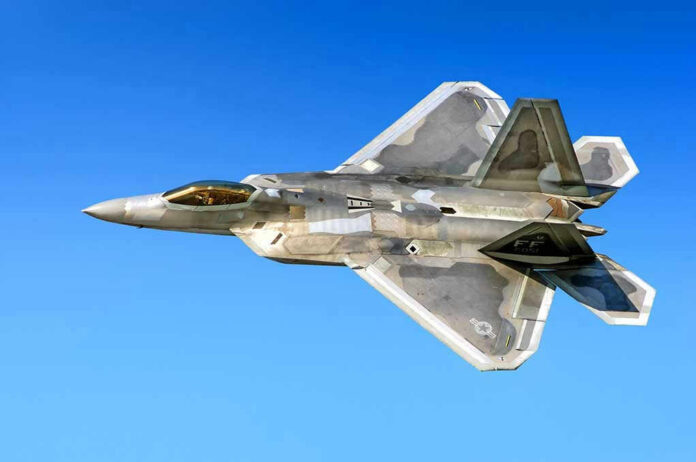
As Washington fights over budgets and bureaucracy, the U.S. Air Force just proved it can move fast again—testing an armed “loyal wingman” drone designed to keep American pilots alive in a real fight.
Quick Take
- The Air Force says Anduril’s YFQ-44A “Fury” Collaborative Combat Aircraft has begun captive-carry flights with inert AIM-120 AMRAAMs, a key step toward weapons integration.
- Mission autonomy testing on CCA prototypes started earlier in February 2026, with semi-autonomous flights on Fury expected soon using Shield AI’s Hivemind software.
- The milestone was publicly discussed at the Air & Space Forces Association Warfare Symposium on Feb. 23–24, 2026, underscoring the program’s rapid pace.
- The Air Force’s broader CCA goal is a large fleet of lower-cost, “attritable” uncrewed aircraft that can team with fighters like the F-35 and future NGAD.
Weapons Integration Starts With “Inert,” Not “Imaginary”
U.S. Air Force officials confirmed that Anduril’s YFQ-44A Fury has flown captive-carry tests with inert AIM-120 Advanced Medium-Range Air-to-Air Missiles mounted externally. Captive carry is not a stunt; it is a safety-and-engineering gate that checks airworthiness, structural loads, and aerodynamic effects before progressing toward separation tests and, eventually, live shots. The Air Force disclosed the step during late-February 2026 symposium briefings as the CCA effort moves from prototypes to real integration work.
Anduril CCA prototype flies with mission autonomy for the first time https://t.co/KFjpfBfN6t
— Inside Defense (@insidedefense) February 25, 2026
Defense reporting also emphasized what the test was—and what it was not. The missiles were inert training shapes, meaning the milestone is about safe carriage and integration pacing, not combat-ready firing today. Live-fire is still described as coming later in 2026. That distinction matters because it keeps expectations grounded while still demonstrating the program is no longer stuck at concept art and PowerPoint, a frustrating pattern conservatives watched for years across slower acquisition efforts.
Mission Autonomy Moves From Lab Demos to Flight Testing
The Air Force announced on Feb. 12, 2026, that mission autonomy testing had begun on CCA prototypes, signaling a shift from basic air vehicle checkout to the software that makes the concept useful. For Fury, Anduril has pointed to upcoming semi-autonomous flights tied to Shield AI’s Hivemind autonomy stack. At a practical level, autonomy testing is about executing pilot-directed tasks and coordinated behavior—capabilities that would let a crewed fighter command uncrewed teammates rather than simply fly near them.
Another key takeaway is that the Air Force is testing autonomy while weapons integration ramps up, rather than waiting for a perfect, finished configuration. That concurrency is how programs move quickly, but it also creates the need for tight discipline on safety and verification. Available reporting describes an approach that takes “smart risks” while still mirroring traditional test logic—proving components step-by-step. With China and Russia driving air-defense and fighter modernization, speed without recklessness is the only responsible posture.
A “Loyal Wingman” Concept Built for the Threat Environment—Not Social Engineering
The CCA concept is simple: use uncrewed aircraft to extend sensing, strike options, and survivability for U.S. pilots in contested airspace. The program’s origins trace to the Air Force’s demand for more mass at lower cost than exquisite manned fighters alone can provide, with discussion often pointing to roughly 1,000 aircraft over spiral increments. That strategy fits a constitutional, common-sense defense posture: deter adversaries, protect service members, and avoid unnecessary wars by making American capability unmistakable.
Reporting also highlights the rapid development tempo. Anduril’s Fury went from clean-sheet design to first flight in about 556 days, with first flight occurring in late 2025. For taxpayers, the basic logic is straightforward: the Air Force is trying to buy capability and capacity without turning every new aircraft into a $100M-plus symbol of procurement dysfunction. The research summary cites estimates in the $20–30 million range per CCA unit, though final costs will depend on production decisions and requirements.
Competition, Architecture, and the Industrial Base Stakes
Fury is not the only CCA in the air. General Atomics is flying its own prototype, the YFQ-42A “Dark Merlin,” and has discussed semi-autonomous progress using Collins Aerospace’s Sidekick autonomy. The Air Force’s approach encourages modularity through an autonomy architecture intended to let different vendors integrate faster. That is healthy competition—precisely the kind of pressure that can prevent a single prime contractor from locking taxpayers into one slow, overpriced pathway.
There are also clear limits in what has been publicly confirmed. Some competitor weapons-testing details remain less specific in open reporting, and timelines for “very soon” semi-autonomous Fury flights are naturally imprecise. Still, multiple outlets align on the core facts: captive-carry tests with inert AMRAAMs are underway, mission autonomy testing has started across prototypes, and live-fire is expected later in 2026. In an era when Americans demand competence, this is one of the cleaner, more consistently reported modernization stories.
For conservatives, the bigger point is results. A serious national-defense program should prioritize deterrence, readiness, and the protection of American lives—not ideological distractions or endless bureaucratic delay. The CCA effort is still early, and major questions remain about scaling, sustainment, rules for autonomous behavior, and oversight. But the current phase—real flight testing, real stores integration, real autonomy work—shows momentum that aligns with a hard-nosed view of the world: peace through strength requires speed, discipline, and capability that can actually deploy.
Sources:
CCA Inert Weapons Tests, Live Fire
Air Force CCA drone captive carry tests
Autonomous Air Force CCA drone flight testing
YFQ-44A Fury Now Flying With AIM-120 AMRAAM Missile
USAF begins weapons integration on collaborative combat aircraft prototype
Air Force’s drone wingmen have started flying weapons
Air Force flight tests drone wingman carrying inert weapons; competitors reveal new names
Anduril YFQ-44A begins flight testing for the Collaborative Combat Aircraft program
General Atomics, Anduril hint at concepts for new U.S. Navy unmanned combat aircraft
US Air Force awards contract for drone wingman engines