
Whether a foreign head of state should be able to vote in U.S. elections is not a philosophical riddle; it is a question U.S. law already answers by design—American elections follow citizenship and voting residence, not a person’s job title.
The Short Version
- U.S. absentee voting rules for citizens abroad are status-neutral: they turn on citizenship and voting residence, not occupation.
- The Holy See confirmed that Pope Leo XIV, a U.S. citizen, submitted a mail-in ballot in Illinois, consistent with the legal framework for overseas voters.
- Reporting traced his registration to Will County, Illinois, and documented an absentee ballot request in early October.
- The legal pathway that permits U.S. citizens working for foreign governments to vote absentee already exists under federal guidance and practice.
What Happened: A Pope Casts a Ballot, as an American Citizen
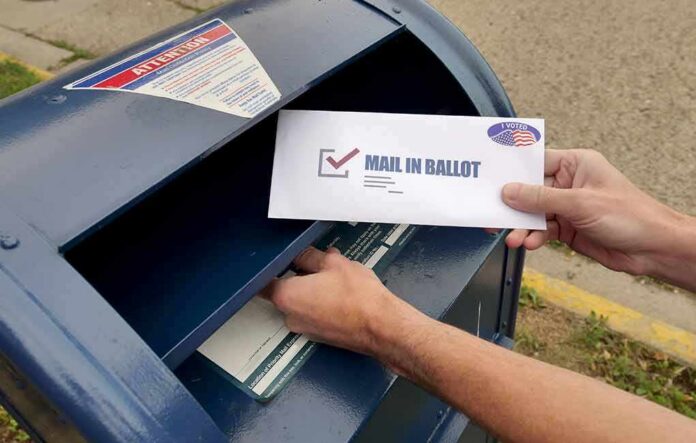
The Holy See publicly stated that Pope Leo XIV “has exercised his right to vote as a United States citizen” and, in keeping with a long-standing personal practice, “submitted his mail-in ballot in Chicago.” That confirmation addressed two essentials in one stroke: the pope is a U.S. citizen and he took the concrete step of returning an absentee ballot, not merely expressing a preference. Independent reporting identified him in Illinois voter records—registered at a New Lenox address—and documented that he requested a mail ballot through the Will County clerk on October 3, aligning with ordinary absentee timelines. The news value is undeniable: no previous pope has voted in a U.S. election. The legal mechanism, however, is routine.
In parallel with the Vatican’s statement, mainstream outlets summarized the legal baseline correctly: federal rules allow citizens living abroad, including those employed by foreign governments, to vote absentee in federal contests. That summary reflects the logic and practice of the Uniformed and Overseas Citizens Absentee Voting Act (UOCAVA) system, which orients on citizenship and voting residence, not occupation.
The Legal Mechanism: Citizenship and Voting Residence, Not Job Title
The United States has built an entire absentee-voting architecture for citizens outside its borders. Under the federal program administered by the Department of Defense’s Federal Voting Assistance Program (FVAP), “most U.S. citizens aged 18 or older living abroad” can vote via absentee ballot in federal elections so long as they maintain a voting residence and follow state procedures. The workflow is standardized: register (or confirm registration), request a ballot—often via the Federal Post Card Application—and return it by the state’s deadline. None of the core federal materials that guide voters and election officials carve out an exception for Americans who work for foreign governments; to the contrary, federal guidance explicitly includes citizens abroad as a class, and media summaries correctly note that even those serving foreign governments fall within its ambit.
What matters in practice are the administrable elements: Are you a U.S. citizen? Are you 18 or older? What is your voting residence (the address that ties you to a ballot style)? Did you request, mark, and return the ballot by the relevant deadlines? FVAP, State Department consular guidance, and state election offices build around those questions because they are verifiable and neutral to occupation or prominence. By that test, a U.S. citizen who also happens to be a foreign head of state faces the same checklists as any other overseas voter.
How We Got Here: A System Built for Scale and Neutrality
UOCAVA-era reforms were engineered for scale, predictability, and fairness to a dispersed electorate—Service members, their families, and civilians abroad. The central insight was to stabilize absentee access by standardizing the application process and setting expectations that ballots would travel across borders reliably. Over decades, that framework hardened around two guardrails. First, election eligibility hinges on citizenship and residence. Second, discretion about who “ought” to vote is not a gatekeeper function for clerks. This is why high-sensitivity cases—from aid workers to corporate executives to Americans in foreign civil services—are handled within the same rule-set. Federal training materials and the biennial Voting Assistance Guide operationalize this for states and local jurisdictions.
This structure also explains why the pope’s ballot—symbolically extraordinary—fit administratively into an ordinary channel. The Will County clerk’s office processes overseas ballot requests routinely; the legal criteria do not change with the voter’s public profile. That is both the promise and the point of a rule-of-law system that treats similarly situated citizens alike.
The Narrow Question: Does Being a Foreign Head of State Change the Rule?
On the specific claim some observers floated—whether leading a foreign sovereign should disqualify a U.S. citizen from absentee voting—available federal guidance does not create such a disability. PBS’s summary of AP reporting captured the practical reading: U.S. federal law allows citizens living abroad, “even those working for foreign governments,” to vote via absentee ballot. The Holy See’s statement describes Pope Leo’s history of voting whenever eligible, pre-dating his papacy, which is consistent with UOCAVA’s design that follows the individual citizen, not the office they later assume.
Separate policy regimes sometimes intersect here. For example, the State Department may review questions of dual nationality and service in foreign governments for diplomatic or nationality-status purposes; that is a different body of law than the election-administration rules for casting a federal absentee ballot. The election question is narrower and, under present practice, turns on citizenship, residence, and compliance with state procedures—criteria the reporting indicates were met in Illinois.
That fact is that the @FBI should be examining this move because Illinois election officials certainly won’t.
Robert Prevost is not eligible to vote in the United States.
Why? Because a pope ordinarily holds office for life. Leo XIV is not a missionary temporarily assigned to… https://t.co/ydhYnQhyJv
— Mia Sardinella (@MiaSardinella) November 1, 2026
Symbolism Versus Administration: Why This Felt Novel But Ran Through Familiar Rails
The dissonance is easy to name. On one hand stands an office that styles itself above partisanship; on the other, a citizen’s franchise that is intentionally blind to status. The Vatican’s public framing—civic participation by an American citizen—landed squarely within the election system’s logic, even as commentators debated the optics of a pontiff engaging a secular ballot. Those optics debates are real within religious and diplomatic circles, but they do not rewrite election law. U.S. absentee processes are built to be automatic, not adjudicated ad hoc by perceptions of propriety.
In that sense, the episode is clarifying. It shows that the American franchise, at least at the federal level, is structured to survive edge cases by adhering to a simple rule: if you are an eligible American with a voting residence who follows the steps, you vote. The job you hold abroad—whether schoolteacher or sovereign—does not convert the ballot box into a character test.
What It Means Going Forward
For election officials, nothing changes: overseas ballots are processed against state deadlines and verification protocols without regard to occupation. For citizens abroad, the path remains well-marked—register, request, return. And for institutions worried about symbolism, the remedy is not in election administration; it lies in internal norms, statements, and choices about public messaging. The separation of those lanes is by design. It preserves equal access to the franchise while leaving questions of institutional neutrality to the institutions themselves.
Sources:
zerohedge.com, sun-sentinel.com, pbs.org, vaticannews.va, charlotteobserver.com, todayville.com, apnews.com, bbc.com, firstpost.com, aol.co.uk, inquirer.com, fvap.gov
© conservativesense.com 2026. All rights reserved.