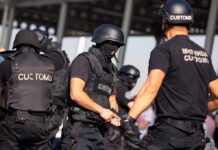


Declaring a national emergency is not a reflex; in France it is a legal instrument with a fraught history and sweeping consequences. The evidence from the student-led unrest—large crowds, injuries, arson, and thousands of arrests—shows acute disruption. It does not, on the public record, establish that exceptional powers would have been more lawful, more effective, or more proportionate than the targeted policing and prosecutions the government chose.
The Short Version
- The unrest was serious: nationwide demonstrations, widespread arrests, injuries to students and police, and hundreds of schools closed or damaged.
- Most mobilizations were peaceful alongside localized violence; officials emphasized proportional policing and protection of peaceful protest.
- France’s state-of-emergency regime is sweeping and historically loaded; invoking it requires more than disorder—it requires necessity and proportionality.
- On the available record, ordinary policing and prosecutions remained operational; no decisive evidence shows emergency powers were legally required or superior.
What actually happened: scale, harm, and operational strain
By any objective yardstick, the weeks of school-centered unrest were large and costly. Interior and media tallies reported roughly a quarter-million demonstrators nationwide, with some marches turning confrontational at flashpoints where bus shelters burned, fires were set, and small groups fought with riot police. Education authorities documented material impairment to learning: hundreds of high schools were closed in whole or in part for safety, and dozens of schools were burned or ransacked. Injury counts included hundreds of students and police officers, and one reported catastrophic hand injury to a 15-year-old during clashes in Lens. Arrest and detention figures crested into the thousands, a substantial proportion of them minors; prosecutors opened hundreds of cases. These numbers are not perfectly harmonized across outlets—reflecting different cutoffs and definitions—but they converge on the same fact pattern: heavy operational load, real violence at the margins, and sustained disruption of schooling across the country.
Two clarifications temper the picture. First, the documented violence, while serious, did not define every march; many demonstrations were peaceful even as others devolved into vandalism or fights with police. Second, despite images of burning street furniture and tear gas, daily life beyond the protest corridors continued; authorities kept up arrests, school closures, triage, and court processes without evident collapse of capacity. Both points matter when weighing extraordinary powers.
France’s emergency toolbox: what it is and what it does
Calls to “declare an emergency” assume a legal template. In France, the modern template is the 1955 state-of-emergency law, born of the Algerian War, amended repeatedly, and most recently normalized through counterterrorism experience. It enables curfews, assembly and movement restrictions, warrant-light administrative searches, closures of venues, and even forms of house arrest—measures that shift the balance from judicial to administrative control. France used this regime during the 2005 suburban riots and extensively after the 2015 Paris terror attacks; courts and Parliament gradually hemmed and refined its scope, but the headline remains: it is a blunt, expansive instrument intended for extraordinary threats to public order, not a crowd-control upgrade for difficult protest cycles.
Because the law carries sweeping intrusions, proportionality is the lodestar. The question is not whether unrest is costly or images alarming, but whether ordinary legal authorities—police powers, criminal procedure, prefectural orders, school-administration closures—are objectively insufficient to restore order and protect life. That is a high bar in a state that already equips prefects and police with robust tools for dispersals, perimeter controls, and rapid charging of violent offenses.
The government’s choice: targeted enforcement, not blanket exception
French officials repeatedly framed their approach in two moves: preserve the right to peaceful protest and intervene aggressively where violence, blockades, or vandalism occur. Interior leadership emphasized proportionality—act “each time there’s serious violence,” but do so with restraint—while the prime minister publicly tasked education leaders to listen to students’ complaints and seek solutions. In practice, that meant breaking unlawful blockades, clearing violent groups, shuttering unsafe schools, and channeling cases to prosecutors. It is a classic “surgical policing plus administrative management” model, not an attempt to reclassify the entire movement as a state-level emergency.
The distribution of conduct on the ground supported that distinction. Government and wire-service tallies reported large, often peaceful marches punctuated by smaller violent clusters. Advocacy groups criticized force levels in some incidents and urged restraint, but also described the overarching mobilization as overwhelmingly peaceful. When the bulk of participants are not rioting, sweeping national exceptions that curtail assembly and movement for all are harder to justify under proportionality doctrine, even if the violent fringe is real and damaging.
Were officials “nuts” not to flip the emergency switch?
Hardly. On the public record, three tests cut against declaring a national emergency. First, necessity: authorities continued to make arrests, clear streets, close and secure buildings, and process cases in ordinary courts. No credible evidence surfaced that civilian control was lost or that military aid to civil power was required; indeed, arrests and prosecutions scaled to the disorder, not beneath it. Second, proportionality: a blanket emergency curtails liberties for the peaceful many to reach the violent few—a poor fit when the state can and did isolate violent conduct with existing tools, however imperfectly. Third, precedent discipline: France’s modern emergency invocations track either sustained nationwide rioting that overwhelmed policing (2005) or mass-casualty terrorism (2015). The school-centered unrest—serious, at times violent, and costly—does not match those thresholds as documented.
That does not sanitize the harms. Students and staff were injured; police were hurt in the hundreds; public property burned; and school calendars fractured. The state’s obligation is twofold: to repress violence and to remedy the underlying governance failures students cite—teacher shortages, overcrowded classrooms, and dilapidated facilities—without collapsing the distinction between peaceful mobilization and crime. The government’s stated approach tracks that obligation. It also carries political risk: restraint can be caricatured as weakness, and aggregated arrest footage can overwhelm nuance in the public square.
🚨🇺🇸🇫🇷 TRUMP: “FRANCE IS BURNING!” — BLAMES IMMIGRATION FOR VIOLENT RIOTS
President Donald Trump issued a stark warning on Truth Social, blaming immigration for France’s escalating unrest and urging French authorities to close their borders before it’s too late.
French Interior… pic.twitter.com/KdrH2P8n8x
— C14 News | EN (@c14english) October 18, 2026
What the evidence cannot carry
Some commentary ascribed orchestration to far-left or Islamist networks and argued for military intervention. The reporting base here does not supply the kinds of evidence—indictments naming organizers, seized communications, intelligence assessments entered into judicial records—that would elevate those claims from rhetoric to fact. Nor does it substantiate a migration-based causal account; the sources center school conditions, not demographic profiles. Absent such proofs, folding sweeping ideological attributions into the emergency calculus is unsound. If future case files or intelligence made coordination clear, the analysis would change; the current record does not.
The long view: capability, thresholds, and trust
France’s recurring debate is not about whether it can impose order—it can—but about when the Republic should trade ordinary legality for exceptionalism. Every emergency invocation redefines that line, and the 2015–2017 period showed how quickly the exceptional can become routine. In this cycle, officials kept the lid on with conventional policing and prosecutorial throughput while attempting to separate peaceful protest from criminal violence. That choice aligns with constitutional proportionality, preserves maneuver space to negotiate substantive education fixes, and avoids normalizing a wartime statute for peacetime unrest. It is, on the record we have, the legally conservative and institutionally prudent course.
Sources:
townhall.com, npr.org, reuters.com, bbc.com, cnbc.com, itv.com, cnn.com, bbc.co.uk, en.wikipedia.org, latimes.com, academic.oup.com, lemonde.fr
© conservativesense.com 2026. All rights reserved.