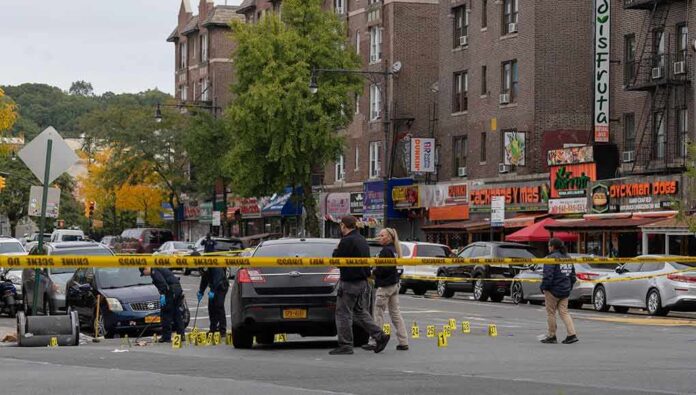
When a car jumps a curb toward a working reporter, the central question is intent—and the evidentiary record here, from arrest charges to video and the suspect’s own statements about motive, supports prosecutors’ view that the maneuver was no accident.
The Short Version
- Police arrested and charged Ryan Hayward after video showed a vehicle leaving the roadway and driving toward Maine Wire reporter Joe Sokol in Bangor.
- The charge set—reckless conduct and criminal threatening with a dangerous weapon, plus driving to endanger—is consistent with an alleged intentional vehicular threat, not a mere traffic mistake.
- Hayward denies trying to kill anyone but acknowledged he was angry at Sokol’s reporting; his stated grievance undercuts claims of a harmless misunderstanding.
- Attacks and threats against journalists—cars included—are a recurring press-freedom risk; the dispute that matters in courts is almost always intent versus misjudgment, settled with video and corroboration.
What the evidence shows: vehicle, video, and charging decisions
Prosecutors built this case on a straightforward sequence: an encounter between a driver and a reporter on public property, a car that left the roadway and closed distance on a pedestrian, and a police response that culminated in arrest and multiple counts that treat the car as a dangerous weapon. Local reporting identifies the suspect as Ryan Hayward, 38, and places the incident just before 8 a.m. on Odlin Road in Bangor. Video published by outlets shows the driver confronting the reporter, departing, then returning and driving onto grass toward him, after which the vehicle leaves; police subsequently announced the arrest and the weaponized-driving charges. Those charges—reckless conduct with a dangerous weapon and criminal threatening with a dangerous weapon, alongside driving to endanger—are not an over-the-transom traffic docket; they signal an allegation that the car was used as a tool of intimidation or harm, which aligns with what the footage depicts.
Two points are worth underscoring for readers parsing degrees of certainty. First, an arrest and charges are allegations, not proof beyond a reasonable doubt; the courtroom is where intent gets resolved. Second, the initial public account did not rely on a solitary social clip; multiple local outlets reported the same core facts after police confirmation, which is material in an era of viral but ambiguous video.
The suspect’s own words narrow the dispute
Hayward has publicly denied an intent to kill; that is the defense’s most specific counterpoint. But his on-record statements do not claim an innocent driving error. In an interview relayed by The Maine Wire and summarized by other outlets, he denied attempting murder while acknowledging he was “fired up,” “disrespected,” and angered by Sokol’s reporting on addiction—comments that speak directly to motive, not accident. That combination—video of a targeted approach and an articulated grievance about the reporter’s work—is exactly the kind of evidentiary pairing prosecutors use to argue intent to threaten, even if the defense disputes an intent to inflict lethal harm. The law distinguishes gradations of mens rea (mental state), and a denial of homicidal purpose does not negate an allegation of criminal threatening with a weaponized vehicle.
Put plainly: a driver can reject the label of “attempted murder” while still facing strong evidence of intentional intimidation or reckless conduct with a dangerous weapon. The charging posture in Bangor sits squarely in that zone, and it is consistent with how similar cases have been framed nationally when cars were used to menace newsgatherers.
How these cases are adjudicated: intent versus misjudgment
Most vehicular incidents involving journalists distill to a single hinge: did the driver deliberately use the car to threaten or strike, or was this a rash miscalculation? Video is pivotal but not always dispositive; investigators triangulate with pedestrian trajectories, tire tracks, throttle or steering inputs when available, statements at the scene, and any prior interactions that supply motive. The evidentiary baseline in this case—vehicle off the roadway toward a known individual, immediately after a verbal confrontation; subsequent flight; a later statement expressing anger at the target’s reporting—maps to the prosecutorial theory of a knowing threat. That is why the counts emphasize dangerous-weapon conduct and threatening, which require proof of risk creation and intimidating intent, not necessarily an intent to kill.
Courts are accustomed to this template. Where video exists, it anchors the analysis; where motive is articulated, it colors the inference structure; where no collision occurs, the question becomes whether the maneuver was sufficiently proximate and purposeful to place the victim in fear of imminent serious bodily injury. In the Bangor matter, the public record to date supports affirmative answers to those questions, which is why the case progressed beyond mere investigation to arrest and charging.
Why it matters: a recurring press-freedom hazard with a familiar pattern
Vehicle-based intimidation of journalists is not an outlier. Press-freedom trackers treat assaults and threats against reporters—often episodic, sometimes opportunistic—as a defined category, with attacks on bodies and equipment, and, in multiple cases, vehicles used as weapons or to ram news cars. The database maintained by the U.S. Press Freedom Tracker documents recurring assaults and damage to news vehicles; recent entries range from windshield smashings to follow-and-confront patterns outside stations. Internationally, CPJ has cataloged incidents in which reporters were chased and their vehicles damaged; the operational through-line is hostility to newsgathering, not a particular ideology. That history matters here for two reasons: it establishes a base rate—this happens more than most people assume—and it validates the charging framework when a driver’s conduct tracks prior intimidation patterns.
Zoom out and the stakes are simple. If driving a two-ton object at a reporter becomes a socially tolerated tactic for expressing grievance with coverage, street-level newsgathering will self-censor; the public loses ground truth, starting with the unglamorous beats—addiction services, local corruption, street safety—that most need daylight. Legal clarity and case follow-through deter that slide. When police investigate promptly, prosecutors file the counts the facts support, and courts adjudicate on the evidence rather than the narrative heat, the signal to the next would-be intimidator is unambiguous.
This is why some reporters stop going into the streets.
Not because they're afraid of asking hard questions.
Because once you're out there, you don't control what happens next.
Joe Sokol of the Maine Wire was reportedly confronted by a man who backed up his vehicle and then…
— JonathanFrye (@jonathan_f32966) October 1, 2026
What to watch next: the practical markers of accountability
Three developments will tell you how this resolves. First, whether any additional footage—fixed cameras, bystanders’ phones—surfaces; corroboration tightens inferences about steering, speed, and proximity. Second, whether the state offers or resists a plea to lesser non-weaponized conduct; that decision reflects confidence in proving intimidating intent. Third, victim impact statements and community-safety arguments at sentencing if there is a conviction; courts increasingly recognize that targeting journalists with vehicles chills protected activity. None of these steps hinge on partisanship; they turn on evidence, charging theory, and the judiciary’s tolerance for weaponizing cars to silence speech.
Sources:
redstate.com, themainewire.com, bangordailynews.com, x.com, thegatewaypundit.com, q1065.fm
© conservativesense.com 2026. All rights reserved.