

Every few years the California desert gives up a secret it has been keeping, and the pattern is always the same: a shallow grave, a name that had gone quiet on a missing-persons list, and a sheriff’s department that knows far more than it is yet willing to say. The discovery of two bodies on a remote Lancaster property fits a script investigators and crime reporters in Southern California have run through before, and understanding that script is the fastest way to make sense of what is unfolding now.
Key Points
- The Los Angeles County Sheriff’s Department has confirmed the remains found in shallow graves on a Lancaster desert property belong to Ricky Phillips, 61, and Edward Perez, 46, both local men who had been reported missing.
- Investigators connected the burial site to active missing-persons cases before any theory about a suspect became public, a sequence that distinguishes this case from pure cold-case mysteries.
- Homicide detectives have not disclosed cause of death or named a suspect, and the search of the property for additional victims continued in the days after the initial discovery.
- California’s forensic system routinely defers an official cause-of-death finding for weeks or months while toxicology and pathology work is completed — a standard administrative step, not evidence of an unresolved mystery.
- The Lancaster case sits in a long California lineage of desert burial discoveries — from the McStay family in 2013 to a 1980 Mojave double homicide identified only decades later — that shows how such cases can resolve quickly or linger for years.
What Investigators Have Established
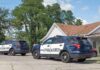
The facts on the record are specific and were confirmed directly by law enforcement rather than inferred by reporters. The Los Angeles County Sheriff’s Department told the Los Angeles Times that the remains recovered from the Lancaster property belong to Ricky Phillips, 61, and Edward Perez, 46. Both men were from the Lancaster area, and both had been the subject of missing-persons reports filed by family or associates before the bodies were located. That sequencing matters: this was not a case of unidentified remains surfacing and investigators working backward to a name. Detectives were already looking for these two men when the graves were found, which gave the identification process a head start that many desert discoveries never get.
The property itself became an active crime scene for days after the initial find. Homicide investigators continued digging at the remote Lancaster location, and the Los Angeles Times reported that the search for additional remains was ongoing even after Phillips and Perez had been identified. The New York Post’s coverage characterized the inquiry as a double-homicide investigation, consistent with the manner in which sheriff’s detectives have treated the scene — shallow burials are not accidental deaths, and a coordinated search of a single property for more than one body signals that investigators suspect a single event or actor connects both men. What detectives have not released is a cause of death for either victim or any public identification of a person of interest, a withholding that is standard practice in an open homicide investigation rather than a sign that the case lacks direction.
Why the Cause of Death Takes Time — and Why That Is Normal
Readers unfamiliar with forensic procedure sometimes mistake the absence of a published cause of death for stalled or secretive police work. In Los Angeles County, it is neither. The county’s Medical Examiner’s Office treats suspected homicides as cases requiring full forensic investigation, and when a cause cannot be established immediately after autopsy, the office issues what is formally called a deferred finding — a notation that further studies, often toxicology, are pending. The county’s own guidance states plainly that a deferred certificate remains in place “until additional studies have been completed,” at which point the office amends the record. Toxicology alone can run two to four months in a typical case, longer when decomposition or burial conditions complicate sample recovery, which is exactly the circumstance shallow desert graves produce.
This procedural reality is why cases involving buried remains so often outrun the news cycle that first reported them. A homicide detective can know a great deal — manner of death, likely timeline, even a working theory of the perpetrator — while the medical examiner’s paperwork still reads “deferred.” The two tracks, investigative and forensic, move on separate timelines by design, precisely so that a final cause-of-death determination rests on completed science rather than on the pace of a news cycle.
A Familiar Geography: Why California’s Deserts Keep Reappearing in These Stories
Lancaster sits at the edge of the Antelope Valley, within reach of the Mojave Desert corridor that has served, for the better part of a century, as the region’s preferred dumping ground for the concealed dead. The grim logic is simple: enormous tracts of unpopulated, rarely traveled land, soil soft enough to dig but remote enough that a disturbance goes unnoticed for weeks, months, or decades. The most notorious modern example remains the McStay family case. Joseph and Summer McStay and their two young sons vanished from their Fallbrook home in February 2010; nearly four years later, a motorcyclist stumbled onto two shallow graves in the Mojave Desert containing all four bodies, a discovery that broke open a case investigators had wrongly treated as a voluntary disappearance across the Mexican border. Chase Merritt, Joseph’s business partner, was later convicted largely on circumstantial evidence — DNA, cell-site data, and financial motive — gathered only after the desert yielded its secret. That case illustrates both ends of the timeline such discoveries can run. Other Mojave burials have taken far longer to resolve. A pair of homicide victims found in the desert near Ludlow in 1980 were not identified until 2021, when a genealogical DNA search undertaken by a woman tracing her own biological parents incidentally matched the remains to two long-unidentified victims. Advances in forensic genetic genealogy — the same technology increasingly used by labs like Othram to close decades-old cases — have compressed timelines that once stretched across generations. The Lancaster case, by contrast, moved from disappearance to identification in a matter of weeks, a pace made possible precisely because detectives already had missing-persons reports, family cooperation, and a defined search area to work from.
Missing men found dead in shallow graves in California desert as mystery grows https://t.co/0wNHtslkxP pic.twitter.com/V9JDveC5w8
— California Post (@californiapost) October 3, 2026
What Happens Next
The investigative path from here is well worn. Detectives will pursue the relationships, financial records, and last-known movements of Phillips and Perez, looking for the point where their lives intersected with whoever buried them. The medical examiner’s office will complete toxicology and pathology work and eventually amend the deferred finding to a conclusive cause and manner of death. And the sheriff’s department will decide, on its own timeline, when releasing a suspect’s name serves the investigation rather than compromises it. None of that withholding signals confusion; it reflects a system built to get the finding right before it goes final, which is the only standard that matters once a case reaches a courtroom.
Sources:
nypost.com, latimes.com, rollingout.com, charleyproject.org, abc15.com, yahoo.com
© conservativesense.com 2026. All rights reserved.