

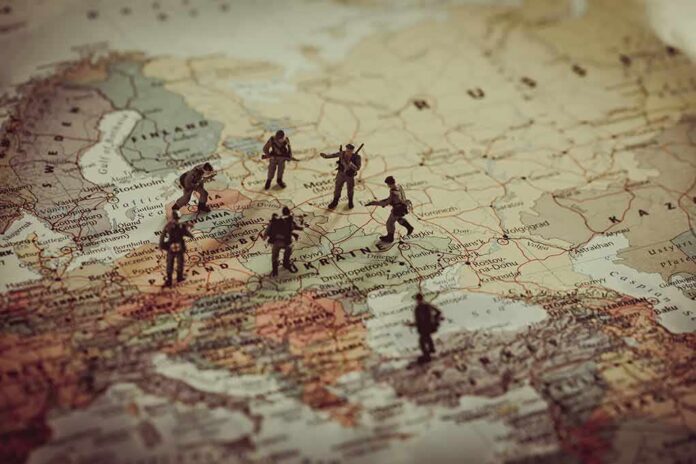
Lithuania is turning its border into a machine-stopping maze to slow Russian armor before it ever rolls.
Story Snapshot
- Leaders approved permanent fortifications along Russia and Belarus to block hostile movement.
- Plans include anti-tank obstacles, mined bridges, and more than 20 counter-mobility parks.
- Baltic states and Poland coordinate the broader defense line along the eastern frontier.
- Goal is delay and channeling, buying time for forces to mass and strike.
Lithuania locks in permanent border fortifications
Lithuania’s defense minister said the country will build permanent fortifications on its borders with Russia and Belarus to stop hostile movement. He set an initial timeline to begin work at select sites by late summer or early fall, with details kept quiet for security reasons. This marks a formal shift from plans on paper to fixtures in the ground. It also signals a public doctrine: counter-mobility first, meaning stop tanks, slow columns, and create choke points that favor defenders.
Government planning documents and interviews outline a layered mix of barriers, ditches, obstacles, and prepared demolitions. Lithuania intends to stock and position engineering gear this year and stand up more than 20 counter-mobility parks to support fast emplacement when needed. Bridges near the Belarus frontier and the Kaliningrad approach have been readied with charges and anti-tank obstacles, including dragon’s teeth. One key bridge on the Neman River was reinforced as part of this push.
From talk to terrain: a Baltic and Polish line takes shape
Defense ministers from Estonia, Latvia, Lithuania, and Poland issued a joint statement pledging to coordinate a defense line along the eastern border, citing growing threats from Russia and Belarus. The plan does not seek a solid wall. It seeks a network. Each country tunes the design to its terrain, yet the logic stays the same: cut speed, force detours, and funnel attackers. That regional effort gives Lithuania depth. It also helps allies share tactics and logistics across the line.
Analysts and military experts describe the strategy as visible on purpose. The point is to make potential attackers see the traps, recalculate, and lose tempo. Slowed units move on predictable routes and become easier targets for artillery, drones, and anti-armor teams. That buys hours and days, which matter in a small country with a tight window to mobilize, move reserves, and integrate allied reinforcements. The goal is not to look tough. The goal is to steal time from an enemy clock.
What “permanent” means: steel, soil, and stored bite
Permanent fortifications in this plan mean fixed obstacles at key chokepoints plus prebuilt support for rapid surge. The counter-mobility parks will stock mines, anti-tank barriers, and bridging kits so engineers can shape the ground on short notice. Several bridges already have demolition prep. Reinforced crossings link into anti-vehicle barriers that stall or break formations. This design mirrors lessons from Ukraine, where smart terrain shaping has stopped armored thrusts cold and forced long, costly detours.
The government also linked fortification to civil readiness. Reports describe work on evacuation planning and civil defense measures that match the border build-out’s tempo and intent. The stated aim is to keep citizens a step ahead of risk while troops hold ground and allies flow in. That pairing shows a whole-of-society lens: protect movement nodes, secure supply routes, and give families a clear plan. Smart leaders do not just harden borders. They harden communities, too.
Money, deadlines, and the measure that matters: time
Funding and schedules have evolved as the scope grew. Media reports cite a ten-year, multibillion-euro effort to bolster the eastern border, with milestones that stretch as equipment arrives and designs mature. Lithuania rephased construction targets and set completion timelines for engineering parks through 2028 to align budgets, industry output, and military priorities. Delays should concern planners, but they also reflect realism. Building terrain at scale is slower than drawing lines on maps.
🇷🇺 Northern News: Situation Along Russia's Northwestern Borders
🇱🇹 Lithuania: Accelerating the Construction of a Defensive Border Belt
Lithuania is accelerating the creation of an engineering barrier system along its borders with Russia and Belarus. The government has approved… pic.twitter.com/WkFtgF9PGT
— Aiden Minnis (@VZSMO) September 8, 2026
Common sense says a fortress does not beat a tank by being pretty; it wins by wasting the tank’s time. American conservative values prize clear purpose, prudent spending, and deterrence that works. Lithuania’s approach fits that frame. It is concrete-first, doctrine-backed, and regionally aligned. The most credible gripe would be if planners confuse symbols with substance. So far, the evidence shows substance: explosives on bridges, steel in the ground, and stockpiles in reach. That is how you turn hours into safety.
Sources:
cbsnews.com, kaitseministeerium.ee, ies.lublin.pl, china-cee.eu, armyrecognition.com, reuters.com, express.co.uk, lrt.lt
© conservativesense.com 2026. All rights reserved.