Atlanta officials cleared a homeless encampment near a World Cup site, and the move has revived an old question: when a city gets ready for a global showcase, who gets pushed out of view?
Quick Take
- The city cleared the Bell Street encampment near Grady as part of its Downtown Rising effort.
- Officials said the goal was safety and housing, not image management.
- Reports say tents and medication were thrown away, which raised anger from advocates and critics.
- The episode fits a broader pattern seen in past mega-events, where cities try to make homelessness less visible before the cameras arrive.
What Atlanta Did Near the World Cup Site
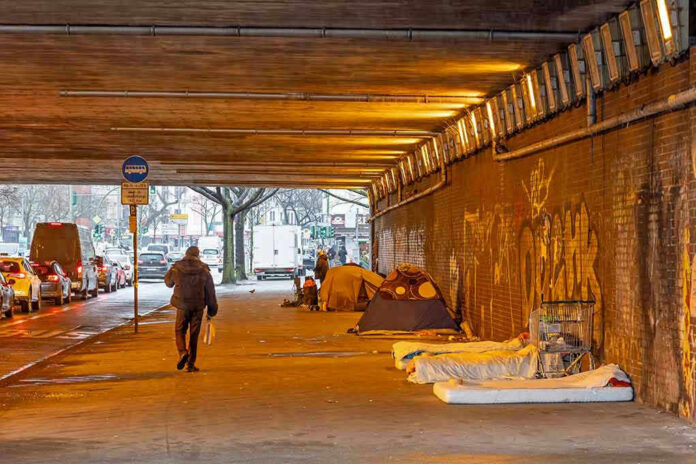
Atlanta cleared a large homeless encampment near Grady in the run-up to the World Cup as part of its Downtown Rising campaign. The city said it had been reaching out to people in the camp for months and working to move them into permanent housing and shelters.
Cathryn Vassell, who leads Partners for Home, said the cleanup was “less about optics” and more about safety for people in and around the area. That line matters because it shows the city’s public defense: Atlanta is framing the cleanup as a housing step, not just a sweep. The city also says the larger goal is to house 400 people ahead of the World Cup.
Why the Cleanup Hit a Nerve
The story did not land as a routine sanitation move. It landed like a warning shot. National and local reporting has already shown that Atlanta officials and city council members know the World Cup could trigger sharper pressure on homelessness policy, including fears of crackdowns. That makes every tent removal look larger than one block and one day.
The reported disposal of tents and medication sharpened the reaction even more. National policy groups have long warned that cities should not immediately discard the belongings of people living outdoors, and public health experts say forced removals can damage health and stability. For readers who see common sense as part of good government, the basic rule is simple: if a city says it is helping, it should not toss the very items people need to survive.
Atlanta’s Bigger World Cup Strategy
Atlanta is trying to present a different face than the one it showed during the 1996 Olympics, when police were accused of arresting homeless people by the thousands and the city removed about 9,000 people to a detention center. This time, officials point to a housing-first model, outreach workers, and medical and mental health support. The city says Downtown Rising has already housed more than 460 people.
🔴 Atlanta discards homeless people's belongings near World Cup venue
City employees threw out tents, medication, identification documents and other possessions of about 15 unhoused people at Freedom Park on July 1, less than a mile from a World Cup watch party venue. The sweep… pic.twitter.com/t2eX5VdIlY
— NewsTongue (@NewsTongueX) July 12, 2026
That does not erase the harder truth behind the headlines. Mega-events often reward speed, visibility, and calm streets, while homelessness needs time, trust, and steady follow-through. Public health researchers and housing advocates have argued for years that encampment sweeps can cause harm and that shelter, storage, and coordinated outreach work better than simple removal. Atlanta’s challenge is to prove it can do both: clean up the corridor and avoid repeating the old habit of treating poor people like clutter.
The Question Behind the Headline
The immediate dispute is about what happened at one encampment. The deeper issue is whether Atlanta can prepare for the World Cup without turning homelessness into a photo problem. The city says it is moving people into housing. Critics will keep watching to see whether the promise holds once the cameras move on, because that is where these stories usually reveal their real cost.
Sources:
independent.co.uk, ajc.com, reuters.com, instagram.com, facebook.com, reddit.com, endhomelessness.org, ncbi.nlm.nih.gov
© conservativesense.com 2026. All rights reserved.