
A daring rescue mission deep inside Iranian territory cost American taxpayers upwards of $210 million and exposed critical vulnerabilities in U.S. military operations as the price for recovering two downed airmen escalated into one of the most expensive Combat Search and Rescue operations in recent history.
Story Snapshot
- U.S. F-15E Strike Eagle shot down over southwestern Iran near Isfahan, prompting massive two-day rescue operation
- Operation cost estimated at $210-310 million after U.S. destroyed its own disabled MC-130J aircraft and MH-6 “Killer Egg” helicopter to prevent Iranian capture
- Both crew members successfully rescued despite operating in hostile territory with active Iranian air defenses
- Conflicting claims emerge as Iran releases wreckage footage claiming shootdowns while U.S. maintains self-destruction narrative
High-Stakes Rescue Over Enemy Territory
The 494th Fighter Squadron F-15E Strike Eagle went down over southwestern Iran near Isfahan, ejecting its two-man crew into one of the most dangerous regions in the Middle East. The mountainous terrain near Isfahan hosts Iranian nuclear facilities and sophisticated air defense systems, creating a nightmare scenario for American forces tasked with recovering the downed airmen. The operation, internally dubbed “Epic,” involved hundreds of personnel across multiple branches, including Air Force Special Operations Command, the elite 160th Special Operations Aviation Regiment known as the “Night Stalkers,” and CIA operatives running deception missions to confuse Iranian forces.
The “Killer Egg” and Catastrophic Losses
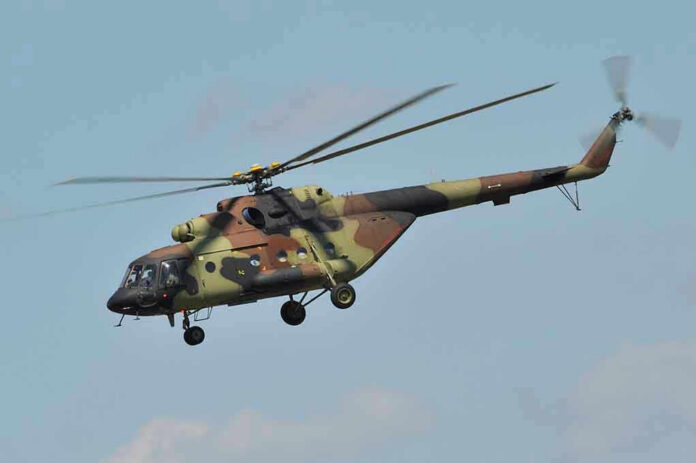
Central to the rescue effort was the MH-6 Little Bird helicopter, nicknamed “Killer Egg” by special operations crews for its distinctive egg-shaped fuselage. This compact aircraft, with a 32-foot rotor span and capacity for Hellfire missiles, evolved from the Vietnam-era OH-6 Cayuse into a specialized tool for inserting special forces into tight urban spaces and conducting rapid extractions. The Little Bird gained legendary status during the 1993 Battle of Mogadishu, immortalized in “Black Hawk Down.” However, the rescue mission reportedly resulted in the loss of two MC-130J Commando II transport planes valued at approximately $100 million each, plus the MH-6 valued at $7.5 million, alongside the original F-15E worth an estimated $100 million.
Competing Narratives and Strategic Implications
Iranian state media released footage showing wreckage of the C-130s and the compact Little Bird helicopter, with officials declaring “By God’s grace, the American enemy aircraft was destroyed at the hands of the soldiers of Islam.” U.S. sources counter that disabled aircraft were deliberately destroyed to prevent Iranian capture of sensitive technology and intelligence, a standard protocol in denied territory operations. The inability to independently verify either claim highlights the fog of war in contested airspace. This incident follows years of escalating U.S.-Iran tensions, including Iranian threats and vessel seizures in the Strait of Hormuz that prompted deployment of the USS Bataan and 26th Marine Expeditionary Unit to the Persian Gulf.
The Price of Principle
The staggering financial toll raises fundamental questions about operational planning and risk assessment that resonate with Americans frustrated by government spending. A $210-310 million price tag for a two-person rescue reflects the military’s unwavering commitment to the principle that no service member gets left behind, a doctrine dating to Cold War-era priorities of protecting both personnel and classified intelligence. Yet the loss of multiple aircraft in hostile airspace exposes vulnerabilities in legacy platforms like the MC-130J when operating against peer-level air defenses. The operation underscores growing demand for stealthier, more survivable Combat Search and Rescue assets as conflicts shift from counterinsurgency operations to potential confrontations with sophisticated adversaries possessing advanced anti-aircraft capabilities.
Sources:
Iran’s Deadly Prize: Videos Reveal US Rescue Planes Desperately Searching as Pilot Capture Looms
USS Bataan, USS Carter Hall and 26th MEU Now in the Persian Gulf
Here Are 12 Badass Military Helicopters