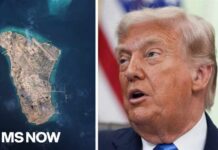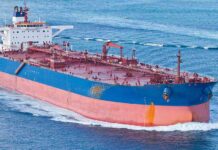


President Trump has escalated tensions with Iran by amplifying threats of a naval blockade of the Strait of Hormuz after failed ceasefire negotiations, raising fears of a global economic catastrophe as hundreds of tankers remain stranded in the world’s most critical oil chokepoint.
Story Snapshot
- Trump shared an article on Truth Social advocating a naval blockade of the Strait of Hormuz, echoing tactics used against Venezuela, following the collapse of 21-hour ceasefire talks in Islamabad
- Iran has reportedly mined the strait and claimed control, paralyzing global shipping and disrupting roughly 20% of the world’s oil supply, with experts warning recovery could take months
- U.S. minesweepers are actively clearing the waterway while a destroyer turned back after Iranian forces issued a 30-minute targeting warning, highlighting the volatile standoff
- China’s reported shipment of air defense systems to Iran through proxies has further complicated the crisis, with both nations positioning for a prolonged confrontation that threatens worldwide energy markets
Diplomatic Breakdown Sparks Blockade Threat
Vice President JD Vance led negotiations in Islamabad that collapsed after 21 hours when Iran rejected U.S. demands to reopen the Strait of Hormuz. On April 11, 2026, Trump responded by sharing an article on Truth Social that proposed a naval blockade as his “Trump card” against Tehran. The piece drew parallels to the successful U.S. oil blockade of Venezuela in 2019, suggesting similar economic strangulation could force Iranian compliance. Trump warned he would “load up ships with the best ammunition” if diplomatic efforts continued to fail, marking a decisive shift from negotiation to military intimidation.
Iran’s security officials dismissed the blockade threat as a “self-made problem” and insisted diplomacy remains the only viable path forward. Iranian leaders proposed implementing toll systems for vessels transiting the strait and demanded full management authority over the waterway. These proposals represent a fundamental challenge to decades of international maritime law treating the strait as international waters. The standoff reflects deeper sovereignty disputes, with Iran leveraging its geographic position to extract concessions while the U.S. insists on maintaining freedom of navigation for global commerce.
Strategic Chokepoint Under Iranian Control
The Strait of Hormuz has served as a critical flashpoint since the 1980s Tanker War during the Iran-Iraq conflict. Currently, Iran has reportedly mined the narrow passage, sunk its own vessels to obstruct traffic, and stationed forces to enforce what it claims as territorial control. Trump asserts U.S. forces defeated Iran’s navy of 158 ships along with substantial air force assets in recent clashes, though independent verification remains unavailable. Hundreds of tankers now sit idle, unable to transit safely, creating supply chain disruptions for oil and fertilizer that ripple across global markets.
U.S. minesweepers have begun clearing operations in the strait, but progress remains slow and dangerous. Reports indicate a U.S. destroyer recently reversed course after receiving a 30-minute warning from Iranian forces via Pakistani intermediaries. Iran denies U.S. vessels have successfully transited the waterway, while the Pentagon maintains operations continue despite threats. This cat-and-mouse dynamic illustrates how asymmetric warfare allows Iran to challenge superior U.S. naval power through mines, shore-based missiles, and fast attack boats rather than conventional fleet engagements that it would surely lose.
Economic Fallout and Global Implications
The strait closure threatens immediate chaos in energy markets, with approximately 20% of global oil supplies typically passing through the narrow channel. Shipping experts warn that even if the waterway reopens soon, normalizing operations could require months as insurance costs spike and vessel operators reassess risk. Fertilizer shortages stemming from disrupted ammonia shipments pose particular threats to agricultural production worldwide. Energy importers in Europe and Asia face the most acute vulnerabilities, while U.S. energy independence provides some insulation from direct supply shocks but not from resulting price volatility.
The crisis also carries significant political implications for Trump’s America First approach. By threatening a blockade, the administration demonstrates willingness to deploy hard power unilaterally rather than relying on what Trump has criticized as weak NATO allies. China’s reported shipment of air defense systems including MANPADs to Iran through proxy networks signals Beijing’s commitment to supporting Tehran as a counterweight to U.S. regional dominance. This great power competition over a strategic chokepoint recalls Cold War dynamics, where local conflicts served as proxies for broader ideological and economic struggles. Americans rightly question whether their government’s Middle East entanglements serve ordinary citizens or primarily benefit defense contractors and global elites with vested interests in perpetual instability.
Sources:
Fox News: Trump Iran Blockade Threat