

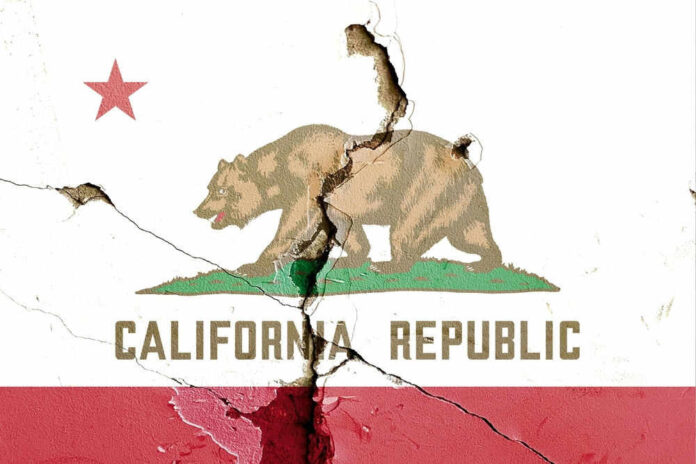
California’s top Republican lawmaker is pushing a radical “two-state solution” to permanently divide the Golden State, offering fed-up inland counties a path to escape decades of liberal coastal tyranny.
Story Highlights
- Assembly Republican Leader James Gallagher proposes splitting California’s 35 inland counties from coastal regions
- Plan emerges as direct challenge to Governor Newsom’s redistricting scheme set for November vote
- Shasta County becomes first local government to officially back the historic division effort
- Proposal requires approval from state legislature and U.S. Congress to become reality
Republican Leader Champions Rural Representation
Assembly Republican Leader James Gallagher announced his ambitious plan on August 28, 2025, proposing to separate California’s 35 inland counties from the coastal elite strongholds of San Francisco and Los Angeles. Gallagher’s “two-state solution” directly challenges Governor Gavin Newsom’s redistricting proposal scheduled for public vote in November. The Republican leader frames his initiative as essential relief for politically disenfranchised inland communities that have suffered under decades of progressive policies prioritizing urban coastal interests over rural needs.
Historical Pattern of California Division Efforts
California division proposals stretch back to the 19th century, reflecting persistent regional dissatisfaction with centralized governance. The most notable recent attempt was Tim Draper’s “Six Californias” initiative from 2013-2016, which sought to create six smaller states for improved representation and governance. That effort failed to qualify for the ballot due to insufficient support and legal obstacles. However, ongoing political polarization and demographic shifts have intensified calls for structural change, with inland counties consistently complaining about underrepresentation and policy neglect from Sacramento’s coastal-dominated government.
Local Governments Rally Behind Split Movement
Shasta County supervisors made history by becoming the first local government to formally endorse the new split effort, adopting a resolution on November 6, 2025. The county carefully modified its language to avoid “secession” terminology while expressing strong support for the division proposal. Gallagher emphasized the core motivation driving the movement: “We don’t want any part of a government that won’t give us a voice.” This reflects growing frustration among rural communities that feel overshadowed by coastal urban centers controlling state politics and resource allocation.
Constitutional Hurdles and Political Reality
The proposal faces significant constitutional barriers requiring approval from both California’s state legislature and the U.S. Congress under Article IV, Section 3 of the Constitution. Constitutional scholars acknowledge these requirements make success unlikely, but supporters argue smaller states would be more responsive and governable. Critics contend splitting California would prove costly, inefficient, and politically motivated, potentially exacerbating regional inequalities. However, the movement’s momentum demonstrates substantial dissatisfaction among inland communities tired of progressive policies that prioritize coastal urban agendas over traditional American values and rural interests.
While legal and political obstacles remain formidable, the growing support from local governments signals this isn’t merely symbolic gesture but reflects genuine desire for self-determination among communities abandoned by California’s leftist establishment. The proposal represents hope for constitutional governance, individual liberty, and traditional principles that have been systematically eroded by decades of progressive overreach emanating from Sacramento and coastal elite power centers.
Sources:
Shasta County 1st to back new effort to split California after Prop 50