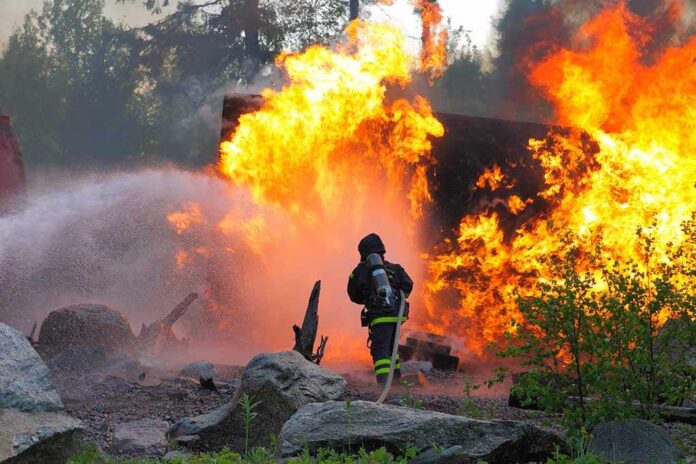
A new executive order by President Trump seeks to override California’s permitting process, aiming to speed up wildfire recovery efforts in Los Angeles.
Story Highlights
- President Trump signs an executive order to expedite rebuilding in Los Angeles.
- Federal preemption of local permitting aims to cut bureaucratic delays.
- California officials criticize the move, citing existing progress.
- Order emphasizes self-certification by builders to accelerate recovery.
Trump’s Bold Move to Expedite Rebuilding
President Donald Trump has signed an executive order intended to bypass local and state permitting processes in Los Angeles to expedite the rebuilding of homes and businesses destroyed by the 2025 Palisades and Eaton wildfires. The order directs federal agencies such as FEMA and the Small Business Administration (SBA) to allow builders to self-certify compliance with health and safety standards, a move aimed at accelerating the slow recovery plagued by bureaucratic delays.
The Trump administration argues that less than 16% of the destroyed structures have received rebuilding permits, casting blame on California’s state and local governments for the delays. The order comes amid widespread criticism of California’s handling of the recovery process, with only seven structures reportedly built in LA County by early January 2026.
Governor Newsom and Mayor Bass had over a YEAR to clear the local permitting backlogs that have prevented California wildfire survivors from accessing $3.2 BILLION in SBA relief that was approved to help them rebuild. Today, @POTUS is taking executive action to get the job done.…
— Kelly Loeffler (@SBA_Kelly) January 27, 2026
This federal intervention marks an unprecedented step in disaster recovery, directly challenging local authority over permitting processes. By allowing self-certification, the administration hopes to cut through what it sees as unnecessary red tape, speeding up the rebuilding process to help residents return to normalcy more quickly. The executive order also aims to expedite the release of federal relief funds, a move deemed necessary due to the slow pace of local efforts.
California’s Response and Political Implications
California Governor Gavin Newsom has criticized the executive order, labeling it as “useless” and defending the state’s progress in the rebuilding efforts. Newsom argues that the permitting process has actually been expedited, issuing permits at twice the speed compared to pre-fire conditions. However, the Trump administration contends that the pace remains insufficient to meet the urgent needs of affected communities.
The executive order has intensified the ongoing political feud between President Trump and California’s Democratic leadership. The order is seen by some as a political maneuver to highlight the perceived failures of Democratic governance in California, while others view it as a necessary step to overcome the bureaucratic obstacles hindering recovery efforts.
Trump Tired of California Failure Theater, Issues Order for Administration to Take Over LA Fire Rebuild https://t.co/NipdS2Ge3U
— Fearless45 (@Fearless45Trump) January 27, 2026
Potential Outcomes and Future Considerations
The executive order’s emphasis on self-certification for builders could significantly accelerate the rebuilding process if implemented successfully. However, it also raises concerns about the potential for reduced oversight and the implications of federal overreach in local governance. Legal challenges from the state and local governments are anticipated, which could further complicate the recovery efforts.
In the long term, this move could set a precedent for federal intervention in disaster recovery, challenging traditional local control over zoning and permitting. While some residents welcome the federal assistance, others remain skeptical of the order’s effectiveness and its impact on local autonomy. The ongoing debate highlights the complex interplay between federal authority and state sovereignty in managing disaster recovery.
Sources:
Fox News: Trump aims to fast-track L.A. rebuild with executive order
Politico: President Trump moves to take over L.A. wildfire recovery
ABC7: Trump signs executive order aimed at taking over L.A. wildfire rebuilding
LAist: Trump executive order targets overly burdensome permitting in L.A. fire zones
White House: Addressing state and local failures to rebuild Los Angeles after wildfire disasters