

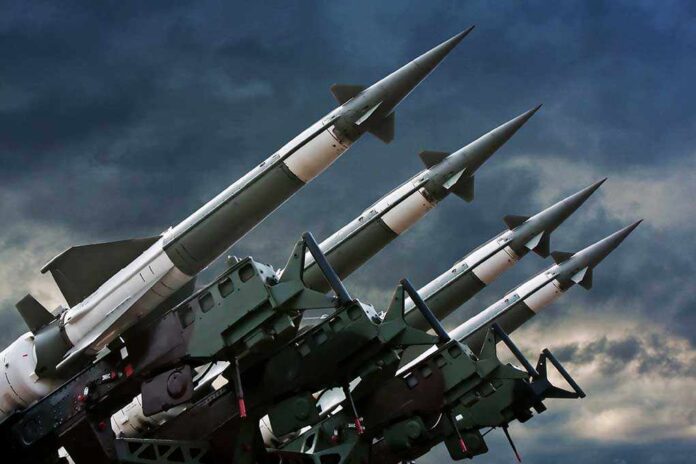
Supplying Tomahawk missiles to Ukraine could redefine the power dynamics of the Russia-Ukraine conflict, sparking significant concerns for Putin’s military strategies.
Story Highlights
- The US considers supplying Tomahawk cruise missiles to Ukraine, marking a major escalation.
- Tomahawks offer unique range and precision, potentially shifting battlefield dynamics.
- Russia warns of severe consequences if Tomahawks are deployed against its territory.
- Implications for NATO-Russia relations and global security are profound.
Tomahawk Missiles: A Strategic Shift
The decision to supply Tomahawk cruise missiles to Ukraine represents a significant shift in US military aid. These missiles, known for their long range and pinpoint accuracy, offer Ukraine the capability to strike deep into Russian-occupied territories, potentially disrupting critical logistics and command centers. This move follows the precedent set by the prior delivery of ATACMS missiles, expanding Ukraine’s ability to conduct long-range precision strikes.
Since the Russian invasion of Ukraine in 2022, Western nations have incrementally increased their military support for Ukraine. The supply of Tomahawks is viewed as a gamechanger, potentially altering the balance of power in the ongoing conflict. The strategic advantages of these missiles lie in their ability to target high-value assets far beyond the front lines, which could force Russia to reconsider its military strategies and operational concepts in Ukraine.
Russian Concerns and Reactions
Russia has responded to these developments with heightened rhetoric, warning of severe repercussions should Tomahawk missiles be used against its territory. Such statements underscore the escalating tensions between NATO and Russia, as the latter perceives the supply of advanced long-range weaponry as a direct threat to its national security. Moscow’s response may include bolstering its own defenses or retaliating in unconventional ways, such as cyberattacks or targeting Western supply lines.
The introduction of Tomahawk missiles also raises questions about the broader geopolitical implications. For NATO, this move signifies a commitment to supporting Ukraine against Russian aggression, while managing the risks of further escalating the conflict. The strategic calculus involves balancing deterrence with the potential for unintended consequences, as the introduction of such powerful weapons could provoke unpredictable Russian responses.
Implications for Future Conflicts
The supply of Tomahawk missiles to Ukraine not only impacts the current conflict but sets a precedent for future military engagements. It reflects a shift in Western military aid strategies, emphasizing long-range precision strike capabilities as a central element of modern warfare. This development could lead to an arms race, with nations seeking to acquire or develop similar technologies to counteract such threats.
The defense industry stands to gain significantly from this increased demand for advanced missile systems and countermeasures. However, the political and social ramifications are complex, with debates intensifying over the risks and benefits of such escalations. As the situation evolves, continuous monitoring and analysis are crucial to understanding the full impact of this strategic shift.
Sources:
Congressional Research Service, “U.S. Security Assistance to Ukraine,” 2024.
BBC News, “Ukraine War: US to Send Long-Range Missiles,” 2023.
Politico, “US Considers Sending Tomahawk Missiles to Ukraine,” 2024.