

Panama’s Supreme Court just delivered a decisive blow to Chinese control over the strategic ports at both ends of the Panama Canal, advancing President Trump’s Monroe Doctrine vision amid Beijing’s furious threats.
Story Highlights
- Panama Supreme Court unanimously voids CK Hutchison’s unconstitutional port contracts on January 29, 2026, based on 2025 audit exposing bidding irregularities and ghost concessions.
- President Mulino ensures seamless operations under A.P. Moller-Maersk transition, rejecting Chinese warnings of “heavy prices.”
- U.S. officials, including Secretary Rubio, praise the ruling as a win against Chinese influence in the Western Hemisphere.
- Strategic victory bolsters U.S. security interests, weakening China’s Belt and Road expansion near critical canal chokepoints.
Supreme Court Ruling Exposes Contract Violations
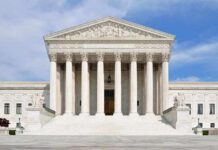
Panama’s Supreme Court ruled on January 29, 2026, that contracts held by CK Hutchison Holdings’ subsidiary, Panama Ports Company, to operate Balboa on the Pacific and Cristóbal on the Atlantic ports were unconstitutional. A 2025 audit by Comptroller Anel Flores revealed bidding irregularities, accounting errors, unpaid fees, and ghost concessions dating to 2015. The unanimous decision voids these concessions originally granted in the 1990s and extended without competition in 2021. This action upholds Panama’s constitution and bidding laws, prioritizing national sovereignty over foreign commercial interests.
President Mulino Prioritizes Stability Amid Threats
President José Raúl Mulino announced on February 2, 2026, that port operations continue without interruption under A.P. Moller-Maersk during the transition. CK Hutchison rejected the ruling as lacking legal basis, warning of job losses for thousands of Panamanians. China’s Foreign Ministry spokesman Lin Jian threatened “heavy prices” for harming Chinese firms’ rights. Mulino’s firm stance navigates superpower tensions, ensuring economic continuity for the canal that handles 5% of global trade, second-most used by China after the U.S.
U.S. Applauds Strategic Win Over Chinese Expansion
Secretary of State Marco Rubio expressed encouragement over Panama’s decision to rule the port concessions unconstitutional, aligning with President Trump’s directives. Trump’s April 2025 social media order to Rubio and January 2025 inaugural rhetoric aimed to counter Chinese influence at the canal. The Pentagon views Chinese infrastructure infusions as threats to U.S. military transit in potential conflicts. This ruling derails a $23 billion BlackRock-led sale of CK assets, blocked earlier by Beijing, reinforcing U.S. hemispheric control under revived Monroe Doctrine principles.
Gen. Donovan of U.S. Southern Command warned that China seeks to counter U.S. forces through regional infrastructure. Rep. Moolenaar insisted ports go to operators sharing U.S. values. The Global Risk Mitigation Foundation called the ruling a “death knell” to Beijing’s plans in CK ports.
Long-Term Implications for Global Trade Security
Short-term, Maersk manages uninterrupted operations, though job stability concerns persist for Panamanian workers. Long-term, the decision weakens China’s Latin America footprint and Belt and Road Initiative, setting a precedent for divesting Chinese-linked assets in strategic chokepoints. U.S. security gains protect vital trade routes essential for American exports and military logistics. Panama tests its sovereignty amid U.S.-China rivalry, favoring operators aligned with Western interests over Beijing’s commercial coercion.
Sources:
Panama Blocks Chinese-Linked Company from Operating Ports at Either End of Canal
China warns Panama of “heavy prices” after court voids canal
Hong Kong firmly rejects court ruling cancelling concession on operating Panama ports