
In a historic move that shakes the foundations of federal agency independence, the Supreme Court has allowed President Trump’s removal of a Biden-appointed FTC commissioner, signaling a potential end to nearly a century of limits on presidential power.
Story Snapshot
- The Supreme Court permitted Trump’s firing of FTC Commissioner Rebecca Slaughter, overriding a lower court’s order of reinstatement.
- This action challenges the 1935 precedent restricting presidential authority to remove independent agency officials without cause.
- The Court’s decision sets the stage for a possible landmark ruling on executive power over federal agencies.
- If precedent is overturned, future presidents could gain sweeping authority to remove agency leaders who oppose their agenda.
Supreme Court Sides with Trump on FTC Removal, Overturning Lower Court
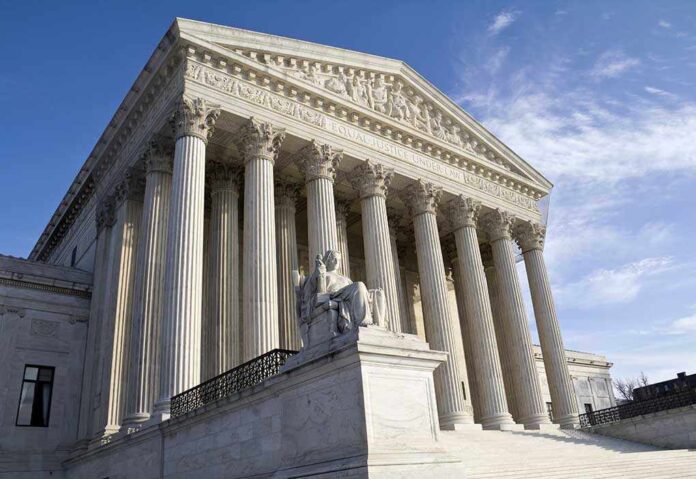
On September 22, 2025, the Supreme Court granted the Trump administration’s request to stay a lower court order that had blocked the removal of FTC Commissioner Rebecca Slaughter, a holdover from the Biden era. This decision immediately allowed President Trump’s action to stand, despite a federal district court ruling that her firing was unlawful and ordering her reinstatement. The case now stands as a pivotal test of whether presidents have the constitutional power to remove independent agency officials who resist an administration’s priorities.
The Supreme Court’s action signals a willingness to revisit the established 1935 precedent of Humphrey’s Executor v. United States, which has long shielded agency commissioners from at-will dismissal. By allowing the removal to move forward pending further review, the Court has thrown the future of independent agencies into uncertainty and raised the specter of major changes to the federal balance of power. The order, which did not provide a detailed opinion, has caught the attention of legal experts, lawmakers, and agency officials nationwide.
Historic Precedent and the Unitary Executive Debate
The Federal Trade Commission Act of 1914 established the FTC as an independent agency, specifically protecting its commissioners from summary removal by the president. In 1935, the Supreme Court’s Humphrey’s Executor decision reinforced this protection, ruling that commissioners could be removed only for cause, such as inefficiency or malfeasance. This legal structure was designed to insulate regulatory agencies from political pressure and preserve their expertise and impartiality. However, recent Supreme Court cases have eroded similar protections for leaders of other agencies, fueling debates over how much control presidents should wield over the executive branch.
In the current dispute, President Trump justified his removal of Slaughter and fellow commissioner Alvaro Bedoya by citing their “inconsistency with Administration’s priorities.” These firings, unprecedented in their directness, put the issue squarely before the courts—prompting the district court to side with Slaughter, the appeals court to uphold that ruling, and ultimately the Supreme Court to intervene in favor of presidential authority. The stakes are now higher than ever, as the case is likely heading toward full review and a possible redefinition of agency independence.
Battleground for the Future of Agency Independence
The outcome of this legal struggle could fundamentally reshape how federal agencies operate. If the Supreme Court overturns or narrows the Humphrey’s Executor precedent, presidents—regardless of party—would have the power to dismiss independent agency officials at will. Proponents of strong executive authority argue this change would increase democratic accountability and ensure that agencies reflect the will of the people as expressed through elected leadership. However, critics warn that such a shift could undermine the checks and balances built into the Constitution, politicize regulatory enforcement, and erode the expertise and stability that independent agencies were designed to provide.
In the short term, Trump’s victory means immediate uncertainty for current and future commissioners at the FTC and other independent agencies. The possibility of at-will removal could chill agency officials’ willingness to act independently, disrupt ongoing enforcement priorities, and prompt rapid turnover with each new administration. Over the long term, a Supreme Court ruling in favor of broad presidential removal powers could prompt Congress to revisit the statutes governing agency independence and reshape the modern administrative state—potentially restoring power to the executive branch after decades of what many conservatives see as unchecked bureaucratic overreach.
Legal and Constitutional Implications for Conservative Values
This case resonates deeply with Americans concerned about the erosion of constitutional checks and balances and the rise of an unaccountable administrative state. The Supreme Court’s decision to allow Trump’s removal of a Biden-appointed official underscores the principle that executive power should not be hamstrung by unelected bureaucrats pursuing their own agendas. For supporters of limited government and individual liberty, this may represent a long-overdue correction, restoring the president’s ability to ensure federal agencies serve the interests of the people and uphold American values, rather than promoting leftist policies or acting as unaccountable fiefdoms. As the fight moves forward, the eyes of the nation—and every citizen who believes in constitutional government—will be watching closely.
SCOTUS allows Trump to fire Biden-appointed FTC commissioner | Fox News https://t.co/QS4kaggp5z
— Lizmac57 (@lizmac57) September 23, 2025
While the Supreme Court’s stay order lacks a detailed explanation, both the official court record and legal commentary confirm the significance of this development for the future of presidential authority, agency independence, and the proper balance of power in American government. The next stages of this case could determine whether agency appointees continue to wield unchecked power, or whether the executive branch is once again firmly placed in the hands of the people’s elected leader.
Sources:
U.S. Court of Appeals for the D.C. Circuit, No. 25-5261, September Term, 2025
Supreme Court of the United States, 25A264 Trump v. Slaughter (09/22/2025)