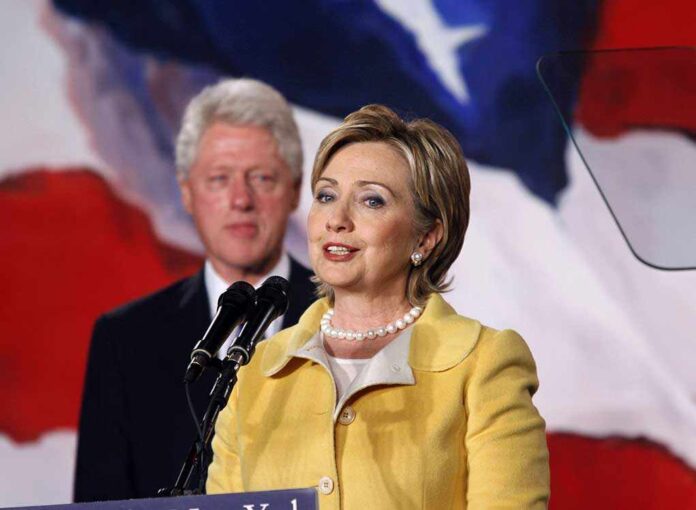
Fresh evidence sent to Congress threatens to expose years of alleged Clinton Foundation corruption and DOJ obstruction, reigniting demands for accountability and transparency.
Story Snapshot
- DOJ and FBI leadership delivered “Clinton corruption files” to the Senate Judiciary Committee with claims of foreign and domestic pay-to-play schemes.
- Whistleblowers allege prior DOJ officials obstructed investigations and suppressed evidence during the Obama era.
- The Senate panel now reviews the files, potentially paving the way for hearings and reforms on foreign influence and nonprofit oversight.
- Renewed controversy highlights deep partisan divides and calls for restoring trust in law enforcement and government institutions.
New Evidence Sent to Senate Judiciary Committee
Attorney General Pam Bondi and FBI Director Kash Patel have transmitted a cache of documents, referred to as the “Clinton corruption files,” to the Senate Judiciary Committee. These files reportedly detail how both foreign and domestic actors—including a U.S. defense contractor—donated to the Clinton Foundation while Hillary Clinton served as Secretary of State, allegedly seeking to influence policy decisions. This latest development comes years after multiple investigations were shut down by senior DOJ officials, raising questions about transparency and the impartiality of federal law enforcement.
Department of Justice officials have evidence pointing to a defense contractor and foreigners donating money to the foundation while Hillary was secretary of state in order to influence policy decisions.https://t.co/u5fCfhHUs8
— The Rule 5 Texan (@Rule5Tweets) November 12, 2025
Whistleblowers claim that critical evidence was withheld from federal prosecutors and that high-level officials in the Obama administration, including former Deputy Attorney General Sally Yates, intervened to block further investigation. According to internal memos and testimony, line-level FBI agents and DOJ prosecutors were ordered to “shut it down,” stopping them from pursuing leads that pointed to possible pay-to-play schemes. The decision to release these documents now, years after the original probes were closed, reflects growing pressure to restore accountability and address lingering concerns about the integrity of government agencies.Timeline: Years of Alleged Obstruction and Missed Accountability
The Clinton Foundation first came under scrutiny in 2015, when the U.S. Attorney’s Office in Little Rock, Arkansas began investigating alleged corruption. That probe was soon shut down following directives from Obama-era DOJ leadership. In 2016, further investigation efforts were reportedly blocked, and by 2019, the IRS abruptly halted a criminal probe into the Foundation’s finances. Only now, with the Trump administration’s renewed focus on political corruption, have these files resurfaced for congressional review, driven by whistleblower disclosures and ongoing partisan debate.
Bondi and Patel’s decision to transmit the evidence signals a shift in approach. They present themselves as reformers determined to confront what many conservatives view as systemic abuse of power and disregard for the rule of law. The Senate Judiciary Committee, tasked with oversight, is expected to review the files and consider possible hearings. This process could lead to additional evidence releases and expanded inquiries, potentially impacting related investigations such as the Arctic Frost probe.
Political, Economic, and Social Implications
In the short term, the release of the Clinton corruption files has reignited controversy around the Foundation, its donors, and the conduct of prior DOJ officials. The renewed focus may lead to congressional hearings and increased scrutiny of nonprofit organizations with political ties. Longer-term consequences could include legal reforms targeting foreign donations and stricter oversight of political foundations. The reputational impact on the Clintons and implicated government officials could be significant, with broader implications for the U.S. political and nonprofit sectors.
The controversy also risks deepening partisan divides over issues of accountability, foreign influence, and the integrity of federal institutions. Some analysts suggest the evidence, if substantiated, could prompt renewed criminal investigations. Critics, however, point to the lack of prior indictments and warn of politically motivated attacks. The debate underscores the challenges of prosecuting alleged pay-to-play schemes, where intent and quid pro quo often remain difficult to prove.
For conservative Americans, the case highlights long-standing frustrations with government overreach and perceived double standards in the application of justice. The timing of the evidence release—years after initial probes were closed—raises questions about past failures to hold powerful figures accountable. With the Senate Judiciary Committee now reviewing the files, attention turns to whether real reform and transparency will follow, or whether political gridlock will once again prevent meaningful action.
Sources:
Report: DOJ sending Sen. panel ‘Clinton corruption files’ (OANN)
Report: DOJ sending Sen. panel ‘Clinton corruption files’ (IOTW Report)