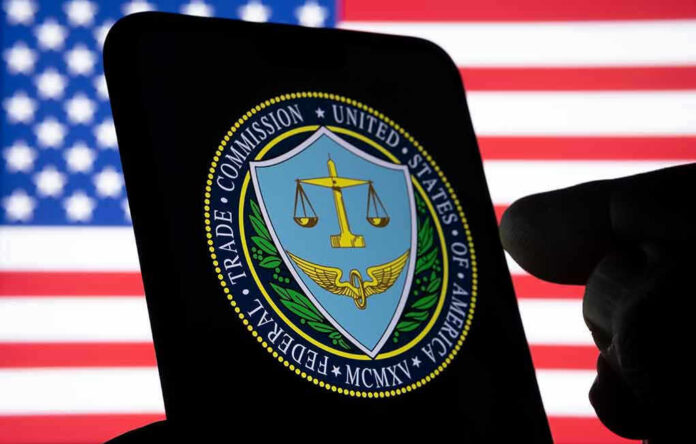
Imagine a world where powerful advertising giants could secretly collude to choke off funding to any news outlet that dares to veer from their preferred political script—now imagine the federal government finally stepping in to say “enough.”
At a Glance
- The FTC has blocked advertising agencies from coordinating boycotts targeting media outlets for their political or ideological viewpoints.
- Omnicom’s $13.5 billion acquisition of Interpublic Group triggered this precedent-setting antitrust action.
- The new rule prohibits collusion but still lets individual advertisers choose where their money goes.
- This move aims to prevent corporate censorship of conservative voices in the media by economic strangulation.
FTC Lays Down the Law: No More Colluding to Silence Conservatives
For years, the American public has watched as major advertising agencies quietly flexed their muscles, directing billions in ad dollars away from media outlets that refuse to toe the left-wing line. Whether it’s cable news, talk radio, or online platforms, the message from the woke advertising class has been clear—step out of line and you’ll be starved of revenue. The FTC’s latest action finally throws a wrench into this coordinated censorship machine, making it illegal for advertising giants to band together and blacklist companies just because they dare to support family values, gun rights, or the Constitution.
This isn’t just a technical business regulation—this is a direct shot across the bow of the activist class that’s been bullying conservative outlets for years. The FTC’s order is a long-overdue defense of the First Amendment, not just for the big names in news but for every American who believes in open debate and a fair marketplace of ideas. The days of shadowy backroom deals, where ad agencies play kingmaker and shut down dissent, may finally be numbered.
Behind the Curtain: How the Advertising Industry Became the Speech Police
With the rise of digital advertising, a handful of mega-agencies like Omnicom and Interpublic Group have seized unprecedented control over where billions in ad dollars are spent. It’s no secret that these titans have used their power to “punish” news organizations that stray from the progressive orthodoxy. The merger between Omnicom and IPG would have created a behemoth capable of dictating the financial fate of countless publishers—unless, of course, the government stepped in.
The FTC’s investigation unearthed the very real threat that, if left unchecked, these agencies could coordinate to blacklist any outlet expressing views they find distasteful. That means conservative voices—already under siege from social media censors and activist mobs—would face yet another layer of pressure to conform or be silenced. The FTC’s new consent order, announced June 23, 2025, is designed to stop this kind of viewpoint-based collusion dead in its tracks, ensuring that agencies can’t gang up to starve dissenters of ad revenue.
Individual Choice Preserved, Coordinated Censorship Outlawed
Let’s be clear: The FTC didn’t say advertisers can’t pick and choose where they spend their dollars. If a company wants to avoid controversy or protect its brand image, it still has every right to do so. What the government finally cracked down on is the secret handshake agreements—the wink-and-nod collusion—where agencies collectively decide to freeze out entire segments of the media based on ideology. That’s not “brand safety”—that’s corporate censorship, plain and simple.
Industry experts and free speech advocates are hailing this as a landmark for both competition and the First Amendment. By drawing a hard line against collusion, the FTC is sending a loud message: economic power can’t be used as a weapon to silence lawful speech. It’s a rare win for common sense in an era when so many government actions seem designed to undermine, not protect, the diversity of views that makes this country great.
The Stakes: Free Speech, Fair Competition, and the Future of American Media
This order isn’t just about antitrust law or some arcane business matter—it’s about whether Americans will continue to enjoy a free and open media landscape. For conservative publishers, the threat has always been existential: get on board with the latest progressive cause, or watch your funding dry up overnight. With the FTC’s intervention, those days may be coming to an end. Agencies will have to walk a fine line—respecting their clients’ choices without conspiring to stamp out dissenting voices.
Time will tell how effectively this rule is enforced, but one thing is certain: the FTC’s action offers a glimmer of hope for every reader, viewer, and listener who’s tired of seeing their values erased from the public square by unelected corporate censors. Finally, the heavy hand of the advertising cartel has met its match. The American marketplace of ideas just got a little freer—and that’s something worth celebrating, even if it took the government this long to notice.
Sources:
FTC Prevents Anticompetitive Coordination in Global Advertising Merger