
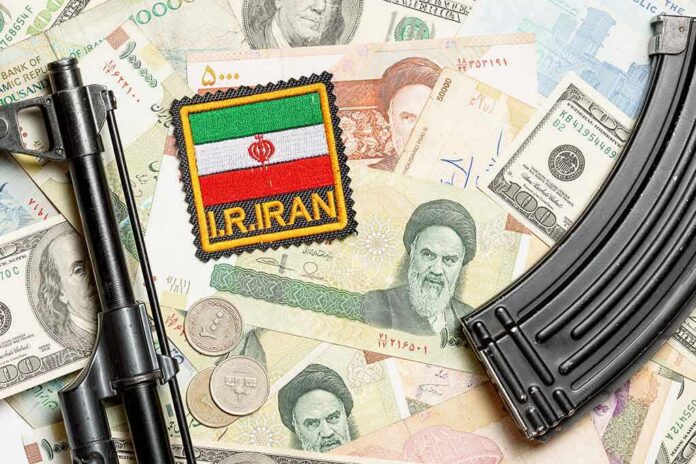
Iran’s currency crash, soaring prices, and fuel strains are now squeezing daily life and stoking fresh labor unrest across the country.
Story Snapshot
- The rial hit repeated record lows near 2.2 million per United States dollar in early September 2026.
- Official twelve-month inflation neared 70 percent, with food rising much faster.
- Leaders warned of unrest as fuel lines grew and drivers protested rising costs.
- Trade fell sharply as sanctions and blocked dollars pinched imports and supplies.
Currency Slide Signals Deepening Crisis
Reuters reported that Iran’s rial set fresh record lows in late August and early September 2026, trading above 2.2 million per United States dollar on the open market. The slide roughly doubled the exchange rate from about a year earlier. A weaker currency makes all imports cost more. That drives up prices for food, medicine, and parts. Ordinary families feel the hit first. Shopkeepers raise prices to cover new costs. Savings lose value. People rush to dollars or gold to protect what they have.
Al Jazeera reported that President Masoud Pezeshkian urged unity and said Iran’s “enemies” use war, blockade, and sanctions to stir division and unrest. The message came as prices kept rising and shortages spread. Leaders often call for patience during shocks. But long lines and empty shelves test that message. When people see their pay buy less each week, trust falls. That is when small strikes can turn into wider action that slows key parts of the economy.
Inflation, Food Costs, and Fuel Strains
Reuters cited official data showing twelve-month inflation at 69.9 percent, with food, beverages, and tobacco rising at nearly twice that rate. That gap hits lower income homes hardest. Families cannot skip food. They cut other needs or take on debt. Reuters also reported a senior source said Iran had about two months of gasoline supply left and must import fuel due to limited refining capacity. Even if exact stockpiles vary, tight fuel markets add stress. Commuters pay more. Deliveries slow. Work becomes harder to reach.
Trade has also shrunk. President Pezeshkian said total trade fell by between 25 percent and 35 percent, with imports hurt most. Sanctions and blocked dollar access make it harder to pay for goods and parts abroad. When imports fall, factories lack inputs and cut output. Fewer goods on shelves push prices even higher. The World Bank has linked foreign exchange constraints to rising inflation and food security risks in Iran, which tracks with what people face today. This is the loop that erodes paychecks and strains social stability.
Labor Unrest Tied to Prices and Quotas
Reporting summarized by The President’s Daily Brief described strikes or threatened stoppages by truckers at the Mehran border crossing and at the port of Bandar Abbas, as well as protests by taxi and ride-share drivers over reduced subsidized fuel. The same summary linked unrest to a policy that doubles gasoline prices once monthly quotas run out. These steps may save the budget, but they add pain at the pump. Drivers on thin margins cannot absorb sharp fuel jumps. Fares rise. Food and goods cost more to move.
Iran has faced similar cycles before. Academic and policy studies show that sanctions and limited access to foreign exchange often weaken the currency, raise inflation, and feed unrest. The pattern is simple but harsh. A shock hits the rial. Prices surge. The government trims subsidies or rations fuel. Workers protest. Security forces push back. Families scrape by however they can. Today’s crisis fits that mold. While some figures differ across outlets and dates, the downward direction and daily strain are clear.
Why This Matters for Americans
U.S. policy choices help shape this story. Reuters reported that tighter United States pressure, including secondary sanctions, is choking Iran’s access to dollars for imports and finance. That limits Tehran’s room to steady prices. For Americans, this is a case study in how financial tools can shift power without a shot fired. But it also shows a hard truth many at home know well: when leaders miss warning signs, ordinary people pay first and longest while elites stay insulated.
What To Watch Next
Watch the rial’s street rate, fuel lines, and reports of driver actions in border hubs and ports. If the currency keeps sliding and gasoline stays tight, more sectors may slow or strike. Also watch for any subsidy or ration changes. Those decisions can cool or spark protests within days. One caveat is that counts of protests and stockpiles are hard to verify in real time, so scale may appear smaller than it is. Still, the core indicators already point to severe strain.
Sources:
redstate.com, en.wikipedia.org, aljazeera.com, reuters.com, euronews.com
© conservativesense.com 2026. All rights reserved.