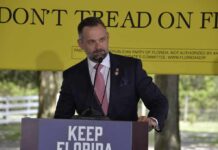

The through-line of Robert F. Kennedy Jr.’s 2024 arc is not a one-night conversion but a six-week progression: a private rapprochement with Republicans at their Milwaukee convention in mid-July, a public testing of terms for cooperation, and a formal, explicit endorsement of Donald Trump in late August. Understanding that sequence—meeting, consideration, endorsement—clarifies what happened and why it mattered.
The Short Version
- Kennedy met with Trump during the Republican National Convention in Milwaukee on July 15, 2024; his campaign acknowledged the meeting amid unity-themed talks, while denying any immediate withdrawal.
- In the following days, discussions broadened to possible roles for Kennedy in a second Trump administration, signaling active consideration of alignment.
- By late August, Kennedy and his running mate were openly weighing an exit; on August 23, he suspended his campaign and endorsed Trump in Phoenix.
- Legal filings and onstage appearances cemented the shift within hours, turning a mid-summer conversation into a late-summer realignment.
What Actually Happened: A Three-Step Timeline
The record begins in Milwaukee. On July 15, 2024, Kennedy met with Trump during the Republican National Convention. Kennedy’s campaign confirmed the meeting and cast it in the language of “national unity,” while pushing back on immediate speculation that he was quitting the race. The point was conversation, not capitulation, at least that night. In the following week, reporting indicated the two camps discussed not only support but potential ways Kennedy could be involved in a second Trump administration—a signal that the dialogue had moved beyond pleasantries to the architecture of cooperation.
By August 20, the posture changed from private exploration to public contemplation. Kennedy’s running mate, Nicole Shanahan, said they were considering ending the independent bid and endorsing Trump—a notable trial balloon that made the option explicit. Three days later, in Phoenix, Kennedy suspended his campaign and endorsed Trump. Wire reports from the event describe nearly 20 minutes of remarks before Kennedy stated his endorsement unambiguously. Minutes before the announcement, a Pennsylvania court filing foreshadowed it, documenting the campaign’s intention to endorse and withdraw—an administrative breadcrumb that fixed the timeline in official records. Within 24 hours, Trump and Kennedy appeared together onstage in Arizona, transforming paperwork and a podium statement into a public alliance with broadcast optics.
How We Got Here: Mechanism and Motive
Late-cycle realignments follow a familiar mechanism. An outsider candidacy pressures institutions, amasses a coalition of disaffected voters, and then faces a strategic fork: persist to November with limited path-to-victory math, or convert influence into leverage by aligning with a major-party nominee. In Kennedy’s case, the RNC meeting established a line of communication at the highest level; subsequent reporting on potential roles in a Trump administration indicates that the conversation quickly moved from rhetoric to terms. The Pennsylvania filing operates as the legal hinge—quiet but decisive—because ballot-access litigation imposes deadlines that force intentions into the public record ahead of microphones.
What about motive? Kennedy’s campaign messaging throughout 2024 framed his candidacy as a referendum on institutional distrust—public health bureaucracies, speech norms, and concentrated corporate power. Those themes travel more easily into a Republican coalition than into a modern Democratic one that, in Kennedy’s telling, had become too deferential to technocratic authority. That is why the July denial that he was “dropping out” can coexist with the August endorsement: strategic options were still in flux in mid-July, but the ideological compatibility test was already underway.
The RNC’s Role, Precisely Defined
It is tempting to compress narrative time and say “it happened at the RNC.” The evidence supports a narrower claim. The Milwaukee encounter was an initiator—a meeting that legitimized talks and set an agenda around unity—but not the site of the endorsement itself. The endorsement occurred on August 23 in Phoenix; the paperwork landed the same day; the joint rally followed within hours. The distinction matters because it explains the July crosscurrents: a campaign can deny immediate withdrawal while entertaining a structured, phased path to endorsement weeks later.
Seen that way, the RNC functioned as a clearinghouse for negotiations: a place where parties could test alignment, gauge public reaction to rumors, and buy time for staff to draft the political and legal choreography that culminated in Phoenix. The absence of a stage-side declaration in Milwaukee is not a gap in the story; it is how careful political engineering looks when done under the lights.
Why It Mattered Politically
Third-party withdrawals and endorsements typically move modest vote shares; their value lies in where those votes sit and what signal they send. Analysts emphasized that Kennedy’s exit likely had only a small net effect overall, but that small effects can matter in tight states or among niche demographics newly reachable to Republicans when framed by a Kennedy voice. The onstage embrace in Arizona supplied the symbolic proof of alignment; the court filing, the legal certainty; the Phoenix announcement, the rhetorical bridge for Kennedy supporters to cross without feeling whiplashed by a same-night reversal.
The media ecology amplified the move for familiar reasons. Coverage gravitates to the “game frame”—who benefits, what margin moves—especially when a storied Democratic surname migrates across the aisle. That lens can flatten policy rationales, but it correctly captures the tactical upshot: even a narrow slice of voters, redirected late, can shift field operations, advertising budgets, and turnout modeling in states decided on the margins.
RFK Jr. from the RNC just moments ago describes how Charlie helped engineer his endorsement of President Trump in 2024:
“Charlie Kirk built the bridge that President Trump and I walked across.”
— ☀️✨ Rachel Speaks Out 🌙💜 (@Rachelspeakout1) September 11, 2026
Reading the Record with Discipline
Four anchors moor the timeline. First, acknowledgment of the July 15 RNC meeting in Milwaukee by Kennedy’s team—no endorsement then, but a deliberate opening to talks. Second, credible reports that discussions extended to potential roles in a second Trump term, which elevates the meeting from optics to substance. Third, the August 23 Pennsylvania filing, which gives the endorsement intention a stamped, contemporaneous legal footprint. Fourth, the Phoenix event and subsequent Arizona rally, which provide the public, unequivocal expression of endorsement and its immediate political consummation.
Put together, the chain is clean: convene, consider, commit. The RNC was the ignition, not the destination. The destination arrived with a signature in court and a sentence at a podium.
Sources:
youtube.com, apnews.com, nytimes.com, nbcnews.com, wired.com, abcnews.com
© conservativesense.com 2026. All rights reserved.