
conservativesense.com — California did not just approve “free solar for illegal aliens” — it quietly built a climate program that now sits in the crosshairs of the immigration and accountability wars.
Story Snapshot
- California runs a state program that gives no-cost solar panels and efficiency upgrades to low-income farmworker households.
- Critics now brand it “free solar for illegal aliens” and question whether the spending and results pencil out.
- Supporters insist it cuts energy bills, reduces emissions, and helps one of the state’s most vulnerable workforces.
- The real fight is over intent, transparency, and whether this is smart climate policy or ideological patronage.
What The Program Actually Does, Beneath The Headlines
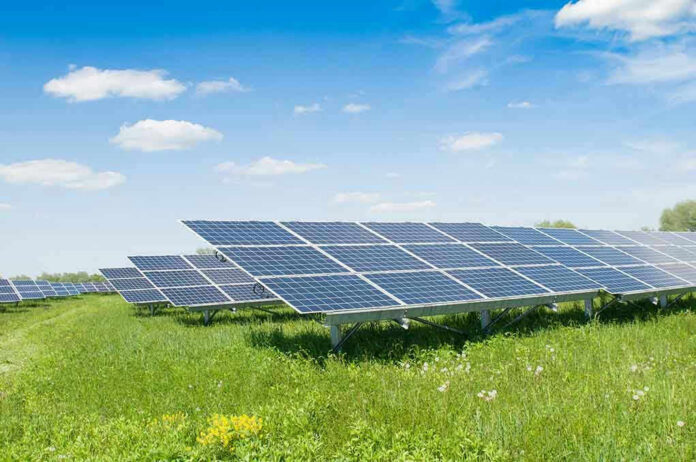
California’s Farmworker Housing Component of the Low-Income Weatherization Program is not a rumor; it exists in black and white on state pages. The California Department of Community Services and Development describes it as providing no-cost rooftop solar systems and energy efficiency upgrades to low-income farmworker households, with at least one agricultural worker in the home and income below set thresholds.[1][5] The same documents frame it as part of the state’s climate investments, explicitly tied to reducing greenhouse-gas emissions and lowering energy bills for struggling families.[1][5]
The program is not a loan, rebate, or cost-sharing scheme. The state says all services are free to eligible households, including those who rent, and emphasizes co-benefits like health and safety improvements in substandard housing.[1] Officials present it as the only California program focused exclusively on low-income households that combines energy-efficiency upgrades with solar at no cost.[5] Delivery runs through administrators such as La Cooperativa Campesina de California and partners that install measures directly in farmworker regions.[3][6]
Where “Illegal Aliens” Enter The Story
No public-facing eligibility rule says “must be undocumented” or even mentions immigration status. The criteria on the state’s farmworker housing page are straightforward: low-income household, at least one farmworker, and residence in covered areas.[1][6] That is important because the viral framing—“California giving free solar panels to illegal aliens”—implies the state targeted people based on immigration status. The documents we actually have show targeting by occupation and income, not by citizenship.[1][5][6]
The leap happens in media coverage. A City Journal article argues that because California’s farm workforce includes many undocumented workers, the state is effectively giving free solar, appliances, and windows to illegal immigrants as part of a cap-and-trade “slush fund.”[1][2] The author reports that a spokesman did not deny services going to illegal immigrants and highlights about $49 million earmarked since 2019 for roughly 2,000 families, roughly $23,000 per household, to question fiscal accountability.[1][2] That is a political argument about who benefits, layered on top of an income-based program.
Cost, Accountability, And Conservative Common Sense
Basic arithmetic alone should make taxpayers pause. City Journal cites about $49 million allocated and about 2,000 families served, creating a ballpark figure of $23,000 in public money per household for a package of solar panels, refrigerators, windows, and other upgrades.[1][2] The state’s primary materials do not, at least in the excerpts available, provide a transparent breakdown of cost per household, overhead versus hardware, or independent audits of cost-effectiveness.[1][5] That opacity gives critics an opening, and they are sprinting through it.
From a conservative, common-sense standpoint, two questions matter more than the spin. First, is the program delivering verifiable reductions in energy bills and emissions proportional to its cost? Second, is it being managed with tight oversight rather than as a political patronage pipeline for favored nonprofits and contractors? The state asserts significant greenhouse-gas reductions and energy savings in general terms, but does not publish farmworker-specific before-and-after billing data or detailed emissions accounting in the public-facing documents cited here.[1][5]
Immigration Politics Versus Energy-Burden Reality
Critics are not wrong that the farmworker population includes many undocumented workers, and that any broad farmworker assistance program will inevitably serve mixed-status and undocumented households. But the available record does not show lawmakers or administrators designing this initiative as a special benefit for illegal immigrants; instead, it shows an energy-burden program for low-income farm laborers in high-cost, often substandard housing.[1][3][6] The “free solar for illegal aliens” slogan converts that reality into a culture-war symbol that obscures the underlying policy mechanics.
For many readers over forty, this will feel familiar: a climate and poverty program funded by cap-and-trade revenue gets reframed as a giveaway to the least politically sympathetic group that can plausibly benefit. On one side, activists talk about climate justice, priority populations, and co-benefits.[1][5] On the other side, skeptics see a carbon-tax mechanism feeding opaque bureaucracies, nonprofit networks, and contractors while delivering modest environmental returns and, in this case, benefits that likely extend to people in the country illegally.[1][2]
What Serious Oversight Would Look Like
Responsible citizens should demand more than outrage or slogans. Real oversight would start with a line-item audit: how much cap-and-trade money actually reached hardware on roofs and walls, how much went to administrative overhead, and how costs compare with other low-income solar and weatherization efforts in the state.[1][3][5] Evaluators should independently measure pre- and post-installation utility bills for participating farmworker households, and separate out the farmworker component’s emissions reductions from the broader program.[5]
To address the immigration dimension honestly, lawmakers could require de-identified reporting on recipient status categories—citizen, lawful resident, or undocumented—without exposing individuals. That would clarify how much of the benefit pool goes to which groups, and let voters judge whether that aligns with their values. Until then, the fairest reading is this: California created a niche climate program for low-income farmworker families that almost certainly includes undocumented residents, but the evidence does not support the claim that it was designed as a immigration-status giveaway. Whether that is acceptable, wasteful, or wise depends on your threshold for government activism in both climate and social policy.
Sources:
[1] Web – You Thought You’d Heard It All, but Now We Bring You: Free Solar …
[2] Web – Farmworker Housing Energy Efficiency and Solar PV
[3] Web – California Is Giving Free Solar Panels to Illegal Aliens – City …
[5] Web – Free California Solar Incentives: Register for Solar Program to …
[6] Web – Low-Income Weatherization Program
© conservativesense.com 2026. All rights reserved.