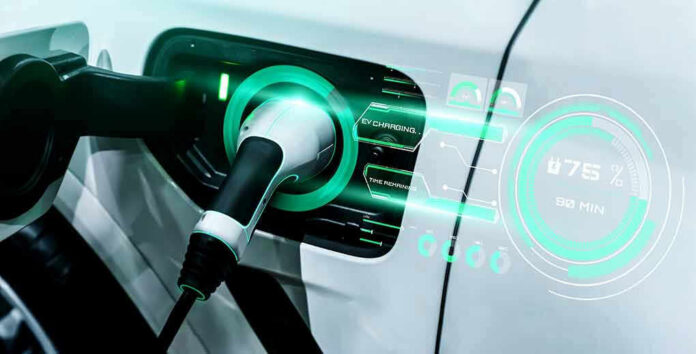
Electric cars are being recast from pricey appliances into paid grid assets—and that shift could reshape who really benefits from America’s energy transition.
Quick Take
- Vehicle-to-Grid (V2G) technology lets some EVs send electricity back to the grid during peak demand, potentially paying owners for the support.
- Real-world programs currently point to roughly $500–$1,000 per year in earnings for participants, with “thousands” more realistic over multiple years.
- Federal policy has pushed EV infrastructure with major funding and tax incentives, raising familiar concerns about who pays and who profits.
- Utilities increasingly view privately owned EV batteries as distributed energy resources that can improve reliability and reduce strain during spikes.
How EVs Became “Batteries on Wheels” for the Grid
Vehicle-to-Grid technology works through bidirectional charging: the car pulls power from the grid when prices are low and can push power back when demand is high. That technical shift matters because it turns a privately owned vehicle into a grid tool—essentially a small, mobile storage unit. Supporters say this helps prevent brownouts and smooths out renewable swings, while critics worry about complicated rules, subsidies, and who controls the benefit.
Electric vehicle owners could earn thousands by supporting power grid https://t.co/Cv4mSUBp8A in @newscientist pic.twitter.com/sb7gggQLOL
— HealthIT Policy (@HITpol) April 17, 2026
The “earn thousands” headline needs context. Documented participation programs highlighted in current research show more modest yearly payouts—often in the hundreds to low thousands—depending on location, program terms, and how often the grid calls for support. Over normal vehicle ownership, those annual payments can add up into the “thousands,” but the near-term reality is closer to supplemental income than a major paycheck.
What EV Owners Can Actually Earn—And What It Takes
One example cited in the research is Bidirectional Energy, which reports EV owners in California and Connecticut can earn about $500 to $1,000 per year by enrolling and allowing the program to draw from their vehicle battery during grid-need periods. The setup typically requires compatible hardware and an installed charger, plus software controls through an app that tracks participation and rewards based on grid conditions.
Smart charging and time-of-use pricing also play a central role, even outside full V2G exports. Utilities can encourage drivers to charge overnight or during off-peak windows when generation is abundant and demand is low. That can lower household charging costs while reducing pressure on transformers and local distribution equipment. Where V2G is enabled, those same price signals can become two-way—buy low, sell higher—within program limits.
Why Utilities and Regulators Want EVs to Stabilize the System
Grid operators increasingly describe EVs as flexible distributed energy resources, not just new electrical loads. That framing is important in a country where many voters—right and left—feel major institutions make big promises while passing costs downstream. If EV batteries can reliably supply power for short periods, utilities can lean less on expensive peak generation and may defer certain upgrades, though major infrastructure investment is still required in many regions.
Federal involvement remains a central fault line. A Department of Energy report cited in the research describes EV-grid interaction as “symbiotic,” and points to large-scale federal investment to build charging infrastructure nationwide. It also references tax incentives for charging equipment, including the Alternative Fuel Vehicle Refueling Property Credit. Conservatives who already distrust Washington-directed industrial planning will likely ask whether these benefits accrue mainly to early adopters and politically connected vendors.
The Real Political Fight: Reliability, Costs, and Control
For many Americans, the deeper concern is not whether V2G can work in theory, but whether it will be implemented in a way that protects consumers and limits bureaucratic creep. V2G programs require rules on compensation, battery use, and data handling, plus clarity on who bears the cost of grid upgrades. Research cited here argues EV charging can generate revenue that funds improvements without shifting costs to non-EV owners—an empirical claim that will depend on how state regulators structure rates.
In practice, the path forward looks uneven. Some regions have more advanced utility programs, more compatible vehicles, and clearer rate structures, while others lag. The upside is straightforward: voluntary participation could pay drivers and improve resilience during peak demand. The downside is equally clear: layered subsidies, mandates, or opaque rate designs could deepen public mistrust in energy policy and confirm the belief that government serves insiders first.
For EV owners, the immediate takeaway is to treat V2G like any other financial decision: read the terms, understand how often discharge events occur, and ask what battery limits and warranty conditions apply. For everyone else, the larger takeaway is that the grid debate is shifting from “Can it handle EVs?” to “Who gets paid, who pays, and who sets the rules?”—the same question Americans now ask about almost everything Washington touches.
Sources:
Vehicle-to-grid (V2G): Empowering EV Owners to Earn Money
Bidirectional Energy — Revenue Benefits
Congressional Report: EV Grid Impacts (U.S. Department of Energy)
The Impact of EV Charging on the Power Grid
The Truth About Electric Vehicles and the Grid: Strengthening, Not Straining, Our Energy