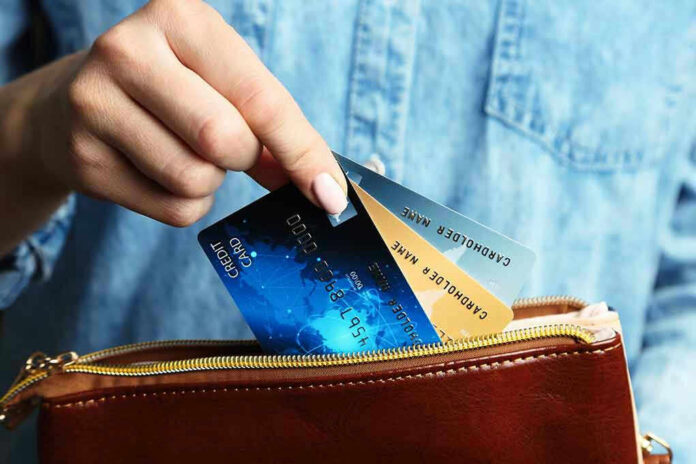
Maxing out a credit card instantly transforms your financial profile, unleashing a ripple effect that can shadow your credit, stress, and future options long after the swipe.
Story Snapshot
- Maxing out a credit card sends your credit utilization soaring, signaling risk to lenders and dropping your credit score.
- Minimum payments climb and interest charges accelerate, making it harder to escape debt.
- Future borrowing becomes difficult as lenders see you as a high-risk applicant.
- The psychological toll is real, with debt stress impacting daily life and decision-making.
- There are strategies to regain control, from consolidation loans to building emergency savings.
Maxing Out a Credit Card: The Hidden Fallout
Credit card limits aren’t just numbers on paper—they’re silent boundaries that shape your financial health. When you cross that line, your credit utilization ratio spikes to 100%, instantly flashing a warning to credit bureaus and lenders alike. This ratio, the percentage of available credit you’re using, is a major factor in your credit score. Most experts advise keeping it below 30%, though under 10% is ideal. Maxing out a card doesn’t just increase your utilization; it puts your entire credit profile at risk, even if you pay on time.
Your available credit shrinks, and your financial flexibility narrows. The consequences extend beyond numbers, affecting your ability to respond to emergencies and seize opportunities. Every additional purchase becomes a gamble, potentially sending you further into financial jeopardy. The moment you hit your credit limit, lenders see you as a much higher risk, which can have immediate and long-term repercussions.
Minimum Payments and Interest: The Debt Trap Tightens
Credit card issuers recalculate your minimum payments based on your current balance. When your balance peaks at the card’s limit, those minimums can jump dramatically. A payment you once managed with ease—say, $50—might suddenly balloon to $150 or more. Most of that payment gets soaked up by interest, especially if you’re carrying a balance at a typical 20%–25% annual percentage rate (APR). For a $5,000 balance at 25% APR, you could be paying over $100 a month in interest alone, with little progress toward the principal.
This is the beginning of the debt spiral. As interest compounds, your payments are increasingly consumed by fees rather than reducing your debt. The longer you stay maxed out, the harder it becomes to break free. This dynamic drives many into a cycle of minimum payments and mounting balances, where the debt grows quietly in the background while your financial options shrink.
Borrowing Power and Real-World Consequences
Lenders scrutinize your credit profile every time you apply for a new loan, mortgage, or even another credit card. A maxed-out card signals financial strain and risk, often leading to denied applications or offers saddled with higher interest rates. The damage isn’t always immediately visible, but it can persist for months—or years—after the card is paid down. Even responsible borrowers find that maxing out a card can derail plans to buy a home, finance a car, or start a business.
Access to credit is the foundation of financial flexibility. When you lose that access, you’re forced to rely on cash reserves or seek alternative—and often more expensive—sources of financing. The long tail of a maxed-out card can haunt your financial decisions, limiting your ability to recover quickly and get back on track.
The Psychological Toll: How Debt Follows You Everywhere
Debt isn’t just a line item in your monthly budget—it’s a persistent source of stress that follows you through your day. Readers often report that the anxiety from maxing out a card is more intense than the debt itself. The pressure to make payments, fear of missing deadlines, and worry over future borrowing all contribute to sleepless nights and distracted days.
This stress can affect your relationships, work performance, and overall well-being. When financial problems become overwhelming, they drive people to make short-term decisions that can worsen their situation—like ignoring bills or avoiding conversations about money. The emotional cost is real, and it often becomes the invisible burden that compounds the financial damage.
Getting Back on Track: Practical Strategies for Recovery
Stopping further charges is the first step when you’ve maxed out a card. Focus on payments to reduce your balance as quickly as possible. Debt consolidation loans can help lower your interest rate and simplify payments, making it easier to regain control. Balance transfer cards offer a window of up to two years with 0% introductory APR, giving you breathing room to pay down your debt without piling on interest.
Building a financial buffer is the long-term solution. An emergency fund in a high-yield savings account can keep unexpected expenses from sending you back to the brink. The real fix is a system that prevents future max-outs—a budget that prioritizes savings, disciplined spending, and regular credit monitoring. These steps restore your financial flexibility and reduce the psychological toll of debt.
Sources:
Best Personal Loans for Debt Consolidation